Hoya cultivation methods and propagation methods explained in detail
Hoya, a perennial trailing herbaceous plant, its flowers resemble spherical umbels, with a peculiar and elegant shape, and give off a captivating fragrance. Keeping one pot at home can create a fresh and elegant home environment, very delightful. So how should hoya be grown?
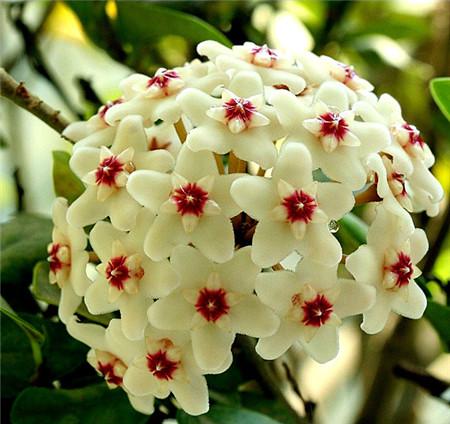

Hoya cultivation methods
Soil requirements
Hoya likes fertile, breathable, well-drained soil, and does not like heavily clayey soil. For potted hoya, it is best to choose loose and fertile slightly acidic humus soil. You can mix in an appropriate amount of vermiculite, or apply a little superphosphate as base fertilizer. You can also use 7 parts leaf mold mixed with 3 parts coarse sand as the growing medium, and the effect is quite good.
Watering method
Hoya leaves are fleshy and contain relatively much water themselves. During cultivation, keep them in a moist state, but do not let water accumulate. Too much watering of hoya will cause root rot, but being too dry will also affect growth, so watering should follow "water when dry, stop when wet." In midsummer, ensure sufficient water, appropriately increase watering, and frequently spray the leaf surface to increase air humidity. In autumn and winter, as the temperature drops, hoya growth gradually slows down. At this time, reduce watering, once every two weeks is suitable.

Light intensity
Hoya likes scattered light and a semi-shaded environment. When maintaining hoya at home, place it on a south-facing windowsill in spring and autumn to keep the leaves green; in summer, move the hoya to a shaded place indoors to avoid direct sunlight, otherwise the leaves are very likely to turn yellow. But do not shade it excessively. With long-term insufficient light, the leaf color of hoya will become dull and lusterless, and the flowers will be few and not vivid.
Temperature requirements
Hoya is cold-tolerant, and the most suitable temperature for growth is 15~28°C. It can also grow very well in a high-temperature environment. In winter, hoya will enter a dormant state. At this time, place the hoya in a cool, slightly dry environment and let it go fully dormant. Control the dormancy temperature at around 10°C. Below 5°C it is prone to frost damage, then causes leaf drop, and finally even the death of the whole plant.

Fertilization method
Hoya fertilization mainly chooses organic fertilizer or compound fertilizer. During the peak growing season, fertilize 1~2 times per month, choosing dilute cake fertilizer water combining nitrogen and phosphorus. At other times, because hoya grows slowly, reduce or stop fertilization to avoid fertilizer damage. In summer, the number of fertilizations can be appropriately increased, and the content of phosphate and potassium fertilizer increased, to promote better bud formation and flowering in hoya.
Timely pruning
During the growth process of hoya, timely pinching should be done to promote better sprouting of new branches, and a flower support should be set up in time to promote its upward climbing growth. When hoya flowers are about to fade, do not cut off the flower stem; let it wither naturally. This is because hoya will sprout at the same place on the flower stem when it blooms the following year. If the flower stem is cut off, it will affect the number of hoya flowers.
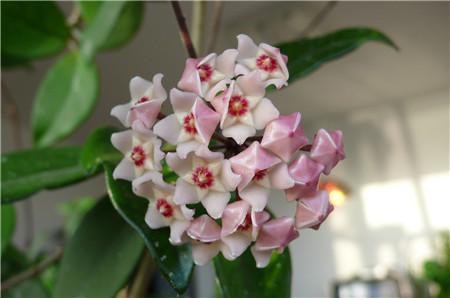

Precautions for hoya cultivation
Do not move the flower pot at will
For hoya that is flowering, do not frequently move the flower pot, otherwise it is very likely to cause bud drop and flower drop. After the hoya flowers fall, protect the flower stem well to promote flowering the next year.
Pest and disease control
Hoya is a plant for both flowers and foliage, and its green leaves have extremely high ornamental value. But during maintenance, some pests and diseases may appear, affecting its appearance. Common pests and diseases include anthracnose, bad spot disease, and leaf spot disease. After discovering disease, spray pesticides in time. You can use 50% carbendazim wettable powder 600 times solution or 70% mancozeb wettable powder 400-6w times solution for spraying control. There are also damage from scale insects and mealybugs, which can be killed by spraying with 40% omethoate emulsifiable concentrate 800-100 times solution or 80% dichlorvos emulsifiable concentrate IOC. times solution.
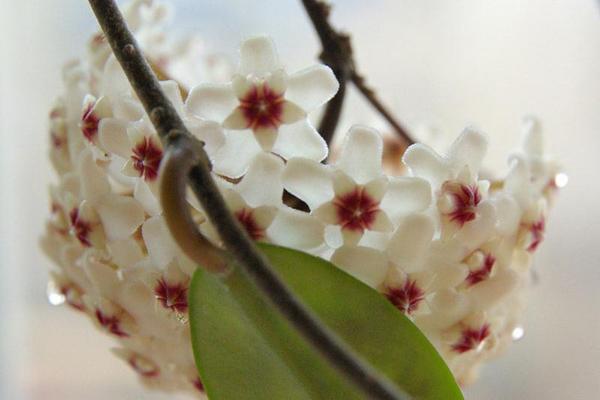
Propagation methods
Hoya is mostly propagated and grown by cuttings. Apart from winter and early spring when low temperatures make it unsuitable, cuttings can be done at other times. Every year from March to April, propagation by cuttings is more suitable.
For hoya, both the old stems of one to two years and the tender stems of the current year can be used as cuttings. Cut them into 5~8 cm sections, keeping 2 nodes, remove the leaves inserted into the medium, leaving only 1~2 leaves on top. After the wound is fully dried, insert the cuttings into a sand bed or a loose-soil flower pot medium to a depth of 1/3 or 1/2 for cultivation. If using a No. 180 flower pot, about 10 cuttings can be inserted per pot.
Cuttings are best inserted as soon as they are cut, to favor survival. From April to June, light is relatively strong. To maintain a cool environment, 2 layers of black gauze net can be set up. Cuttings can take root in about 20 days, and after 1 month new leaves grow. After the roots develop well, they can be transplanted into a larger flower pot for final planting, then moved to a semi-shaded, ventilated place for routine management.