Problems in citrus cultivation that you are sure to run into!
Today we are putting together the questions shared at the training session:
We have posted the questions on the Youguo Master app, which has lots of questions and is especially suitable for citrus growers to go and look at, exchange ideas and share experience.
1. What causes sunburn fruit on Orah mandarins? How do you deal with it?
Answer: Sunburn fruit is mainly caused by the fruit surface losing water at high temperature due to sun exposure; if the plant's water supply cannot keep up, the fruit gets scorched. It mainly happens on the top fruit of upright branches, and the degree of occurrence is closely related to the variety; the specific reason is that different varieties have different physiological habits and peel structures. It can be alleviated through cultivation measures such as appropriate long branches, appropriate drooping, maintaining orchard humidity (growing grass, spraying water to cool down, etc.), and applying more organic fertilizer. For Orah mandarins, the most economical and effective measure is to appropriately let out late summer shoots to shade the fruit. Trials have shown that bagging cannot effectively reduce sunburn fruit and may even make it worse.
2. A newly built plot is at an altitude of 1446 m; what planting suggestions are there?
Answer: From the picture it looks like it is on the peak; the mountain may be relatively barren, and the aspect cannot be seen. If you want to plant, pay attention to choosing varieties that match the local climate. For example, Orah mandarins are not cold-tolerant and are already damaged at minus one degree.
3. Planted on a dry slope, when summer shoots came out we broadcast 3-5 liang of flue-cured tobacco high-nitrogen compound fertilizer, and the leaves turned yellow. What is the reason? Nutrient deficiency? Fertilizer deficiency?
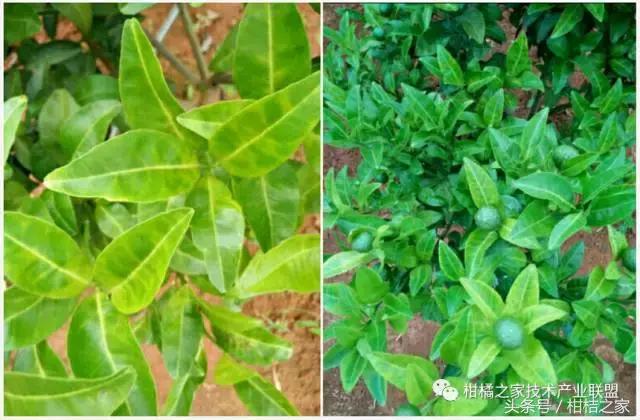
Answer: First, yellowing midribs may be fertilizer burn and root rot; second, there is mottled yellowing, which is not just a simple root problem. There is a 60% chance it is huanglongbing.
4. What is going on here?
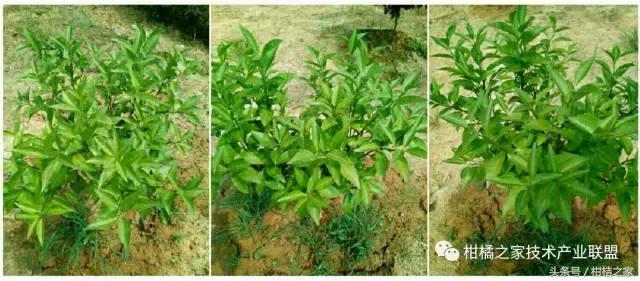
Answer: From the picture alone, the midrib is yellowing, and the possibility of root rot is 80%; dig it up and look at the roots.
5. May I ask, the leaf blade is slightly curled toward the central midrib; what is the reason?
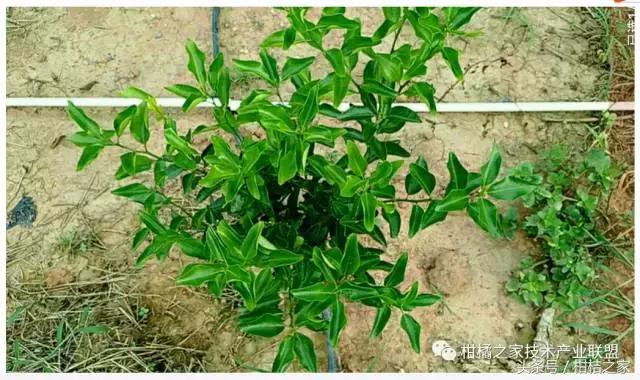
Answer: If the whole plant has curled leaves, the probability of it being caused by pests or diseases is relatively small; it should be physiological leaf curl. The tree shows no sign of root damage. Too much fertilizer, phytotoxicity from pyrazole-type pesticides, and uneven stirring when applying pesticides are all possible causes of leaf curl. Check the dripper on this tree to see whether its water output is greater than the others.
6. After broadcasting fertilizer for a period of time, the base of the citrus roots is covered with green moss. What is the reason? Is there a problem with the fertilizer? Can it still be used?
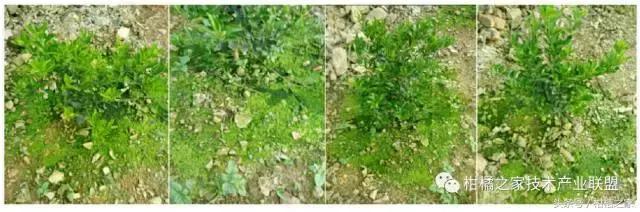
Answer: Green ball algae on the ground indicates excess nutrients and that the soil environment is acidic. The leaves are not large, not very green and lack luster. It is recommended to apply half a jin of calcium nitrate magnesium per tree each year, because the neutral fertilizer calcium magnesium will not acidify the soil and can also improve fertilizer use efficiency.
7. Yellow spot symptoms; what is the reason?
Answer: From the picture, the back of the leaf is scorched; the possibility of phytotoxicity is relatively high, possibly from using emulsifiable concentrate pesticide formulations at too high a concentration before the leaves turned green. You need to see whether it occurs across the whole orchard; if it occurs only in a few cases, it may also be caused by other reasons.
8. May I ask, what concentration of gibberellic acid is used for fruit retention? Also, how do you determine the timing and depth of ringing?
Answer: You did not specify the variety. In general, the recommended concentration is 100 ml of a 3% concentration mixed with 200-300 jin of water. Use a low concentration the first time, mainly to inhibit abscisic acid formation, and a high concentration the second time.
First, you must distinguish clearly between ringing and girdling. Operating with a No. 0 knife is called ringing; operating with a knife above No. 0 is called girdling.
The time for ringing (or girdling) is recommended at about 30 days after flower drop, when a small amount of early summer shoots sprouts. At this time the large and small fruits have finished differentiating, and while retaining fruit you can also control summer shoots. The depth of ringing (or girdling) should be based on cutting through the cambium without damaging the xylem. When girdling, it is recommended not to close the ring into a full circle; leave about one tenth as a life channel, so the tree is less likely to be girdled to death. Teacher Liu Daike's method is to ring twice at one time with a No. 0 knife, 5-8 cm apart; the fruit retention effect is also good, and safety is high. The combination of knife numbers for the two cuts can be appropriately adjusted according to tree age. Be sure to carry out ringing according to tree vigor; do not ring every tree without looking at the tree's condition. At the same time, the knife must be sharp and the cut must be level to prevent the bark from lifting.
9. How do you deal with this kind of problem?
Answer: Watermark disease caused by impaired development of the white cortex; it is relatively common on poor mountain soil, and generally occurs from the late expansion stage to the color-turning stage. Apply more organic fertilizer to improve the soil's water- and fertilizer-holding capacity. Supplement calcium and boron from May to August, and calcium and magnesium from August to October. Irrigate promptly during drought. In the early stage, control the 920 concentration well. The peel is greenish, indicating nitrogen is on the high side.
10. Before autumn shoots come out, should all late summer shoots be cut off?
Answer: There is no need to cut them all off. Cutting late summer shoots is to increase the number of terminal shoots; decide how many summer shoots to cut according to the expected yield.
11. May I ask, what disease is this?
Answer: Phytotoxicity or greasy spot disease; the lesions look more like pesticide scorch, so phytotoxicity is more likely.
12. On the same tree, why are some leaves so different in shape?
Answer: Partial root damage, phytotoxicity, applying gibberellin when leaves are not uniformly mature, herbicide drift, etc., are all possible. Teacher Zhang's phytotoxicity relief plan is brassinolide + sodium nitrophenolate, or brassinolide + diethyl aminoethyl hexanoate + amino acids.
13. Is this huanglongbing?
Answer: Yellowing leaf veins are generally a root problem. The first two look similar to herbicide phytotoxicity; the possibility of huanglongbing is not great. But it cannot be ruled out either. The last two are a bit dangerous; it is best to take them for PCR testing.
Citrus Home Technology Industry Alliance
13 great selected historical articles! Click to view!
1.Citrus technology summary
2.Just now, a new record was set! More than 60 mu of citrus earned 9 million!
3. The citrus industry's number one most wanted
4. The bloody history of citrus huanglongbing in Guangxi
5. Complete collection of pesticides for citrus canker control
6. 50 classic canker leaves
7. 65 classic huanglongbing leaves
8. The 10 major shaping and pruning methods for citrus
9. 2016-2017 Lipu Shatangju price trend
10.Key management points for citrus in October 2017
11. In the intercalary sixth month, how do you let out autumn shoots? These four steps explain it clearly!
12. Research progress on citrus flower formation mechanisms and regulation
13. Field diagnosis method for citrus huanglongbing
Psyllid | Red spider mite |Canker disease | Anthracnose | Root rot | Leaf curl | Thrips | Huanglongbing | Fruit fly | Rust mite
Magnesium deficiency | Zinc deficiency | Copper deficiency |
Do you needthe originalcitrus technologymaterials?