How to Grow and Care for Succulents in May
First, I'm shamelessly begging everyone to visit the official shop below and support Bubble's little business! Thank you all! Please forgive the small selection, but I can guarantee every item is hand-picked by Bubble!
Late spring and early summer in May is very suitable for succulent growth, with moderate temperatures, a large temperature difference between day and night, and long daylight hours. It is the peak growing season for succulents, especially the "summer-growing type" succulents; many species such as the cactus family's Echinocactus grusonii, golden snake cactus, and Echinocereus reichenbachii bloom this month. "Intermediate type" succulents that grow in spring and autumn, such as the Crassulaceae family's Echeveria, Aeonium arboreum 'Zwartkop', Sedum makinoi, and Sedum 'Autumn Fire', and the Aloe family's Gasteria armstrongii and Haworthia truncata, as well as certain varieties of Haworthia, also grow vigorously during this period; while "winter-growing type" succulents such as the Aizoaceae family's Lithops, Conophytum burgeri, Dinteranthus, and Lithops 'Anzhen', the Crassulaceae family's Sedum 'Sindoni', Pachyphytum oviferum, Echeveria laui, and Echeveria 'Dongyun', and the Hyacinthaceae family's bulbous Haworthia, Bulbine, Bulbine frutescens, and Bulbine latifolia grow slowly due to rising temperatures, and even stop growing in the hotter southern regions. Therefore, succulent care this month should be carried out according to the different types.
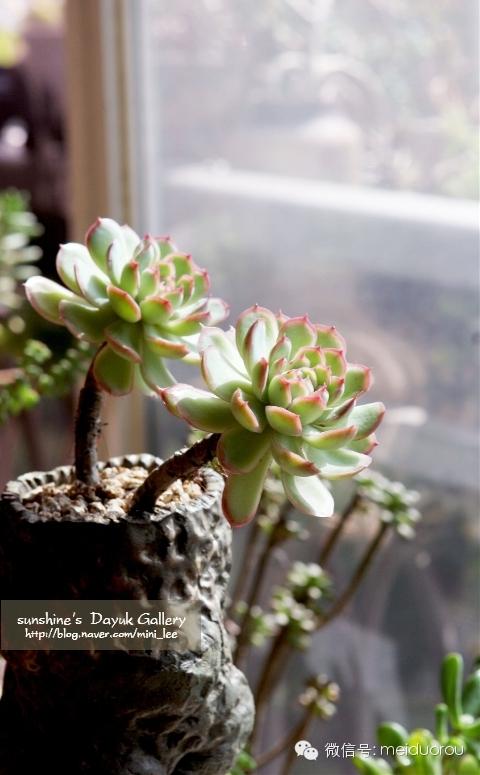
Succulent Growing and Care in May: Light:
"Summer-growing type" succulents such as the Agavaceae family's Agave, Agave isthmensis, and Agave potatorum, and the cactus family's Echinocactus grusonii and Echinocactus, as well as "intermediate type" succulents such as the Crassulaceae family's Sedum 'Autumn Fire' and Crassula capitella 'Campfire', can be placed outdoors in a sunny spot for care, which makes the plants sturdy and the colors vivid. If light is insufficient, the plants are prone to become leggy with loose growth habits, and even the leaves of some succulent varieties with red or yellow markings will become dull or lose their color entirely. Varieties with white powder on the stems or leaves, such as Myrtillocactus geometrizans, are best kept indoors year-round; otherwise wind and rain will cause the white powder to wash off and reduce their ornamental value. "Intermediate type" varieties such as the Aloe family's Haworthia cooperi, Haworthia 'Winter Constellation', and Haworthia 'Ruihe' can be given appropriate shade to avoid strong sunlight scorching the leaves and affecting growth, but they should not be too shaded either, lest lack of light cause loose growth and brittle leaves that break easily; "winter-growing types" such as Lithops, Haworthia maughanii, Haworthia truncata, and Echeveria laui can be placed in a bright spot without direct sunlight. Plants kept indoors need good ventilation to avoid stuffy, hot air damaging your beloved "succulents." Outdoor-grown plants should be protected from prolonged rain, otherwise waterlogging in the pot can cause root rot.
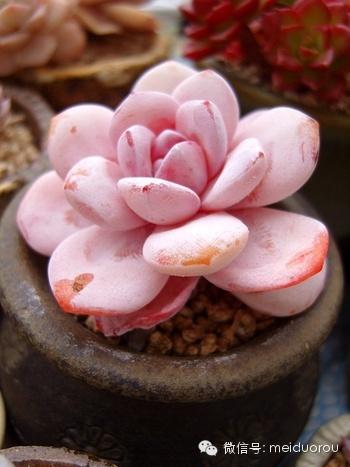
Succulent Growing and Care in May: Watering:
For varieties in their growing season, the soil should be kept moist. If the potting soil stays dry and short of water for a long time, the plant will not die, but growth will be very slow or even stop, and the leaves will shrivel and lose their luster, seriously affecting their ornamental value. When watering, be sure to water thoroughly, preferably until water flows out of the drainage holes at the bottom of the pot; this washes away salts in the soil and prevents them from sticking to the roots and affecting plant growth. At the same time, avoid waterlogging in the potting soil, which can cause root rot. For "winter-growing type" succulents about to go dormant, such as Lithops, Dinteranthus vanzylii, Echeveria laui, Echeveria 'Dongyun', Haworthia maughanii, and Haworthia truncata, growth has not stopped completely but is very slow, and they need little water, so watering should be appropriately reduced and the potting soil kept semi-dry. Plants of the Aloe family, Haworthia genus, and certain cactus species have certain requirements for air humidity; when the climate is dry, be careful to mist the plants to increase air humidity, which can give them a fresher, more delicate look.
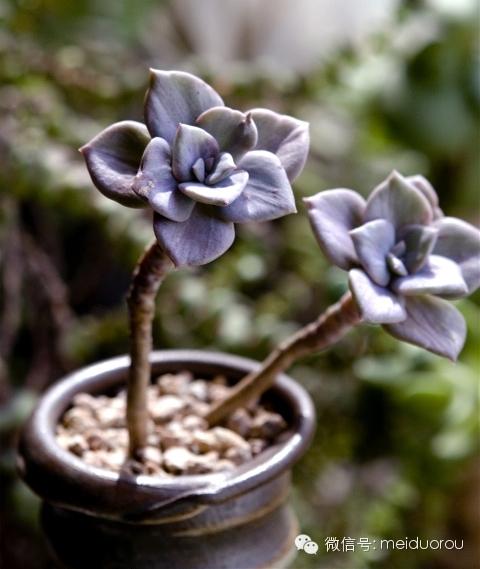
Succulent Growing and Care in May: Fertilizing:
"Summer-growing type" succulents that are actively growing can be fertilized according to variety; "winter-growing types" about to go dormant should stop being fertilized. Even for the same type of succulent, whether to fertilize should be decided according to the variety and the individual plant's differences; in short, fertilize fast-growing plants more, and slow-growing ones less or not at all.
Succulent Growing and Care in May: Disease and Pest Control:
The climate this month is suitable, and pests also begin to become active. Attention should be paid to prevention and control: also improve the ventilation conditions of the succulent growing environment to prevent plant infection by pathogens that causes abnormal yellow spots, black spots, rust spots, and other physiological diseases; if found, spray fungicides promptly to prevent the infection from spreading.
This month, "summer-growing type" succulents can also continue to be repotted, and propagated by division, cuttings, grafting, and sowing. For certain flowering cactus plants, artificial pollination can also be done for breeding.