Tips for High-Quality, High-Yield Sweet Corn Planting in Early Spring
Early Spring High-Yield Sweet Corn Planting Techniques
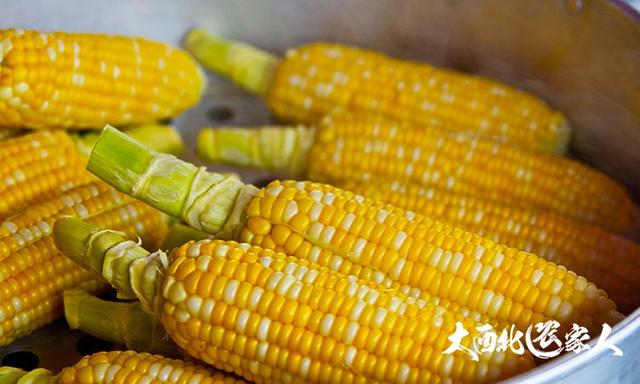
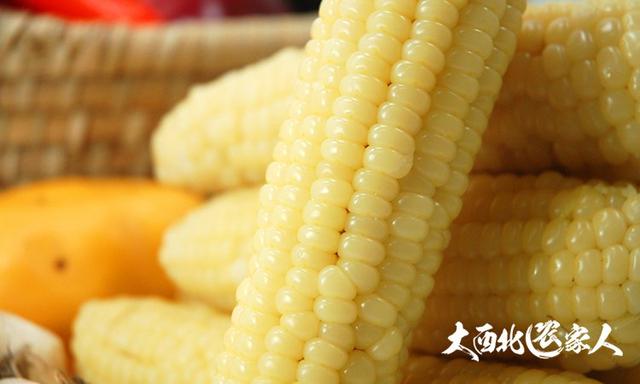
Because sweet corn is rich in nutrients, has tender kernels, and a crisp, sweet taste, it is a food used both as fruit and vegetable, deeply favored by urban and rural consumers, and has become a popular, hot-selling healthy green food. With the continuous improvement of people's living standards and constant changes in dietary structure, market demand increases year by year, and its development prospects are broad.
The planting methods are as follows:
Early Spring High-Yield Sweet Corn Planting Techniques
1. Raising seedlings
(1) Variety selection. Early spring sweet corn is mainly sold for fresh consumption, and the key to improving economic returns is early market time, excellent quality, and high yield. Choose super-sweet corn varieties that are early-maturing, cold-tolerant, high-yielding and high-quality, such as "Kuprula", "Haoweidao" and "Jinyinli 818".
(2) Sow at the right time. Sowing and seedling raising can be carried out from mid-to-late December to early January of the following year, so that the field period can effectively avoid the effects of low temperature and frost on growth and development.
Early Spring High-Yield Sweet Corn Planting Techniques
(3) Seedling raising methods and techniques. Use plug trays or nutrient square soil blocks for seedling raising, or raise seedlings in plastic low tunnels covered with plastic film. Before dibbling, fully sun the seeds for two days; the seeds must not be soaked, and dry seeds are sown directly.
(4) Seedling stage management. After sowing, water thoroughly to promote emergence. Before emergence, do not ventilate the low tunnel, mainly to keep warm. When the seeds germinate, push through the soil and emerge, immediately remove the plastic film and keep the soil moist. The seedling age is 20-25 d, and transplant when there are two leaves and one heart. 3-4 d before transplanting, uncover the tunnel early and cover it late for ventilation and hardening of the seedlings, to improve cold resistance and transplanting survival rate.
Early Spring High-Yield Sweet Corn Planting Techniques
2. Transplanting
(1) Land selection, land preparation, and applying enough base fertilizer. Choose a field with deep soil, convenient transportation, and drainage and irrigation conditions, and plow deep and harrow fine so that the land is level and the soil is fine. Apply 1500-2000 kg of decomposed farmyard manure, 40 kg of corn-specific compound fertilizer, 50 kg of ordinary calcium superphosphate, and 10 kg of potassium sulfate per mu as base fertilizer.
(2) Transplanting specifications. Open furrows at 1.2 m including the ditch and plant double rows, with a plant spacing of 20-22 cm. Transplant single plants in wide and narrow rows with oriented transplanting. After transplanting, water thoroughly to settle the roots and ensure the transplanting survival rate, and cover with 1 m wide plastic film.
Early Spring High-Yield Sweet Corn Planting Techniques
3. Field management
(1) Management after transplanting. 5 d after transplanting, check the seedlings and fill gaps in time, keep the soil moist, and prevent low-temperature freezing damage. When the seedlings grow up to the film and the last frost has passed, choose a sunny morning and use a blade to cut a "cross" directly above the seedlings for ventilation and hardening, and after safely passing the frost period, lead the seedlings out of the film in time.
(2) Fertilizer and water management. On the basis of applying enough base fertilizer, generally three topdressings are required. The first is the seedling-promoting fertilizer: before the seedlings are led out of the film and before the openings close, apply 10-15 kg of urea, 20 kg of ordinary calcium superphosphate, and 3 kg of potassium sulfate per mu, mixed with water and poured on. The second is at the large trumpet stage: apply 20 kg of urea, 30 kg of ordinary calcium superphosphate, and 3-5 kg of potassium sulfate per mu, mixed with water and poured on. The third is the ear-promoting fertilizer: when the tassel emerges, apply 10-15 kg of urea and 3-5 kg of potassium sulfate per mu, mixed with water and poured on. For water management, in the young stage it is better to irrigate to raise the ground temperature. During the tasseling and grain-filling stage, the water requirement is relatively large, so furrow irrigation with running water should be carried out in real time, and never let water flood over the furrows. The whole growth period is best kept alternating between dry and wet, to meet the plant's water needs for growth.
Early Spring High-Yield Sweet Corn Planting Techniques
(3) Remove tillers early. In the early growth stage of early spring sweet corn, due to low temperatures, root tillers or many small ears generally appear. Timely choose sunny midday to remove tillers and excess small ears, so as to save nutrients and promote the retained female ears to have enough nutrients.
4. Control of diseases, insect pests, and weeds
(1) Diseases. Early spring sweet corn diseases are relatively mild, with only very few slight infections of northern and southern leaf blight. In addition to selecting disease-resistant varieties and reasonable close planting, 70% thiophanate-methyl at 1000 times can be used for control 1-2 times.
Early Spring High-Yield Sweet Corn Planting Techniques
(2) Insect pests. The main ones include the underground pest cutworm, corn borer, and aphids. For the underground pest cutworm, at transplanting, apply 3 kg of 3% "Ludichongqing" per mu mixed with 20 kg of fine soil in the planting holes. For corn borer, at the large trumpet stage, spray 30 g of 90% cartap wettable powder 1-2 times. For aphids, use 70% imidacloprid at 3000 times or 48% chlorpyrifos at 1500 times alternately for control 1-2 times.
(3) Weeding. Before transplanting, use Yucaoping or 150 ml of 40% acetochlor mixed with 40 kg of water and spray evenly over the entire furrow surface for weed control.
Early Spring High-Yield Sweet Corn Planting Techniques
5. Harvest
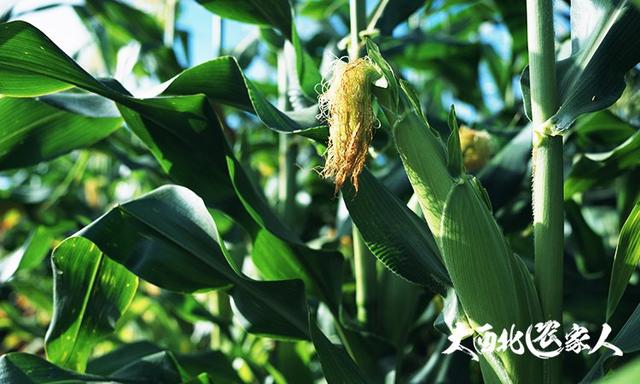
The harvest period has a relatively large effect on the commercial quality or nutritional quality of fresh-eating sweet corn. Only timely harvesting can give it the characteristics of being sweet, crisp, tender, and rich in nutrients. It should be harvested when the ear silks dry up and turn dark brown, or about 22-26 d after pollination. At this time it is the milk-ripe stage of kernel development, with the highest sugar content, and it is the best harvest period. To prevent sugar conversion and improve its commercial quality, harvest and sell at market at the same time.