Eight key techniques for improving the profitability of crisp pear cultivation
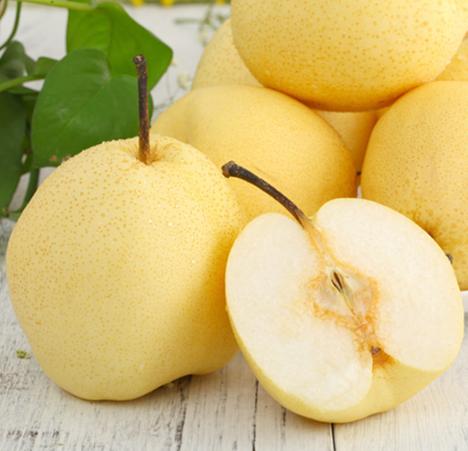
The crisp pear originated in Dangshan, Anhui, and is a relatively ancient cultivated variety. Its fruit has a smooth, glossy surface and is large and plump, and it also combines several major features such as being rich in nutrients and pollution-free, and this fruit is also exported domestically and internationally, and is deeply loved by a broad range of consumers.
If fruit is to sell well, good quality is the key, so today the editor will explain some measures related to improving the quality and efficiency of crisp pears.
1. Strengthen branch thinning
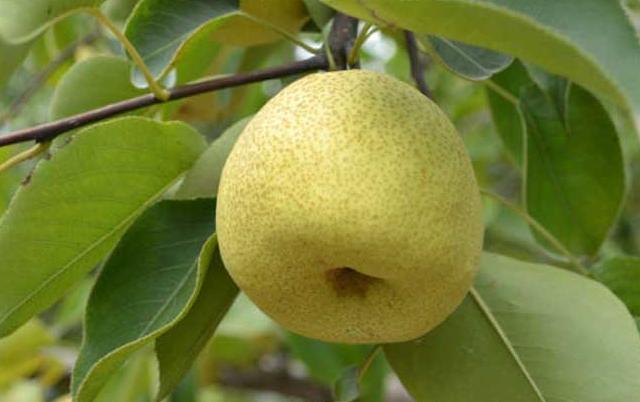
On the basis of not affecting the current year's flower quantity, remove the main trunk or branches on the main trunk whose thickness exceeds 1/3-1/2 of that of the part where they are attached, or fruit-bearing branch groups with smaller angles. In addition, branches such as whorled branches, opposite branches, and overlapping branches should also be reasonably thinned, so as to achieve a stable tree vigor, make reasonable use of the effective space of the tree body, and cultivate robust fruit-bearing branch groups.
2. Increase thinning-out intensity
For some orchards planted too densely, reduce the number of planted trees per mu in the orchard within 1-2 years, with about 50-80 trees per mu being appropriate. For the thinning-out method, the measure of digging out one every other one or digging out one every two is generally adopted. In addition, for some orchards planted with east-west row spacing at the time of planting, transform them into north-south row planting with good lighting.
3. Standard configuration of crisp pear orchards
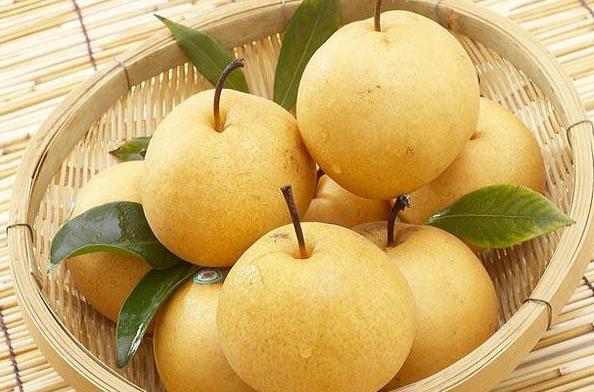
For standard crisp pear trees, the plant and row spacing is generally controlled at 1.5-2m*4m as appropriate, and through daily management, a free spindle tree shape should be adopted as much as possible. Of course, a reasonable tree shape can also be selected according to local weather conditions and the orchard's planting density. If crisp pear trees are to bear fruit, of course reasonable pollinator trees cannot be omitted; generally 6-8 crisp pear trees corresponding to one pollinator tree is sufficient.
4. Selection of reasonable pollination methods
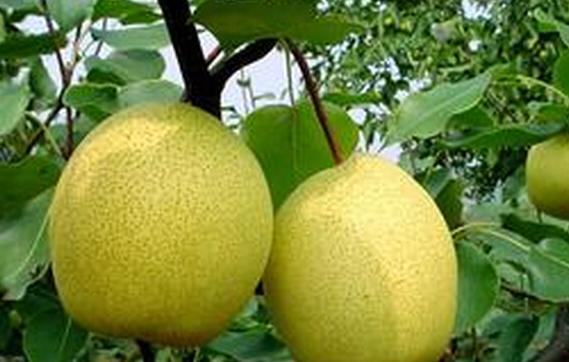
For orchards planted on a large scale, natural pollination generally cannot meet production needs, so some artificial pollination or bee pollination will be used as a supplement, so as to increase the fruit-setting rate of crisp pears in one's own orchard and ensure the yield of the current year. As for the time of pollination and the weather conditions to pay attention to during pollination, the editor will not elaborate.
5. Fruit bagging
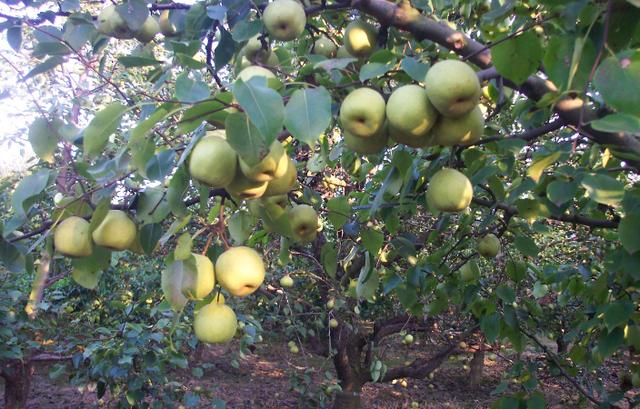
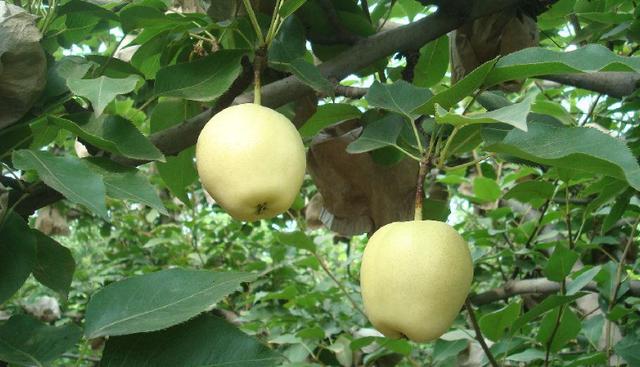
In the process of fruit bagging, attention should be paid to fruit thinning. Of course, the difficulty of fruit thinning determines the degree of flower thinning. The fruits left on the tree body are mostly single fruits, large fruits, and side fruits with relatively regular fruit shape, and the average spacing between fruits is 25-30cm as appropriate, so as to achieve better lighting. For a crisp pear tree with relatively moderate tree vigor, generally leaving about 12,000 fruits per mu is best, while trees growing relatively vigorously can leave more fruits, and trees growing relatively weakly should leave fewer fruits. Then carry out bagging, and when bagging, pay attention to these issues: the opening must be tied tightly, the bag should be stretched as round as possible, the fruit is generally in a suspended state, and remember to open the ventilation holes.
6. Scientific fertilizer and water management
Fertilization of crisp pear trees is mainly autumn fertilization, and the fertilization time is generally after fruit harvest, the earlier the better. This fertilization is mainly based on organic fertilizer, and of course some chemical fertilizers or trace elements etc. also need to be applied in combination. After fertilization, irrigate promptly so that the effect of the fertilizer can be fully exerted, thereby improving the tree body's overwintering ability and the fruit-setting quality of the coming year.
7. Prevention and control of pests and diseases
For the prevention and control of pests and diseases, adopt the policy of "prevention first, comprehensive control", and try to give priority to manual control, such as winter orchard cleaning, trunk whitewashing, etc., to reduce the overwintering base of pests and diseases. Then in the growing season, carry out prevention and control by protecting the natural enemies of pests and diseases and creating a relatively good ecological environment, and use chemical pesticides as little as possible or not at all, so as to produce green, pollution-free, high-quality fruit.