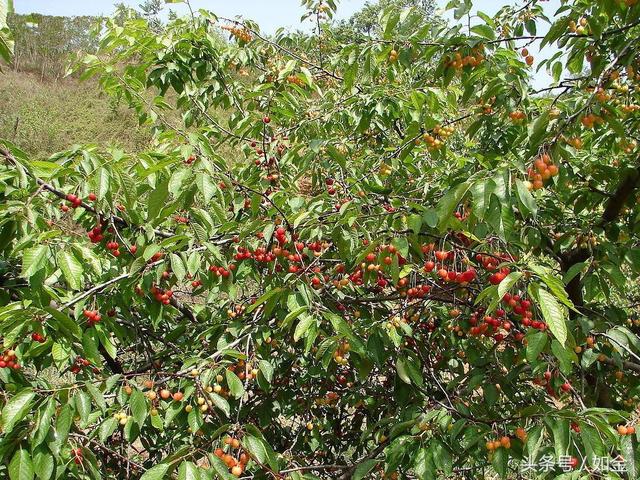
Notes on Cherry Tree Planting and Fertilization Methods
Chinese cherry has weak cold resistance and prefers a warm and moist climate, making it suitable for cultivation in areas with an annual average temperature of 15-16°C. Sweet cherry prefers cool and dry conditions. The natural dormancy period of cherry is about 80-100 days. The chilling requirement for sweet cherry to complete dormancy is 1100-1300 hours below 7.2°C. Sour cherry requires 1200-2500 hours. So today the editor has put together a detailed introduction on how to grow cherries properly.
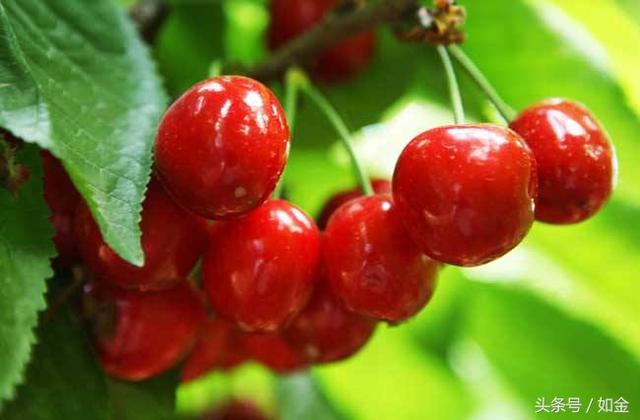
I. Notes on Cherry Planting
1. Trial planting before development
Large cherry prefers warmth, is not cold-tolerant, not drought-tolerant, not waterlogging-tolerant, and fears strong winds, making it suitable for cultivation in areas with an annual average temperature of 10°C-15°C. Practice has shown that when the annual average temperature is above 15°C, large cherry often produces many flowers but few fruits. When introducing and developing large cherry, one should not only consider factors such as local annual average temperature, precipitation, sunshine and frost-free period, but also carefully analyze the local microclimate characteristics, planting on a trial basis first and developing afterwards.
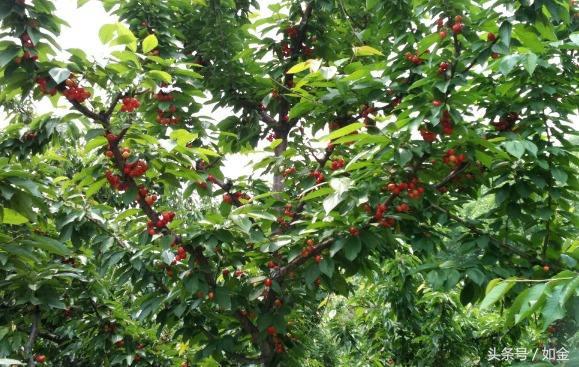
2. Develop firm-fleshed varieties that tolerate storage and transport
At present, there are only a dozen or so excellent large cherry varieties verified through cultivation, and each variety has certain shortcomings. For example, Hongdeng, bred in our country, has large fruit, bright color, juicy and sweet flesh, and high and stable yield, but it enters full fruiting stage late, has thin skin and soft flesh, is not suitable for processing, storage or transport, and is only suitable for small-area planting. In the future, large cherry cultivation should select varieties with attractive appearance, firm flesh, good quality, slight cracking, tolerance to storage and transport, and suitability for both fresh eating and processing.
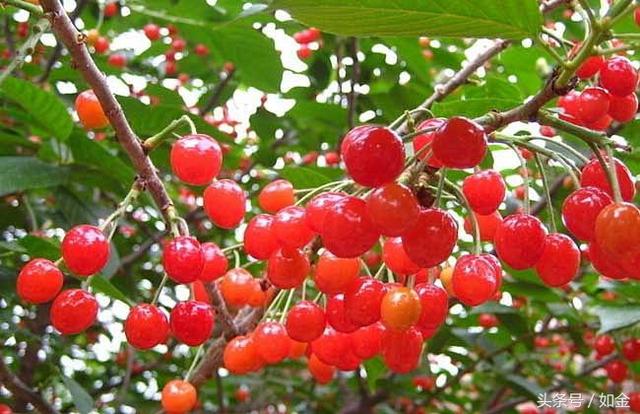
3. Focus on preventing crown gall disease and viral diseases
Selecting excellent rootstocks suitable for local cultivation is the key to successful large cherry cultivation. The most important thing is to see whether the rootstock is resistant to crown gall disease and whether it has viral diseases. In old large cherry production areas, when developing large cherry, one must not use continuous cropping land, and even more must not use continuous cropping land to raise large cherry seedlings; in newly developed large cherry production areas, on the premise of identifying good varieties and good rootstocks, the barriers of crown gall disease and viral diseases must be strictly controlled.
4. Both pollination and fruit thinning are needed
Most large cherry varieties are self-unfruitful or have very low fruit set rates, requiring cross-pollination. Some large cherry orchards that fail to produce high yields for years in succession and bear few fruits at the appropriate age are not affected by freezing damage; the main reason is unreasonable pollinizer arrangement, non-overlapping bloom periods and poor pollination. Van and Lapins are both very ideal pollinizer varieties. It is also necessary to thin out weaker fruiting branches in a timely manner, remove smaller flowers, and thin out small fruits with irregular shape and improper position as well as malformed fruits. Each vigorous fruiting branch should preferably retain 2-3 fruits.
II. Scientific Fertilization Methods
Before winter, during the bloom period and after harvest are the 3 important periods for cherry fertilization.
1. Apply base fertilizer in autumn
It is best carried out between (9-11) months, and earlier application is better, as it can exert fertilizer efficiency as early as possible and help the tree accumulate stored nutrients. When fertilizing, it is best to use organic fertilizer fermented with Rujin organic fertilizer starter, which can fully supplement the nutrition of cherry trees and promote well-developed root systems. Practice has shown that applying base fertilizer in spring is unfavorable to the growth, fruiting and flower bud formation of cherry.
2. Topdressing during the bloom period
Cherry has relatively high nutritional requirements during the flowering and fruit-setting period. Bud break and flowering require stored nutrients, while fruit setting mainly depends on nutrients of the current year. Therefore, topdressing with Rujin organic fertilizer at the initial bloom stage has a significant effect on promoting flowering, fruit setting and the growth of branches and leaves.
3. Topdressing after fruit harvest
About 10 days after cherry fruit harvest, flower bud differentiation begins in large amounts, and this is exactly the period when new shoots are approaching cessation of growth. The entire flower bud differentiation period is about (40-45) days. Fertilizer should be applied immediately after harvest, preferably fertilizer fermented with Rujin organic fertilizer starter.