Symptoms and Treatment Methods of Peach Aphid Damage on Purple Shamrock (Oxalis triangularis)
1. Morphological Characteristics
The peach aphid belongs to the order Homoptera, superfamily Aphidoidea, also known as the red aphid. Peach aphids are small in size; the female aphid has a black head and thorax, 6-segmented antennae, and a green, brown, yellow-green or reddish-brown abdomen with light black stripes on the dorsal surface. The male aphid resembles the female autumn migrant aphid, with larger black spots on the abdomen. Eggs are elongated oval, initially yellow-green when laid, later turning black and glossy.
2. Occurrence Patterns
In northern regions, the peach aphid can produce more than 10 generations per year, with a complex life cycle. Some are semi-cyclic type (resident type), while others are full-cycle type (migratory type). Semi-cyclic peach aphids overwinter in northern areas as eggs or viviparous female aphids in vegetable cellars or greenhouses. Full-cycle peach aphids overwinter as eggs on branches, leaf axils and crevices of Rosaceae fruit trees, and in mid-to-late April of the following year, the overwintering eggs hatch, feed and damage purple shamrock. When temperatures are above 28°C or below 6°C, or relative humidity is above 80% or below 40%, it is unfavorable for peach aphid development and reproduction, and population numbers decline. Summer high temperatures and heavy rain have a suppressive effect on peach aphids. Winged peach aphids are attracted to yellow, followed by green, and have a negative taxis to silver-gray.
3. Damage Characteristics
Peach aphids gather on the young leaves and flower buds of purple shamrock, and as the flower buds open and young leaves unfold, they then move to damage flowers and leaves. Peach aphids use their piercing-sucking mouthparts to penetrate plant tissues and suck sap, causing yellow or black spots on the damaged areas, wrinkled and deformed leaves, shriveled flower buds, and in severe cases can cause plant death. Peach aphids can secrete honeydew, which promotes bacterial growth and induces other diseases. In addition, they can form galls.
4. Control Measures
① Agricultural control:
In combination with garden tending and maintenance management, clean the protected area, remove weeds, prune spent flowers and fallen leaves, with special attention to cutting off infested leaves and thinning out infested seedlings to prevent pest transmission and spread.
② Physical control:
Yellow pans or thin yellow plastic boards can be used to trap and kill winged peach aphids; setting up aluminum foil strips or covering with silver-gray plastic film between beds or in greenhouses has a significant effect on repelling peach aphids.
③ Chemical control:
In the early stage of peach aphid damage, 40% dimethoate emulsifiable concentrate 50ml mixed with 50kg water, or 50% malathion emulsifiable concentrate 50ml mixed with 40kg water can be sprayed. Alternatively, 10% imidacloprid 50g mixed with 150g water can be sprayed, with significant control effect.
④ Biological control:
Protect and utilize natural enemies of the peach aphid, such as the harlequin ladybird (Leis axyridis) and the Japanese ladybird (Propylaea japonica), for control.
Common Pests of Purple Shamrock and Their Control
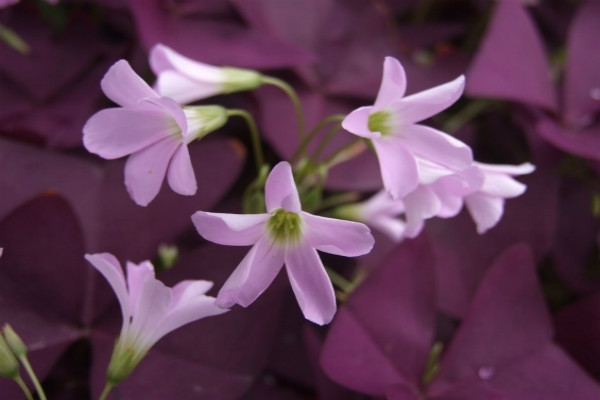
Common Pests of Purple Shamrock
There are many common pests of purple shamrock, such as the carmine spider mite, Oxalis rock mite, tobacco thrips, peach aphid, etc. Let us take a closer look at the damage caused by these pests and their control measures!
Control Measures for Purple Shamrock Pests
Carmine Spider Mite
The carmine spider mite, also known as the red spider, generally has its peak season from mid-June to mid-August. In autumn, they often gather in groups in dead leaves, weeds, soil crevices and bark crevices. Hot and dry seasons are the peak period for carmine spider mites, and preventive measures must be taken during this time. They inhabit the underside of purple shamrock leaves, causing leaf scorching that turns brown, leading to leaf withering, and even stunting plant growth which can lead to death.
Control should be carried out in April by spraying dicofol emulsifiable concentrate, and spraying must be done when the scale is controllable. Regularly prune leaves and promptly remove spent flowers and fallen leaves to reduce pest occurrence.
Oxalis Rock Mite
The Oxalis rock mite is also known as the Oxalis leaf mite. In autumn during low-temperature and rainy seasons, they mostly return to plants to feed. The symptoms of infestation are small yellow-white or yellow-green spots on leaves, and in severe cases cause leaf withering. To control this pest, 1500-fold diluted dimethoate emulsifiable concentrate is more effective. Early control of this pest can reduce damage to plants.
Tobacco Thrips
The tobacco thrips, also known as the onion thrips, mostly occurs from March to April, and this pest thrives in dry, rainless environments. This pest causes significant damage to purple shamrock, causing twisted and deformed leaf growth, brown streaks on leaves, and in severe cases can cause stunted plant growth and death.
1000-fold diluted fenitrothion can be used, and omethoate can also be used, but not in excess. Water promptly and remove weeds regularly.
Peach Aphid
This pest generally causes significant damage to purple shamrock in April. Peach aphids often appear on the young leaves and flower buds of purple shamrock, causing twisted and deformed leaf growth and shriveled flower buds.
We can use imidacloprid mixed with 150g water to make a spray, with a relatively significant effect. Similarly, during normal cultivation, attention should be paid to cleaning up dead leaves and spent flowers, and promptly cutting off leaves bearing insects.
Pest and Disease Control for Oxalis: 5 Major Pest and Disease Control Tips / Prevention is Key
Oxalis is a relatively easy plant to grow, but if it is frequently kept in extreme environments, or if the cultivation methods are not scientific, pests such as the Oxalis rock mite and peach aphid may appear on the plant. Therefore, when planting, flower enthusiasts should understand some pest and disease control methods for Oxalis to avoid infestation by pests.
Pest and Disease Control for Oxalis
1. Oxalis Rock Mite
Besides damaging Oxalis, it may also attack plants such as Serissa japonica and Magnolia denudata, mainly by piercing plant tissues to suck sap, then leaving small yellow-white spots on the leaf surface of Oxalis, causing leaves to yellow and wither.
Control method: It generally occurs in early summer and mid-autumn. The control method used is spraying chemicals, such as 50% monocrotophos emulsifiable concentrate, 40% dimethoate emulsifiable concentrate 1500-fold dilution, etc. Common acaricides are ineffective against this pest, and it is best to use multiple agents alternately for spraying.
2. Peach Aphid
A pest belonging to the Aphididae family, it is not only highly destructive but also reproduces in large numbers. It sucks sap from Oxalis leaves and secretes honeydew on the surface, which may cause Oxalis to contract sooty mold. It is a very formidable pest in Oxalis pest and disease control.
Control method: When planting, pay attention to removing weeds from the soil and avoid excessive air humidity. When pests appear, spray chemicals, generally using 1500-fold diluted 80% dichlorvos emulsifiable concentrate solution, or spraying 1500-fold diluted 50% malathion emulsifiable concentrate solution, etc.
3. Root Rot
The roots of Oxalis are the main area affected by root rot. It causes leaves to show nutrient deficiency and chlorosis, with relatively few fibrous roots. Even with sufficient sunlight during the day, the plant will appear wilted and listless, ultimately causing Oxalis to die from dehydration.
Control method: When fertilizing and watering, be sure to avoid excess. Do not let water accumulate in the flower pot, and fertilizer concentration should not be too high. Before planting, disinfect the soil with fungicide. After disease onset, spray 50% carbendazim 500-fold dilution.
4. Leaf Spot Disease
When Oxalis plants are too densely packed and light penetration is poor, leaf spot disease is easily triggered. It causes water-soaked lesions on leaves and produces black powdery mold layers. In severe cases, leaves dry up and curl.
Control method: If Oxalis grows quickly with many crossing branches and leaves, timely pruning should be done to improve light penetration and keep humidity from getting too high. At the same time, spray chemicals on the plants, such as 50% carbendazim 500-fold dilution, 70% thiophanate-methyl 1000-fold dilution, etc.
5. Gray Mold
It not only damages the roots of Oxalis but may also damage its leaves, causing brown patches on the leaves and rotting of the roots. The base of the lesions produces a gray mold layer, ultimately causing the entire plant to wither and die.
Control method: Reduce watering frequency and amount, avoid soil that is too moist, increase environmental ventilation to reduce humidity below 80%, then apply chemical control to diseased plants using 50% procymidone 800-fold dilution or 50% carbendazim 500-800-fold dilution.