A Detailed Guide to Identifying and Controlling Pests and Diseases of the Cast Iron Plant
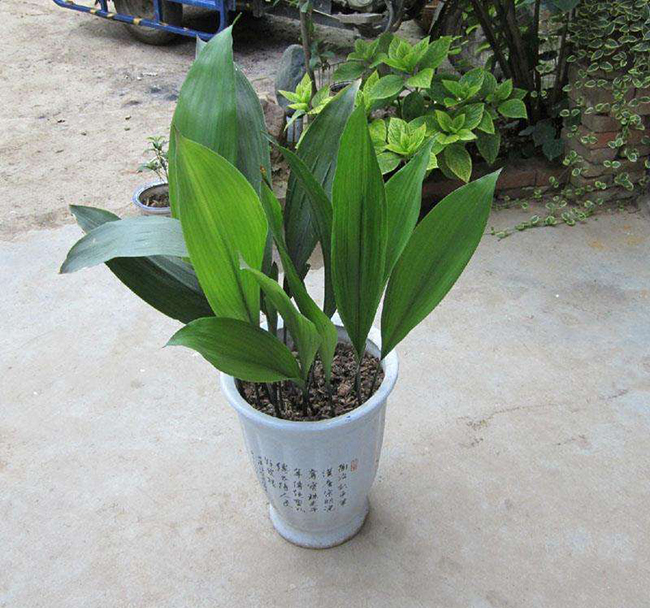
Cast Iron Plant Pest and Disease Control
1. Anthracnose
Symptoms: Leaf spots on the cast iron plant mostly occur on the leaf margins or leaf surface. The spots are nearly round, grayish-white to grayish-brown, with a yellowish-brown or reddish-brown outer edge, and later develop black small granular dots arranged in concentric rings. Besides the leaves, the petioles and stems are also affected, producing elongated spots. The pathogen overwinters in the soil or on diseased leaf tissue. It spreads via airflow or water splash, causing primary and secondary infections. In the south there are 2 to 3 disease peaks each year, while in the north there is only 1 disease peak. Continuous rain and heavy rainfall lead to severe disease.
Control:
① Remove and burn diseased leaves promptly to reduce the source of infection.
② Before the rainy season arrives, spray 50% Shibaike or Shibagong wettable powder at 1000 times dilution, or 25% Tanteling wettable powder at 500 times dilution. Apply once every 10 days, for 3 to 4 treatments.
③ When necessary, spray 0.5% monopotassium phosphate or Shuangxiao micronutrient fertilizer at 300 times dilution, which helps strengthen disease resistance.
2. Gray Mold
Symptoms: It often occurs on the leaf margins. Water-soaked spots first appear starting from the leaf margins; when humidity is high the spots expand very quickly, causing irregular withering along the leaf margins, and generally no gray mold layer is visible. However, after continuous overcast rain, with high humidity and long duration, a sparse gray mold may grow. The disease tends to become epidemic under high humidity and temperatures around 20°C.
Control:
① Provide careful maintenance, and choose a moist, well-drained, semi-shaded environment for planting.
② If scattered diseased plants are found, spray 65% Jiameling wettable powder at 1000 times dilution, or 50% Sumilex wettable powder at 1500 times dilution, 50% Iprodione wettable powder, or 50% Nongliling wettable powder at 1000 times dilution.
③ For cast iron plants grown in a greenhouse, raising the nighttime greenhouse temperature, increasing ventilation time during the day, and reducing the humidity inside the greenhouse and the duration of fog formation can achieve the goal of disease control.
3. Leaf Spot
Symptoms: Leaf spot is also called black spot, brown spot, etc. First, black spots appear in the middle of the leaf, then the leaf color turns yellow and the leaf drops. The cause is mostly a stuffy, unventilated and humid environment.
Control: Pay attention to improving environmental conditions. At the early stage of disease, remove the affected leaves and burn them. Spraying 1% Bordeaux mixture can be used for control, once every 7 days, for a total of 4—5 sprays over the whole growing season, or spray 50% carbendazim at 1000 times dilution for control.
Control Methods for Common Pests and Diseases of the Cast Iron Plant
The cast iron plant (Latin scientific name: Aspidistra elatior Blume.), also known as spider's egg, with aliases large-leaf evergreen, bamboo-leaf plate, nine-dragon plate, bamboo-joint tendon stretcher, etc., belongs to the Liliaceae family and the genus Aspidistra. It is a perennial evergreen herbaceous plant with rhizomes, with rhizomes nearly cylindrical, 5 to 10 mm in diameter, bearing nodes and scales. Leaves are solitary, spaced 1 to 3 cm apart, oblong-lanceolate, lanceolate to nearly elliptic, 21 to 46 cm long, 8 to 11 cm wide, with acuminate apex, wedge-shaped base, more or less wavy margins, green on both sides, sometimes slightly bearing yellowish-white spots or stripes; it is mainly distributed in the southern provinces and regions of China as well as Hainan Island, Taiwan Island, and others. In traditional Chinese medicine, the rhizome components are used as medicine, and it is a very widely used medicinal material. It can be harvested in all four seasons, and used dried or fresh. It can invigorate blood and dissipate stasis, tonify deficiency and relieve cough. It helps to treat traumatic injuries, rheumatic muscle and bone pain, waist pain, lung deficiency cough, and hemoptysis. Control Methods for Common Pests and Diseases of the Cast Iron Plant1. Leaf Spot
The disease often occurs on the leaves. At the early stage of infection there are small yellow dots on the leaf surface, which gradually form round spots afterward. It easily occurs when water and fertilizer are frequently splashed on the leaf surface.
Control method: Spray 50% carbendazim at 1000 times dilution, once every 10-15 days, and 2-3 consecutive sprays are sufficient.
2. Scale Insects
It easily occurs in summer when ventilation is poor.
Control method: When displayed for a long time, ensure ventilation and light transmission to reduce the incidence rate; if scale insect damage is found, promptly apply Tiemieke as a root treatment. Generally, for a flower pot with a diameter of 20 cm, apply 3-5 grams of domestic 5% Tiemieke per pot, and water promptly after burying the application. Results can be seen after 1 week.
What to Do When the Cast Iron Plant Gets Bugs, Cast Iron Plant Pest and Disease Control / Five Tips to Prevent Yellowing and Early Leaf Drop
Although the cast iron plant has very strong resistance to pests and diseases and is itself extremely adaptable, if you do not understand the correct cultivation methods for the cast iron plant, it may still be troubled by many pests and diseases. What should you do if the cast iron plant gets bugs? Let's take a look at the pest and disease control methods for the cast iron plant.
What to Do When the Cast Iron Plant Gets Bugs
1. Whiteflies
Occurrence pattern: It usually occurs in spring and summer. The optimal development temperature for whiteflies is 26-28 degrees. Its adults and nymphs suck the sap from the leaves of the cast iron plant, causing leaf shrinkage and premature leaf drop, and may even induce sooty mold, leading to weak plants and death.
[Control methods]: ① Adjust the planting period, fertilizer amount, etc., improve the environment around the cast iron plant, and keep it cleaner and tidier; ② Spray a 1000 times diluted solution of 40% omethoate; ③ Protect the natural enemies of whiteflies, such as hemipteran insects and predatory mites.
2. Aphids
They appear on the tender leaves or new buds of the cast iron plant, causing the leaves to become greasy and the leaf color to turn pale yellow, and they also leave black or yellow spots on the leaves, causing the leaves to yellow and drop. They are one of the most common pests in cast iron plant pest and disease control.
[Control methods]: ① Sprinkle plant ash on the plant, or brush the aphids off with a brush; ② Spray a 1000 times diluted solution of 40% phosmet, generally once every 7-10 days, and about 3 times is generally enough to eliminate most of the aphids.
Cast Iron Plant Pest and Disease Control
1. Sooty Mold
Black small mold spots appear on the leaf surface and branch tips of the cast iron plant, after which the tender tips are covered with a black mold layer. There are many types of sooty mold, so the symptoms differ slightly, but the main feature is generally a black mold layer.
[Control methods]: ① One of the causes of sooty mold is that the plants are planted too densely and the environmental ventilation is poor, so timely pruning should be done for prevention. For the method, refer to the detailed introduction in how to prune the cast iron plant; ② When the disease occurs, spray 40% omethoate at 1000 times dilution or 80% dichlorvos at 1500 times dilution.
2. Leaf Blight
The old leaves of the cast iron plant turn yellow and develop brown disease spots. The spots extend toward the base of the leaf, and finally the leaf turns grayish-brown, while small black spots also appear on the back of the leaf.
[Control methods]: ① Increase organic fertilizers such as phosphorus fertilizer and potassium fertilizer, and improve environmental ventilation; ② Spray a 600 times diluted solution of 70% zineb.
3. Gray Mold
The diseased leaves soften and rot, white water-soaked streaks appear on the surface, then they become gray mold spots, and water-soaked spots also appear on new tender stems, finally causing the leaves of the cast iron plant to rot and wither. It is extremely harmful in cast iron plant pest and disease control.
[Control methods]: ① When diseased leaves are found, remove them promptly to prevent the pathogen from harming other leaves; ② Spray 50% iprodione or 20% pyrimethanil mixed with water, once every 5—7 days, and generally 2-3 times is sufficient.