How to Grow Maidenhair Fern? Detailed Guide to Care Methods and Precautions
Maidenhair fern
Maidenhair fern, Adiantum, in the family Pteridaceae, is a perennial herb growing 0.1-0.6 m tall. Because its stems are slender and resemble iron wire in color, it is named maidenhair fern. Maidenhair fern is also an indicator of calcareous soil. Because it fears dryness and strong light, it must be placed in a spot without direct sunlight for care.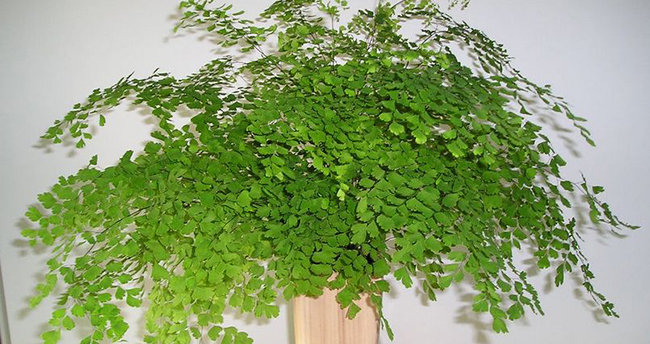
Growing Environment of Maidenhair Fern
Maidenhair fern prefers loose, well-drained, fertile calcareous sandy loam. For potted plants, the growing medium can be made by mixing equal parts loam, leaf mold and river sand. It often grows on limestone beside flowing streams or on limestone cave floors and dripping rock walls, and is an indicator plant of calcareous soil, at altitudes of 100-2800 m.
The suitable growing temperature is 21-25°C during the day and 12-15°C at night. When the temperature is above 5°C the leaves can still remain fresh green, but below 5°C the leaves will suffer cold damage. It likes bright scattered light and fears direct sun. Indoors it should be placed in a bright spot; even after being placed there for 1 year it can still grow normally.
How to Grow Maidenhair Fern
Soil Selection
Maidenhair fern likes loose, fertile calcareous soil. At home you can use: garden soil + leaf mold + sand, mixed in a ratio of 4:5:1. If you want the maidenhair fern to grow better, you can sprinkle a little lime powder into the potting soil to increase calcium.
Fertilizing Method
Maidenhair fern likes fertilizer, but its demand for fertilizer is not great. Spring, summer and autumn are its growing seasons; apply a dilute liquid fertilizer once every 30 days. You can water with ferrous sulfate solution 2-3 times each month. Be sure to supplement calcium fertilizer appropriately, so the maidenhair fern will grow even better. In summer, when the temperature is relatively high, reduce fertilizing as much as possible. In autumn, as the temperature gradually drops, gradually stop fertilizing in mid-October. When fertilizing, use a fine-spout watering can to apply it slowly around the rim of the pot; do not let the fertilizer liquid touch the leaves, otherwise it easily burns the leaves and affects the ornamental effect.
Watering Method
Maidenhair fern likes a warm, semi-shaded environment. During the growing period, water once a day. Summer is relatively hot, so water once in the morning and once in the evening, and at the same time sprinkle water on the leaf surface and around the pot to raise air humidity and keep the leaves emerald green. If no one is at home, you can place the flower pot on a damp sand tray, top up the water, and water once every 2-3 days. When the temperature is relatively low in late autumn, winter and early spring, the potting soil should be kept moist; simply do not let the surface of the potting soil dry out.
Light Requirements
Although maidenhair fern is a shade plant, it needs a certain amount of light during the growing season. When caring for it indoors, it is best to place it on an east- or north-facing balcony, where the light level is more ideal. At noon in summer it needs shading, with appropriate light in the morning and evening; too strong light will cause the leaves of maidenhair fern to scorch. If it is grown on an outdoor balcony, it needs shading at noon in all four seasons to avoid the leaves being scorched and turning yellow.
Temperature Requirements
The suitable growing temperature for maidenhair fern is 15-20°C. Only when the winter temperature is not lower than 5°C can the leaves remain fresh green. In midsummer, if the temperature is too high, the plant needs to be sprayed with water every day to increase air humidity and lower the temperature.
Pest and Disease Control
Maidenhair fern is mainly harmed by leaf blight; in the early stage of the disease, spray with Bordeaux mixture 1-2 times for control. Among insect pests there are scale insects, which can be killed by spraying with 50% malathion 1500x solution, or 2.5% deltamethrin 3000x solution.
Pruning Method
If the leaf clusters are too dense, it is also unfavorable for new leaves to sprout. You can prune appropriately in autumn, removing some old and yellow leaves, to help keep the plant fresh and graceful.
Precautions for Growing Maidenhair Fern
Maidenhair fern should be planted or repotted in spring. When repotting, be careful not to damage the root system, avoid wind, and replace half of the soil with new soil. After repotting, keep the potting soil moist and the air humidity suitable. Because the leaves of maidenhair fern grow quickly, during the growing season regularly thin out and remove some old leaves. When the leaves are too dense, maidenhair fern not only loses its graceful form, but the new leaves growing inside will also die from lack of light, easily forming a hollow center, so it needs timely pruning. During care, if withered leaves are found on maidenhair fern, they should be cut off promptly to keep the plant fresh and attractive and to help new leaves sprout.
Causes of yellowing leaves:
The potting soil alternates between dry and wet. Maidenhair fern likes a moist environment. During the peak growing season it needs sufficient watering; besides keeping the potting soil moist, also pay attention to relatively high air humidity, and sprinkle water around the plant when the air is dry. Especially in summer, water 1-2 times a day; if water is lacking, the leaves will shrivel, which leads to yellowing leaves.
Solutions for yellowing:
The main cause of yellowing leaves in maidenhair fern is improper watering. Simply change the wrong watering method; pay attention to keeping the potting soil moist, control the watering frequency according to the season and climate, but also be careful not to water too much.
Main Value of Maidenhair Fern
Medicinal Value
Whole plant (pig bristle grass): bland, bitter, cool. Clears heat and detoxifies, drains dampness and reduces swelling, promotes urination and treats strangury. Used for dysentery, scrofula, lung-heat cough, hepatitis, strangury, venomous snake bites, and traumatic injuries.
Horticultural Value
It likes shade, has strong adaptability, and is easy to cultivate, making it suitable for indoor potted ornamental display all year round. Small pots can be placed on a desk or coffee table; larger pots can be used to decorate the windowsill, hallway or living room of a shaded room. The leaves of maidenhair fern are also good cut-leaf material and dried-flower material.
How to Grow Maidenhair Fern: Care Methods and Precautions for Maidenhair Fern
Maidenhair fern is a relatively common plant. Its leaves are rather small and, viewed from a distance, look somewhat like cilantro leaves. Growing maidenhair fern at home helps purify the air, so many people like to buy a pot to grow. However, when growing it, there are many techniques.
How to Grow Maidenhair Fern
1. Potting soil selection: First, choose the potting soil well. The first choice is mountain forest soil mixed with an equal amount of garden soil.
2. Watering and fertilizing: During the growing season, watering must be sufficient to promote lush growth. In winter, reduce watering and keep the potting soil slightly moist; low temperature with high humidity very easily causes root rot.
3. Fertilizing tips: In winter, because the temperature is relatively low and overall physiological activity is not vigorous, it is best to fertilize less or simply stop fertilizing in winter, so as to ensure the plant overwinters safely in winter.
4. Placement: After the beginning of winter, move it indoors and place it in a spot with scattered light. Be careful not to let direct sunlight shine on it. To help it overwinter safely, keeping the room temperature at around 10°C is enough. In winter, place it in a sunny spot indoors. It is not cold-tolerant; when the overwintering temperature is not lower than 5°C, the leaves will show symptoms of cold damage.
Care Methods for Maidenhair Fern
1. Soil: Maidenhair fern prefers loose, well-drained, fertile calcareous sandy loam. For potted plants, the growing medium can be made by mixing equal parts loam, leaf mold and river sand.
2. Temperature: Maidenhair fern likes warmth; the suitable growing temperature for the environment is 13-22°C. Planting in spring in the south is excellent, and it also works in the north, but because maidenhair fern is not tolerant of high temperatures, the care methods are also different.
3. Light: Maidenhair fern likes a semi-shaded environment. Never let direct sunlight shine on maidenhair fern; it is suitable for growing in semi-shade.
4. Watering: Maidenhair fern likes moisture and needs more watering during the growing period. In hot weather, spray or sprinkle water on the leaf surface to maintain relatively high air humidity and keep the leaves' clear patterns and emerald green color.
5. Fertilizing: Apply dilute liquid fertilizer 2-3 times a month. When fertilizing, do not let it contaminate the leaf surface, to avoid causing leaf rot. Because of the calcium-loving habit of maidenhair fern, the potting soil should be mixed with an appropriate amount of lime and crushed eggshells; frequently applying calcium fertilizer will give better results. In winter, reduce watering and stop fertilizing.
6. Pests: Potted maidenhair fern often suffers from leaf blight. In the early stage, Bordeaux mixture can be used for control; in severe cases, 70% thiophanate-methyl 1000-1500x solution can be used for control. If scale insects harm the plant, 40% omethoate 1000x solution can be used for control.
7. Pruning: After the beginning of autumn, as the temperature drops, maidenhair fern enters a stage of slow growth and the old leaves gradually turn yellow; at this time they should be cut off.
Precautions for Growing Maidenhair Fern
1. Maidenhair fern should be planted or repotted in spring. When repotting, be careful not to damage the root system, avoid wind, and replace half of the soil with new soil. After repotting, keep the potting soil moist and the air humidity suitable.
2. Because the leaves of maidenhair fern grow quickly, during the growing season regularly thin out and remove some old leaves. When the leaves are too dense, maidenhair fern not only loses its graceful form, but the new leaves growing inside will also die from lack of light, easily forming a hollow center, so it needs timely pruning.
3. During care, if withered leaves are found on maidenhair fern, they should be cut off promptly to keep the plant fresh and attractive and to help new leaves sprout.
Propagation Methods for Maidenhair Fern
1. Division propagation of maidenhair fern. Division propagation of maidenhair fern can be done indoors in all four seasons, but it is generally done in early spring together with repotting. Take the mother plant out of the pot, cut its rhizome so that each piece carries part of the rhizome and leaves, then plant them separately in small pots, cover the rhizomes with mixed soil, water them, and place them in a shady, moist environment to cultivate; new plants can then be obtained.
2. Spore propagation of maidenhair fern. Maidenhair fern can also be propagated by spores. Place peat and fine sand used as the substrate in an oven for high-temperature sterilization to kill pathogens and weed seeds. Then put the sterilized soil into a shallow sowing tray, cut off leaves that have mature spores, collect the spores and evenly scatter them over the shallow sowing tray. No soil covering is needed; cover with a glass pane, soak water in from the bottom of the tray, keep the potting soil moist, and place it in a semi-shaded environment at 20-25°C. After about one month the spores can germinate into prothalli, and once they have filled the tray they can be divided and planted.
When growing maidenhair fern, be sure to pay attention to aspects such as temperature, light and soil. When growing it, you also need strong pest and disease control. There are many propagation methods for maidenhair fern; you can choose a suitable one to use. These were introduced above, so you can learn more about them.
How to Grow Maidenhair Fern: Care Methods and Precautions for Maidenhair Fern / Avoid Dryness and Strong Light
Maidenhair fern is not only good for foliage display, but can also be kept at home to remove harmful substances such as formaldehyde and nicotine, and its care and management methods are relatively simple, so more and more people are preparing to grow a few pots at home. So is maidenhair fern easy to grow? How do you grow maidenhair fern? Today let us learn about the care methods and precautions for maidenhair fern.
Is Maidenhair Fern Easy to Grow?
Maidenhair fern is one of the easier plants to grow. Its requirements for soil, temperature, water and fertilizer are ordinary, but its requirements for light and humidity are relatively high. As long as you ensure its environment is not too dry and the light is not especially strong, then use suitable soil and water and fertilize reasonably, it can be grown very well.
How to Grow Maidenhair Fern
In terms of growing environment, maidenhair fern relatively likes fertile, loose soil with good drainage; in terms of light, it likes bright places where the light is not too strong; in terms of water, it likes a moist environment; in terms of temperature, its leaves need to be above 5°C to stay emerald green, so during care we should try our best to create such an environment for it.
Care Methods and Precautions for Maidenhair Fern
1. What soil to use for maidenhair fern
In soil selection, the minimum requirement is good drainage and looseness, and there are two most suitable soils. The first is made with garden soil, leaf mold and fine sand in proportions of 40%, 50% and 10%; the second is made by mixing peat soil, leaf mold and fine sand in proportions of 40%, 40% and 20%.
Precautions: No matter which soil is used, be sure to disinfect it before planting. The simplest method is to put it in the sun to dry for 1-2 days, and if conditions permit, you can water it with carbendazim or potassium permanganate solution to achieve disinfection.
2. Light requirements
Maidenhair fern likes a bright environment with no lack of light. It relatively fears direct sunlight, so when growing it at home it is best to place it on an east- or north-facing windowsill, which can prevent it from being exposed to the sun. If it is grown in a courtyard, more than 50% of the sunlight should be shaded in summer.
Precautions: When the light is too strong, the leaves of maidenhair fern may scorch and dry out, so be sure not to grow it in a full-light environment. However, in the care methods and precautions for maidenhair fern, we should also note that it must not lack light; if the light is too dim, the leaves will become thin and weak, and it will be unable to display the ornamental value among the effects and functions of maidenhair fern.
3. Suitable temperature
The most suitable temperature for maidenhair fern is 10-20°C, but as long as the temperature is kept above 5°C, its leaves can remain emerald green. However, if it is often below 5°C it may suffer cold damage, so keep it warm in winter. In summer, spray more water to lower the temperature.
Precautions: In autumn or winter, the temperature difference between day and night is relatively large. At this time, how should maidenhair fern be grown? It is recommended that flower lovers move it indoors. This not only allows the temperature to be controlled within a suitable range, but also reduces the yellowing of maidenhair fern leaves caused by an excessive temperature difference.
4. Watering method
When watering, try to keep the soil moist, because maidenhair fern is a plant that likes a moist environment, so during the growing period it can be watered once every 1-2 days. If it is a relatively hot summer, it can be watered once in the morning and once in the evening, and each watering does not need to be too much.
Precautions: If it is often not watered, the leaf edges will dry out and curl, so avoid watering too much at some times and too little at others. Although the watering frequency is relatively high, there must never be standing water in the soil; water by spray irrigation as much as possible.
5. Fertilizing tips
Maidenhair fern's demand for fertilizer is not high; it is enough to apply dilute fertilizer water once a month. Because maidenhair fern is an indicator of calcareous soil, you can apply a little calcium fertilizer when fertilizing, which can make maidenhair fern grow better.
Precautions: When the summer temperature is relatively high, fertilizing needs to be stopped, and organic fertilizer should be applied after the weather cools down. In winter, fertilizing is generally not needed either, especially when the temperature drops below 5°C, even less fertilizing is needed, and when fertilizing, the fertilizer should not be sprinkled on the leaves.