How to Grow and Care for Aglaonema 'Silver Queen'
Silver Queen Aglaonema
Silver Queen, also known as Silver Queen evergreen, Silver Queen Chinese evergreen, and Silver Queen painted drop-tongue. Its leaves are beautifully colored, it is especially shade-tolerant, and it has a unique air-purifying ability. Placed as a potted plant in a living room, it makes the space feel bright and comfortable. At present, using its cut leaves in flower arrangements for leisure or to decorate outdoor environments has become fashionable. Besides its ornamental value and air-purifying ability, Silver Queen is also an excellent feng shui plant; keeping a pot of Silver Queen at home can attract good fortune and ward off evil. Silver King painted drop-tongue has upright stems, and its silver-green leaves are marked with green spots, giving a fresh feeling; it is a very popular indoor foliage plant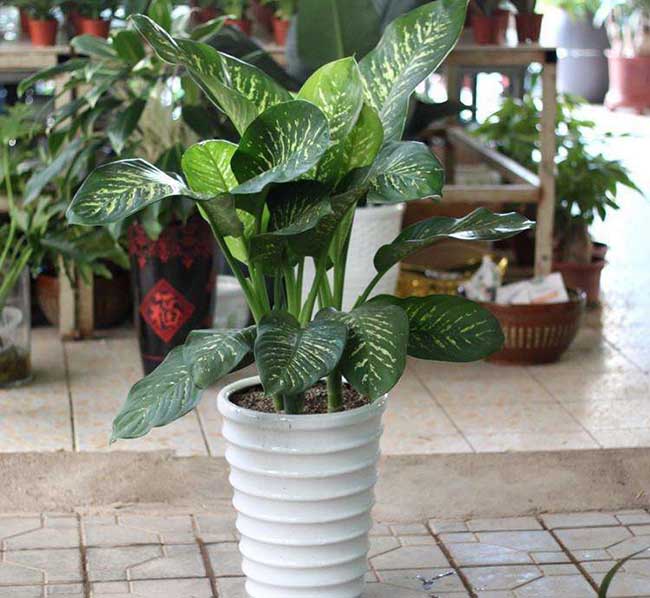
Morphological Characteristics of Silver Queen
Silver Queen is a perennial herbaceous plant, with a plant height of 30-40 cm, upright unbranched stems, and distinct nodes. The leaves are alternate, with long petioles that broaden at the base into a sheath-like form; the leaves are narrow and long, light green, with grayish-green stripes on the surface, and relatively large in area. The roots are yellow, bean-sprout-shaped, and very small. Above the roots are the leaves; unopened leaves are round and wrapped in a sheath-like form. Newly emerged leaves are light green, with gray and some light green spots in the middle, and light green on the back, like the leaves of a large tree. Mature leaves are slightly darker in color. Newly grown leaves are about 3 cun, and once formed they reach 5 or 6 cun
Growth Habits of Silver Queen
Silver Queen prefers a warm, humid, and semi-shaded environment; it is not cold-tolerant, fears strong direct sunlight, and is not drought-tolerant. The optimum growth temperature is 20-27°C, from March to September it is 21-27°C, and from September to the following March it is 16-21°C; the winter temperature should not be lower than 12°C. A mixed soil of half fertile leaf mold and half river sand is suitable. It is suitable for dark rooms with poor ventilation, with a suitable temperature of 15-21°C, and it likes to live in a constant-temperature environment. If watered with warm water, it can survive for a longer time.
Propagation Methods of Silver Queen
1. Cuttings:
Silver Queen cutting propagation is carried out in late spring and early summer. The lower leaves of mature plants tend to wither, causing the stems to become bare; you can cut the top stems for cuttings, and the base left behind can sprout new shoots again.
2. Division:
Silver Queen division propagation is generally carried out in February to March along with repotting. Divide the clustered plant into several plants with roots and plant them separately. They can also be divided and planted in other seasons, and after division they can be divided again after three years.
How to Grow Silver Queen
1. Soil:
For potted Silver Queen, loose peat soil or turf soil is best. A mix of leaf mold and sandy loam can also be used, with a small amount of ferrous sulfate diluted to acidify the soil.
2. Watering:
During the peak growth seasons of spring and autumn, Silver Queen needs plenty of water; the potting soil should be kept moist regularly, and the leaves and branches should often be sprayed with clean water at a temperature close to room temperature to prevent dry tips, but there must be no waterlogging.
3. Light:
Silver Queen prefers diffused light and especially fears direct summer sunlight. Outdoors, 65-75% shade netting is needed for shade; indoors, it should be placed in a spot with strong light so that the leaf color stays vivid.
4. Temperature:
Silver Queen grows fastest at 20-24°C and stops growing above 30°C. In summer, prevent heat and lower the temperature with attention to ventilation; in winter, it should be grown in a greenhouse or indoor structure, and the overwintering temperature should not be lower than 5°C.
5. Fertilizing:
In late spring and early summer, Silver Queen can be given a small amount of acidic nitrogen fertilizer; in summer, increase the nitrogen fertilizer; in early and mid-autumn, some compound fertilizer can be applied; in late autumn and early winter, stop fertilizing.
6. Pests and Diseases:
Silver Queen has dense clumps and poor ventilation, making it susceptible to scale insects. If scale insects occur, use a 50% malathion emulsion at 1000-1500 times dilution, spraying once every 7 days, for 2-3 consecutive sprays.
7. Pruning:
As the Silver Queen plant grows, in order to maintain a good plant shape, the old leaves at the base should be pruned frequently.
8. Repotting:
Silver Queen has strong sprouting vitality and grows quickly, easily filling the pot, so it should be repotted once every two years.
Precautions for Silver Queen
1. Silver Queen likes to grow in a humid and semi-shaded environment. Once the air is too dry, the sunlight is completely unblocked, and the temperature rises above 30°C, it is very easy for the leaf tips of the Silver Queen plant to wither. When growing outdoors in summer, pay attention to shading so the light is not too strong, otherwise sunscald is very likely to occur. When overwintering in a greenhouse or indoor structure in winter, pay attention to lighting to prevent the leaf color from fading due to insufficient light.
2. Do not let water accumulate in the Silver Queen pot (watering too frequently), as this easily leads to root rot. It is best to water only when you see the potting soil is dry. If the pot is relatively deep, the watering frequency should be reduced even more. In summer, you can water and spray appropriately more to maintain humidity. There is a saying, “whether it lives or dies depends on water,” which shows the importance of watering. A lack of water can be made up for, but once water accumulates and the roots rot, it is very difficult to remedy.
3. If Silver Queen is not repotted for a long time, the root system grows straight to the pot wall. In a high-temperature, high-drought environment or in cold weather, this can easily cause the root tips to shrink and necrose, making them lose their proper absorption function, which in turn causes the leaf tips to dry up and shrivel.
4. If the potting soil for Silver Queen is compacted or too heavy and sticky, or if watering is too frequent and excessive, the fine feeding roots of Silver Queen will rot. In this way, the root system's ability to absorb water will drop greatly, causing the leaf tips to turn black and the edges to curl inward.
How to Grow and Care for Silver Queen
As a plant traditionally believed to “attract good fortune” and “ward off evil,” Silver Queen appeals to some flower lovers. But along with that comes the question of Silver Queen's growing methods and precautions, and many flower lovers search everywhere for practical growing methods. In fact, there is no single most suitable way to grow Silver Queen, only the way you use best. To grow Silver Queen well, you must first understand its growth habits, and then make appropriate adjustments according to the conditions of the growing location.
1. How to Grow Silver Queen
Silver Queen is a foliage plant of the Araceae family. Plants of the same kind include evergreen, Dieffenbachia, pothos, and others. These plants are all typical indoor foliage plants, are all quite easy to grow, and have similar habits, such as preferring a warm, humid, and semi-shaded environment, not being cold-tolerant, fearing strong direct sunlight, and not being drought-tolerant. As a grower, you should meet the above habits as much as possible to grow Silver Queen well.
For potted Silver Queen, choose loose, breathable, and fertile soil as much as possible, such as peat soil, turf soil, or a mix of leaf mold and sandy loam. Suitable soil will get twice the result with half the effort in growing flowers. Silver Queen prefers diffused light and fears direct summer sunlight. If outdoors, 65%-75% shade netting is needed for shade. If Silver Queen is placed in a dark spot for a long time, the leaf surface color becomes dull, and the leaves become soft and not upright, affecting the ornamental effect. Silver Queen is not cold-tolerant. When the temperature drops to 10°C, insulation measures must be taken. After freezing, the whole plant rots, and in winter it must not go below 15°C.
2. Precautions
1) Do not let water accumulate in the Silver Queen pot (watering too frequently), as this easily causes root rot. It is best to water only when you see the potting soil is dry. If the pot is relatively deep, the watering frequency should be reduced even more. In summer, you can water and spray appropriately more to maintain humidity. There is a saying, “whether it lives or dies depends on water,” which shows the importance of watering. A lack of water can be made up for, but once water accumulates and the roots rot, it is very difficult to remedy.
2) Do not expose it to strong sun
3) Pay attention to ventilation and air movement, especially for Silver Queen kept in an office.
How to Grow and Care for Silver Queen: Must-Read for Silver Queen Growers
Silver Queen, also known as Silver Queen evergreen, has beautiful leaf color and is especially shade-tolerant. Placed as a potted plant in a living room, it makes the space feel bright and comfortable. Many flower lovers search everywhere for practical growing methods, so how do you grow Silver Queen? Let's take a look at Silver Queen growing methods and precautions.
I. How to Grow Silver Queen
1. Soil preparation:Naturally, the soil should be a fertile soil that drains and breathes well, such as turf soil or peat soil. Of course, you can also mix your own: add a little ferrous sulfate solution to a mixed soil of sandy soil and leaf mold to acidify it.
2. Temperature:Try to keep it between 15-25°C, and in extreme weather, pay attention to reasonable regulation. Summer temperatures are generally high; once above 30°C, it will stop growing, accompanied by yellowing leaves, so cool it down and place it in a ventilated condition. In winter, when below 10°C, cold protection measures are needed, such as moving it to a greenhouse.
3. Light:Place it in a shady spot with diffused light. It cannot receive strong light, nor should it be exposed for too long, to avoid sunscald. Indoors, it should be placed in a position with sunlight to avoid affecting its appearance. Outdoors, especially in summer, shading treatment should be used; 65-75% shade netting can be used to weaken strong light.
4. Fertilizing:In late spring and early summer, Silver Queen can be given a small amount of acidic nitrogen fertilizer; in summer, increase the nitrogen fertilizer; in early and mid-autumn, some compound fertilizer can be applied; in late autumn and early winter, stop fertilizing. With sufficient fertilizer, the stems are thick and strong, there are more tillers, and the leaves are large and plump!
5. Pruning:As the Silver Queen plant grows, in order to maintain a good plant shape, the old leaves at the base should be pruned frequently.
6. Pests and Diseases:Silver Queen has dense clumps and poor ventilation, making it susceptible to scale insects, so prevention should be the priority. If scale insects occur, use a 50% malathion emulsion at 1000-1500 times dilution, spraying once every 7 days, for 2-3 consecutive sprays.
7. Repotting:Silver Queen has strong sprouting vitality and grows quickly, easily filling the pot, so it should be repotted once every two years.
II. Precautions for Growing Silver Queen
1. Do not let water accumulate in the Silver Queen pot (watering too frequently), as this easily leads to root rot. It is best to water only when you see the potting soil is dry. If the pot is relatively deep, the watering frequency should be reduced even more. In summer, you can water and spray appropriately more to maintain humidity. There is a saying, "whether it lives or dies depends on water," which shows the importance of watering. A lack of water can be made up for, but once water accumulates and the roots rot, it is very difficult to remedy.
2. Do not expose it to strong sun, and pay attention to ventilation and air movement, especially for Silver Queen kept in an office.
How to Grow and Care for Silver Queenhas now been fully introduced for everyone. I wonder how much you have learned about Silver Queen growing methods? If you still do not understand it very well, you can save it for later.