A detailed guide to sage cultivation methods and propagation techniques
Sage growing environment
It grows on hillsides, roadsides, in shaded grass clumps, by water and under tree shade, at an altitude of 220-1100 m. It likes a warm, well-lit and well-ventilated environment. The optimum growing temperature is 15°C-22°C. It is drought-tolerant but not waterlogging-tolerant. It is not choosy about soil, preferring soil rich in lime, and it is best to have well-drained, loose-textured neutral or slightly alkaline soil
Sage distribution range
It is native to southern Europe and the Mediterranean coastal region. In China it mainly grows in Zhejiang, southern Anhui, Jiangsu, Jiangxi, Hubei, Fujian, Taiwan, China, Guangdong, Guangxi and other places; it is also distributed in Japan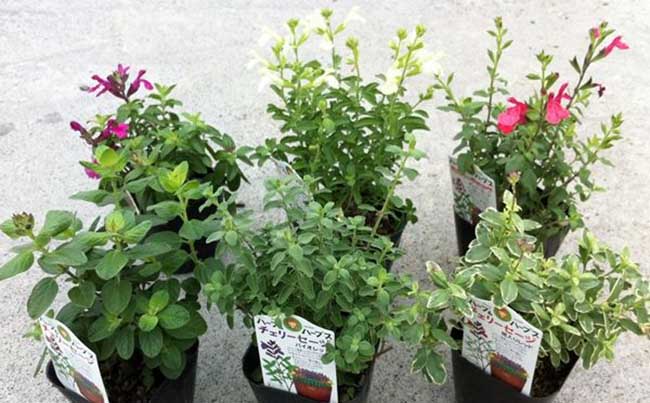
Sage propagation methods
Sowing
Sowing is generally done in spring and autumn. The seedling-raising period is from September each year to April of the following year. Because the seed coat of sage is relatively hard, before sowing the seeds need to be soaked in warm water at about 40°C for 24 hours. The suitable temperature for seed germination is 20-25°C. Seedlings generally emerge in 10-15 days. Either direct sowing or raising seedlings for transplanting can be used. For direct sowing, put 3-5 seeds per hole. When the plants are 5-10 cm tall, thinning is needed, with a spacing of 20-30 cm.
Cuttage
In the south this is done from May to June, and in protected cultivation in the north it starts in March. For cuttings, choose stem tips from the top of the branch that are not too tender, about 5-8 cm long, cut them off below a stem node, remove 2-3 large leaves at the base, and remove half of the upper leaves (to reduce water evaporation), then insert them into a seedbed of sandy soil or perlite to a depth of 2.5-3 cm. After inserting, water them and cover with plastic film to retain moisture. After 20-30 days, when new roots have grown, they can be planted out. The seedbed requires sufficient light and moist, loose soil. The survival rate of cuttage seedlings is generally around 95%.
Sage cultivation management
Potting and planting out
For the substrate, choose loose, well-aerated garden soil plus organic fertilizer and compound fertilizer; you can also use a mix of 7 parts peat and 3 parts garden soil, and an appropriate amount of ammonium fertilizer can be added. Plant out with soil into a nutrient pot with a diameter of more than 10 cm.
Fertilizer and water management
During the growing period, applying ammonium sulfate diluted 1500 times has a relatively good effect; do not apply urea at low temperatures. To make the root system robust and the branches and leaves luxuriant, apply fertilizer once every half month during the growing period, and you can spray a diluted potassium dihydrogen phosphate solution, keeping the pot soil moist. Apply phosphorus and potassium fertilizer once more before flowering.
Temperature and light management
After potting, lower the temperature appropriately to 18°C, and after 1 month it can be lowered to 15°C. If the temperature is below 15°C, the leaves will turn yellow or fall off; if the temperature is above 30°C, the flowers will be small and the plants will stop growing. In the hot summer, appropriate shading is needed. During the seedling stage, strengthen light to prevent leggy growth.
Plant shape management
When the plant has grown 4 pairs of true leaves, keep 2 pairs of true leaves and pinch off the growing tips to promote side branches. If the flower spikes are removed, it can still send out branches and continue to bloom.
Field management
After the plants are established, thinning can be done again to increase the distance, so they grow more vigorously. After planting out, keep the soil loose and the field free of weeds. In the first year after planting out, the fresh leaf yield is not high; from the second year onward, the fresh leaf yield gradually increases. Harvest when the flowers have not yet budded (the fresh leaves can be used to extract aromatic oil or dried in the shade and sold as a commodity). The second harvest is around mid-September, and the third harvest is in late October before frost. After each harvest, fertilize and water in time. After the third harvest in late October or early November, carry out overwintering coverage to ensure the yield for the next year
Sage pest and disease control
The main diseases include leaf spot, damping-off, and seedling blight, which occur frequently at the seedling stage. Use 50% thiophanate-methyl wettable powder or 75% chlorothalonil wettable powder at 500 times solution for control. Common pests include aphids and whiteflies, which can be killed by spraying pesticides
Main values of sage
Edible
The leaves have the effects of sterilizing and killing bacteria, resisting toxins and detoxifying, and driving away plague and eliminating epidemics, and can be eaten as a cold dish; the stems, leaves and flowers can be brewed as tea, which can cleanse oils in the body, help circulation, and nourish the face and beautify the skin. It can also be used as a seasoning, but it should not be consumed in large amounts over a long period (because it contains thujone, and long-term heavy drinking will produce toxins in the body).
Medicinal
[Medicinal parts] Flowers, leaves [Nature, flavor and meridian entry] Bitter, slightly cold, non-toxic. [Zangqi says] Neutral
[Functions and indications] Scrofula with chills and fever, and persistent dysentery with pus and blood. The white-flowered one mainly treats white dysentery, and the red-flowered one mainly treats red dysentery (Bielu). Mainly treats malaria and water swelling (Shizhen)
Other uses
Essential oil and its derivatives are used in daily-use flavors, and sage can also be made into sachets.
In landscaping, it can be used as potted plants and for arranging flower beds, flower borders and garden scenic spots. At the same time, it can dot the areas beside rocks and gaps at the forest edge, appearing quiet and secluded. Placed in front of natural buildings and in small courtyards, because of its strong adaptability, it can also be planted on waterside banks, and the effect of group planting is very good. It is suitable for arrangement in parks, scenic area forest-edge slopes, a corner of lawns, and river and lake banks, both greening the city and allowing people to smell its fragrance
How does sage propagate? Sage propagation methods / survival rate as high as 95%
Sage is a flowering plant with very high ornamental value, and it can be seen in many regions of our country. However, as more people grow sage, people are also more concerned about issues related to its propagation. How does sage propagate? What are the propagation methods of sage? Below, the editor will take everyone to learn about it.
1. How does sage propagate? Sowing / cuttage
When it comes to how sage propagates, it is actually mainly divided into two methods: propagation by sowing and propagation by cuttage. As long as we operate according to the requirements, the survival rates of both methods are very high. In the text below there are specific operating details for these two propagation methods, and interested friends can learn about them.
2. Sage propagation methods (propagation by sowing)
1. Substrate, drainage must be good
Propagation by sowing is a relatively commonly used one among sage propagation methods. Before sowing and propagating it, we must first choose the substrate. Generally, it is best to choose loose and fertile neutral or slightly alkaline soil as the substrate, because such soil has relatively good drainage, allows the plant to better absorb nutrients, and is not prone to water accumulation.
2. Germination promotion, soak for 1-2 days
Because the seed coat of sage is relatively hard, before sowing it is best to soak it in warm water at about 40°C for about 1-2 days. When the seeds begin to absorb water and swell, take them out and plant them. This can play a role in promoting germination and allow the seeds to sprout faster.
3. Sowing, seedlings emerge in 10-15 days
Before sowing and propagating sage, we must first apply an appropriate amount of base fertilizer into the soil, then evenly scatter the seeds on the soil surface, and afterward cover them with 1-2 cm of soil, and then water. When watering, be careful to water thoroughly at one time, and after about 10-15 days the seedlings will emerge.
3. Sage propagation methods (propagation by cuttage)
1. Cuttage time, May-June in the north / March in the south
When propagating sage by cuttage, choosing a good time point is very important, because cutting it at a suitable time can increase the survival rate. If in the south, we can choose May-June for cuttage, while in the north we can choose March.
2. Selection of cuttings, growth must be robust
In the cuttage process of sage, the selection of cuttings is also a very important step. It is best to choose branches that are relatively robust and free of pests and diseases, so the survival rate will be very high. If everyone chooses branches that look very thin and weak, then it can basically be declared a cuttage failure, and the survival rate will not be very high.
3. Cuttage method, roots in 20-30 days
Among sage propagation methods, propagation by cuttage is a relatively simple one. Before cuttage, we can first use chopsticks to poke a hole in the soil, then insert the cutting into it and press the soil flat, and then water. When watering, be careful to water thoroughly at one time. After 20-30 days, when new roots have grown, they can be planted out.
Sage cultivation methods
Sage
Scientific name: salvia farinacea
Aliases: autumn danshen, round dan, common sage leaf, common sage herb, common sage, garden sage
Family and genus: Lamiaceae, Salvia.
Morphological characteristics: - biennial or perennial herbaceous plants and evergreen small shrubs. Plant height 30~60 cm. Much branched, leaves opposite, long elliptic, gray-green, leaf surface with concave-convex texture, pungent and rich fragrance, flowers light blue or purple, sometimes white or pale red. Seeds nearly elliptic.
Ecological habits: likes a sunny or semi-shady environment. Relatively cold-tolerant. Can endure a low temperature of -15°C. Likes well-drained sandy loam, relatively likes fertilizer, and has strong drought tolerance.
Cultivation management: can be propagated by seeds or by cuttage. Seeds can be sown from February to August, and in greenhouse cultivation they can be sown in all four seasons. Before sowing, soak the seeds in warm water at 50°C and stir, keep warm for 5 minutes, then when the temperature drops to 30°C, rinse several times with clean water, then place at constant temperature to promote germination, or continue soaking in clean water for 24 hours before sowing. Use direct sowing or raise seedlings for transplanting. The cuttage time is from May to June. For cuttings, it is best to choose stem tips from the top of the branch, 5~8 cm long, cut them off below a stem node, remove 2~4 large leaves, then insert them into sandy soil or perlite, with an insertion depth of 2.5~4 cm, and a plant and row spacing of 5 cm × (8~10) cm. After inserting, water them and cover with film to keep warm. New roots develop in 20~30 days, and after hardening the seedlings for 3~5 days they can be transplanted and planted out. Before planting out, plow deeply and harrow finely. For poor soil, apply 2000 kg of organic fertilizer per mu, make beds 1.2~1.5 m wide, and plant out at a plant and row spacing of 30 cm × (45~50) cm, then water after planting. For potted cultivation, choose pots with a diameter of more than 18 cm, with one plant per pot. After the seedlings survive, be careful to weed frequently, and water during drought, especially in the hot summer. While watering, apply a small amount of compound fertilizer, and drain promptly on rainy days. In the north, cold protection is needed for overwintering. The method is: after harvesting the aboveground parts, water with frozen water and mound soil, with a soil thickness of 20 cm or higher. After the final frost the next year, dig away the soil and water to facilitate sprouting and growth.