How to Grow Calathea leopardina and Tips for Pest and Disease Control
Growing Habits of Calathea leopardina
It thrives in a warm, humid environment with bright light. It is not cold-tolerant or drought-tolerant, and it fears scorching sun. During the growing season it should be watered thoroughly to keep the soil moist, but the soil should not become waterlogged. A loose, fertile, well-draining and airy, slightly acidic soil rich in humus is ideal.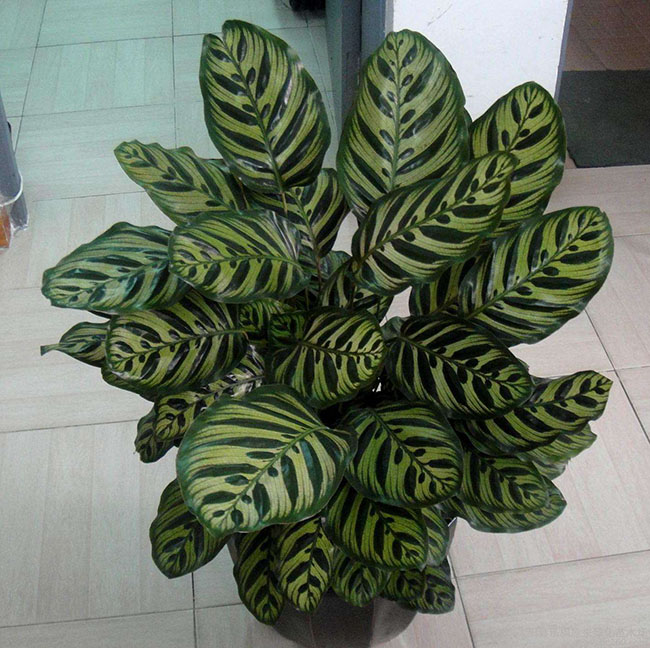
Propagation Methods for Calathea leopardina
Division Propagation
Calathea is generally propagated by division. The ideal time is in spring when the temperature is around 20°C, but as long as the temperature and humidity are suitable, it can be done year-round. When propagating, use a sharp knife to cut apart the root clumps that have stems and leaves or leaf buds. For small-scale propagation, the cut root clumps with stems, leaves and leaf buds can be placed directly into clay pots; for large-scale propagation, they should be placed on a seedbed. If the temperature and humidity do not meet the requirements, cover them with plastic film; make sure the temperature inside the film reaches 20-28°C and the humidity stays above 80%.
Cutting Propagation
Cutting propagation generally uses tender shoot tips. The cuttings should be 10-15 cm long. Depending on leaf size, keep one-third or one-half of the leaf. Treat the cuttings with 500 ppm naphthalene acetic acid for 2-3 seconds; indole acetic acid, indole butyric acid and ABT rooting powder can also be used. After treatment, insert the cuttings into the seedbed, preferably at a spacing of 5×10 cm. Cover with a plastic film arched tunnel; the management method is the same as for division propagation. Cutting propagation can be carried out at any time when the temperature is not lower than 20°C. The cuttings root in 30-50 days; however, the survival rate of cuttings is not as high as that of division propagation, generally around 50%.
How to Grow Calathea leopardina
Temperature
This plant is native to tropical and subtropical regions. It prefers high temperatures, high humidity and a semi-shaded environment. The suitable growing temperature is 20-30°C, with the optimal daytime growing temperature being 18-21°C and 16-18°C at night. The safe overwintering temperature is 10°C. Therefore, in summer, prevent exposure to high temperatures and place it in a shady spot; in winter, take care to protect it from the cold, and move the plant to a wind-free, warmer indoor spot to overwinter.
Light
Direct sunlight should be avoided; it grows better under indirect radiation or diffused light. Especially in summer, direct sunlight easily causes leaf scorch, so in production it is cultivated under an artificially controlled light environment with a 75%-80% shading net. If leaf scorch is found, immediately move it to a spot without direct light, or to a place with shading facilities or under tree shade, and cut off the scorched leaves to prevent other pathogenic bacteria from invading through the wounds. At the same time, strengthen water and fertilizer management to encourage new leaves to grow and restore its fresh appearance.
Water
March to October each year is the peak growing season for Calathea. The most suitable relative air humidity for its growth is 75%-85%; high air humidity favors leaf unfurling. Especially during the period when new leaves emerge, if it is too dry, the leaf margins and leaf tips of the new leaves are prone to withering and curling, and will later become deformed. Once the leaves wilt, they cannot recover. Therefore, during the growing season, water frequently and mist the leaves regularly. In summer, water 3-4 times a day, and do it promptly. The best watering method is to spray the leaf surfaces in the morning, water the soil surface at noon or in the afternoon, and drench the whole plant in the evening. But be careful not to let the soil become too sticky or too wet, otherwise it easily causes root rot and leads to disease. After autumn and winter arrive, Calathea's growth slows down, and the amount of watering should be gradually reduced. Depending on weather changes, water once a day or once every 2-3 days. Especially when the temperature is low, keep the soil dry to protect it from cold damage.
Fertilizing
The growing soil should be fertile, loose and well-draining; compacted and waterlogged soil should be avoided. Use fertile humus soil and porous coarse media as the substrate. Generally, use equal parts of leaf mold and peat soil mixed together; you can also use pond mud, peat and perlite mixed in a 2:3:1 ratio; or use loose, organic-rich leaf mold plus 1/3 perlite and a small amount of base fertilizer.
Pest and Disease Control
Calathea leopardina has strong resistance and few pests and diseases, but pests and diseases can still occur when management is poor during cultivation. Common pests mainly include scale insects and red spider mites; common diseases mainly include southern blight and leaf spot.
Scale Insects
Scale insects are mainly mealybugs, occurring on leaf edges or the undersides of leaves, and sometimes on the leaf surface. They suck plant sap with their piercing-sucking mouthparts. In mild cases, the leaves turn yellow and age, affecting plant growth; in severe cases, leaves wither and drop, eventually killing the whole plant. At the same time, the wounds after scale insect infestation are highly susceptible to viral infection. Scale insects have strong reproductive capacity and can reproduce for multiple generations in one year, with May being the peak hatching period. Because adult scale insects have a waxy outer shell, ordinary pesticides find it difficult to penetrate, and once they appear, control is relatively difficult. When grown indoors with poor ventilation, they are prone to scale insect damage.
Control methods:
According to the occurrence of scale insects, spray pesticide during the peak nymph stage. At this time most nymphs have just hatched, their body surface has not yet secreted wax, and the shell has not yet formed, so they are still easy to kill with pesticide. Spray once every 7-10 days, for 2-3 consecutive sprays. You can use 40% omethoate 1000x solution, or 50% dichlorvos 1000x solution, or 2.5% deltamethrin 3000x solution for spraying control.
Red Spider Mites
Red spider mites are a fairly common threat to plants. They are small, reddish-brown to orange-yellow, and use sharp mouthparts to suck nutrients from the leaves, causing an imbalance in the plant's water and other metabolic balance and affecting normal growth and development. Red spider mites and similar pests reproduce rapidly and cause severe damage in high-temperature and dry environments.
Control methods:
Keep the environment ventilated, maintain environmental humidity above 40%, and frequently spray water on the undersides of leaves to control red spider mite reproduction. Since pesticides find it difficult to kill the eggs, control is generally carried out during the adult and nymph stages after the eggs hatch. You can use 20% dicofol emulsifiable concentrate 1000x solution or 40% omethoate emulsifiable concentrate 1000x solution for spraying.
Southern Blight
This disease occurs relatively often. When it occurs, the stems or leaf bases near the soil turn brown and rot, and white silky mycelium grows in a radial pattern, which can spread through the rhizosphere soil and then cause the aboveground parts to wilt and die. It is white at first, then turns yellow, and finally becomes brown or tea-brown like rapeseed grains, then causing the aboveground parts to wilt and die. The disease is more severe in July-August, and the pathogen is Sclerotium rolfsii. It is prone to occur when the soil is too wet, poor and lacking fertilizer.
Control methods:
You can add 70% quintozene at 0.2% of the soil weight to the soil to disinfect it; before sclerotia form, pull out diseased plants and dig away the surrounding diseased soil, then add new soil; during cultivation, ensure ventilation and prevent planting too densely.
Leaf Spot
This disease mainly affects leaves, but can also affect leaf sheaths. In the early stage, small water-soaked spots less than 1 mm in diameter appear, which then turn into reddish-brown spots about 2 mm in diameter, with no halo around the lesions. The disease can occur year-round, with two peaks in September-October and March of the following year. During the peak period of the disease, it can cause large numbers of leaves to dry up. Planting sites with poor management, poor ventilation, overly dense planting, waterlogging, poor soil, insufficient shade, and weak plant growth suffer severe damage. Diseased plant debris is the source of primary infection for this disease.
Control methods:
Apply more base fertilizer to enhance disease resistance; promptly remove diseased leaves to reduce the source of inoculum; begin spraying before the disease occurs with 75% chlorothalonil wettable powder 500-600x solution, or spray 75% chlorothalonil wettable powder 1000x solution plus 70% thiophanate-methyl wettable powder 1000x solution for control.What Are the Benefits of Calathea leopardina? How to Grow Calathea leopardina
Nowadays people like to grow plants indoors to beautify and green their home environment. There are many kinds of plants that can be grown indoors, and Calathea leopardina is one of them. However, many people do not know much about Calathea leopardina. What exactly are the benefits of Calathea leopardina? What are the methods for growing Calathea leopardina? Let's find out together.
What Are the Benefits of Calathea leopardina:
Speaking of the benefits of Calathea leopardina, it is usually native to tropical and subtropical regions, shade-tolerant, easy to grow, and colorful with elegant form. Its main benefits, besides ornamental value, also include a certain purifying effect. Let's look at the details below:
1. Ornamental value:
Calathea leopardina is shade-tolerant and easy to grow, and it also has a beautiful growth form: the plant is generally clump-forming, with broad leaves that grow densely and appear spread out and upright. Because the two sides of the main leaf vein have white bands and dark green bands interwoven in a feather-like arrangement, the colors are bright and rich. In addition, its leaf surface is also marked with black spots, just like a panda's eyes, round and interesting, which is also the origin of its name.
Calathea leopardina is suitable for use as home decoration and beautification, to accent balconies, studies, bedrooms and so on, adding a sense of elegance. It can also be used to decorate commercial places such as shops and hotels. In South China, it can often be seen planted in courtyards, parks, and along roadsides for landscaping purposes.
2. Purifying effect:
Purifying the air is also a major benefit of Calathea leopardina. Although it cannot be compared with spider plants, the air-purifying effect of Calathea leopardina should not be underestimated. Its ability to absorb harmful gases such as formaldehyde and ammonia is still far superior to many plants, so for a newly renovated house, Calathea leopardina is also a good choice.
The above is a brief introduction to the benefits of Calathea leopardina. I believe that after the above introduction, everyone will have a further understanding and awareness of this plant. Calathea leopardina has broad leaves, and the round black spots on the leaves are just like panda eyes, full of interest, which is also the main reason people like to grow it indoors. However, growing this plant is also somewhat different from growing other plants. What exactly are the methods for growing Calathea leopardina? Let's take a look at the introduction below:
How to Grow Calathea leopardina:
1. Temperature:
Calathea leopardina is native to tropical and subtropical regions and is heat-tolerant. It is suitable for a growing environment of 20-30°C. In winter, the growing temperature should be maintained at around 16-18°C, which is most ideal.
2. Light:
A shade-tolerant plant that prefers semi-shade. It should be placed in a bright indoor spot. Direct sunlight and scorching sun should be avoided to prevent leaf scorch. In summer, do a good job of shading and ventilation.
3. Watering:
During the growing period of Calathea leopardina, water thoroughly to keep the potting soil moist. At the same time, also be careful to avoid causing soil waterlogging, to prevent root rot and even plant death. Because Calathea leopardina has relatively large leaves, water evaporates quickly, so maintain relatively high air humidity around it. You can frequently mist the leaves to keep the air around the leaves moist, which favors the growth and unfurling of the leaves. Once the leaves are found to be curled or shrunken, it means the plant is in a state of water deficiency.
4. Fertilizer:
Follow the principle of "apply frequently and lightly." During the winter dormant period and during sustained high temperatures in summer, stop fertilizing.
5. Repotting:
Repot once every other year. Choose a fertile, loose, well-aerated and well-draining, slightly acidic soil rich in humus.
6. Pest control:
Common pests mainly include scale insects and red spider mites. For scale insects, depending on the condition, you can use 40% omethoate 1000x solution or 50% dichlorvos 1000x solution, or 2.5% deltamethrin 3000x solution for spraying control. For red spider mites, control is generally carried out during the adult stage after the eggs hatch. You can use 20% dicofol emulsifiable concentrate 1000x solution, or 40% omethoate emulsifiable concentrate 1000x solution for spraying.
7. Disease control:
Common diseases mainly include southern blight and leaf spot. For southern blight, you can add 70% quintozene at 0.2% of the soil weight to the soil to disinfect it, and at the same time remove diseased plants and diseased soil, add new soil, and ensure good ventilation. For leaf spot, promptly remove diseased leaves, apply more base fertilizer, and enhance disease resistance.
How to Grow Calathea leopardina
How to Grow Calathea leopardina
Temperature
Calathea leopardina is native to tropical and subtropical regions and is heat-tolerant. It is suitable for a growing environment of 20-30°C. In winter, the growing temperature should be maintained at around 16-18°C, which is most ideal.
Light
A shade-tolerant plant that prefers semi-shade. It should be placed in a bright indoor spot. Direct sunlight and scorching sun should be avoided to prevent leaf scorch. In summer, do a good job of shading and ventilation.
Watering
During the growing period of Calathea leopardina, water thoroughly to keep the potting soil moist. At the same time, also be careful to avoid causing soil waterlogging, to prevent root rot and even plant death. Because Calathea leopardina has relatively large leaves, water evaporates quickly, so maintain relatively high air humidity around it. You can frequently mist the leaves to keep the air around the leaves moist, which favors the growth and unfurling of the leaves. Once the leaves are found to be curled or shrunken, it means the plant is in a state of water deficiency.
Fertilizer
Follow the principle of "apply frequently and lightly." During the winter dormant period and during sustained high temperatures in summer, stop fertilizing.
Precautions for Growing Calathea leopardina
Repotting
Repot once every other year. Choose a fertile, loose, well-aerated and well-draining, slightly acidic soil rich in humus.
Pest control
Common pests mainly include scale insects and red spider mites. For scale insects, depending on the condition, you can use 40% omethoate 1000x solution or 50% dichlorvos 1000x solution, or 2.5% deltamethrin 3000x solution for spraying control. For red spider mites, control is generally carried out during the adult stage after the eggs hatch. You can use 20% dicofol emulsifiable concentrate 1000x solution, or 40% omethoate emulsifiable concentrate 1000x solution for spraying.
Disease control
Common diseases mainly include southern blight and leaf spot. For southern blight, you can add 70% quintozene at 0.2% of the soil weight to the soil to disinfect it, and at the same time remove diseased plants and diseased soil, add new soil, and ensure good ventilation. For leaf spot, promptly remove diseased leaves, apply more base fertilizer, and enhance disease resistance.