How to grow Rhapis excelsa? Detailed guide to cultivation methods and precautions
Rhapis excelsa growing habits
Rhapis excelsa prefers a warm, humid, well-ventilated semi-shaded environment. It does not tolerate waterlogging and is extremely shade-tolerant. In summer, when the heat is intense and light is strong, it should be shaded appropriately. The suitable temperature is 10-30°C. When the temperature is above 34°C, the leaf edges often scorch and growth stalls. The overwintering temperature should not be below 5°C. The plant form is small and growth is slow, and its demands for water and fertilizer are not very strict. It requires loose, fertile, acidic soil and does not tolerate poor, barren soil or saline-alkaline conditions. It requires relatively high soil moisture and air humidity. Ornamental period: flowering from April to May, fruit ripening from October to December.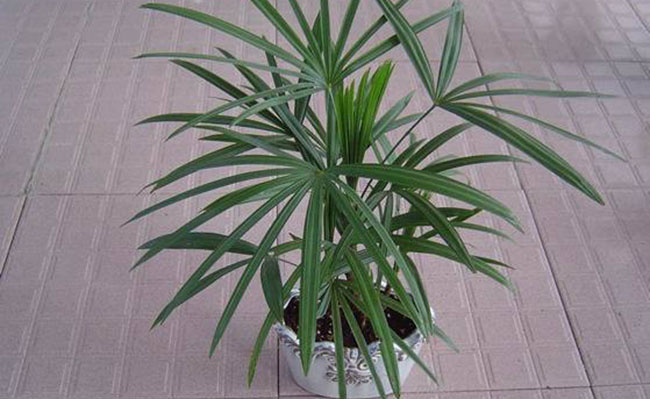
Rhapis excelsa cultivation methods
1. Potting soil: For potted Rhapis excelsa, it is suitable to use leaf mold, peat soil plus perlite or weathered rock granules or mud pond blocks.
2. Watering: Follow the principle of alternating dryness and moisture when watering.
3. Fertilizing: In the vigorous growing seasons of summer and autumn, top-dress once every 2-3 weeks, and avoid direct sunlight; in winter and spring, fertilizer and water should be controlled, and the plant should receive more direct sunlight, which is beneficial for winter growth.
4. Light: Rhapis excelsa is relatively shade-tolerant and can be enjoyed long-term in a bright room; in a darker indoor space it can also be displayed continuously for 3-4 months.
5. Temperature: Rhapis excelsa is relatively cold-tolerant. A low temperature of 0°C has little effect on its survival, but it should avoid cold wind and frost, so indoor potted plants can overwinter safely.
Precautions for Rhapis excelsa:
In winter, move Rhapis excelsa indoors and keep it above 0°C, and it can overwinter safely. Keeping it above 10°C allows it to maintain green leaf color. In winter the plant enters dormancy, so watering should be restricted.
In spring, as the temperature gradually rises, it can be placed outdoors for care after Qingming. In summer, place it under a shade canopy or in tree shade. In a semi-shaded and humid environment, new bamboo-like stems will keep growing and old leaves will remain emerald green.
Precautions for repotting
① When placed in a bathroom for care, check whether the light is bright enough. Although Rhapis excelsa is shade-tolerant, this means it does not need sun exposure, but the light must still be bright, because plants must carry out photosynthesis to synthesize nutrients.
② A bathroom is used for bathing every day, so the temperature fluctuates greatly, and there are also smells such as shower gel that it dislikes, which is not conducive to the care of Rhapis excelsa (especially after transplanting). Suggestion: consider whether it can be moved to a more suitable environment, such as a bright living room.
③ The potting soil looks relatively wet, which is not conducive to better root recovery. Loosen the soil with your finger. If the soil is moist but your finger basically does not pick up soil or picks up only a little soil, then this humidity is roughly in line with the soil moisture requirements after repotting.
④ Mist frequently. When misting, direct the nozzle from the middle of the plant outward to reduce the amount of water falling into the potting soil. Check whether vermiculite is mixed into the soil; it looks as if there may be this kind of substrate. If there is vermiculite, moisture must be controlled even more strictly, because vermiculite not only keeps the potting soil loose and permeable but also has a very high water-retention effect.
⑤ If the condition worsens somewhat, part of the leaves can be cut off appropriately. Suggestion: you can shorten the lower leaves first, and after new leaves grow out later, completely cut off these shortened leaves, so as not to affect the ornamental effect.
Feng shui placement of Rhapis excelsa
1. Rhapis excelsa is a feng shui plant whose Five Elements attribute is water. A house with the entrance facing east can place one Rhapis excelsa, which can improve the health of the residents' kidneys and liver.
2. Rhapis excelsa has a powerful life-promoting effect. In feng shui, balcony plants with life-promoting effects are all tall and sturdy; the thicker, larger, and greener they are, the better. Rhapis excelsa is a very typical example. Place it at the entrance, and it is believed that wealth will come without being invited.
3. Rhapis excelsa can protect the home and ward off evil. If family members are always getting sick, work is always going poorly, and studies are always regressing, then you should place one Rhapis excelsa in front of the door and let Rhapis excelsa drive away the evil energy and return you a peaceful and healthy home.
Rhapis excelsa functions and effects
Rhapis excelsa purifies the air
The function of Rhapis excelsa is similar to that of Monstera deliciosa. Rhapis excelsa, also a large-leaf ornamental plant, can absorb more than 80% of various harmful gases and purify the air. At the same time, Rhapis excelsa can also eliminate heavy metal pollution and has a certain resistance to sulfur dioxide pollution. Of course, as a foliage plant with huge leaves, its greatest feature is the ability to absorb carbon dioxide and produce oxygen, which ordinary plants cannot match.
Medicinal value of Rhapis excelsa
The leaves of Rhapis excelsa can be used as medicine. They can be harvested throughout the year, chopped, and dried in the sun. Entering the liver and kidney meridians, they have the effect of astringing and stopping bleeding, mainly for epistaxis, hemoptysis, hematemesis, and excessive postpartum bleeding. The roots of Rhapis excelsa can also be used as medicine, and can dispel wind and dampness, astringe and stop bleeding. Main indications: rheumatic arthralgia, epistaxis, hemoptysis, and traumatic injuries from falls.
Feng shui placement meanings
Rhapis excelsa is one of China's traditional shade-loving foliage plants, with a long cultivation history, and is deeply loved by people. Because Rhapis excelsa is often planted near temples, like a guardian deity of temples, people also call it Guanyin Rhapis excelsa. Among the people, Rhapis excelsa is considered an auspicious plant that can dissolve evil, ward off evil, and keep the home safe, so people often plant it in front of and behind houses and in courtyards. In feng shui, Rhapis excelsa also belongs to “auspicious objects”. Planting and placing it on a balcony can ward off evil and keep the home safe.
Cultivation methods and precautions for Rhapis excelsa. What are its effects?
Regarding Rhapis excelsa, many people like it. It can be said to be a must-have for the home. Let's take a look at the cultivation methods and precautions for Rhapis excelsa. What are the effects of Rhapis excelsa:
Rhapis excelsa, also known as Guanyin bamboo, jintou bamboo, palm bamboo, and dwarf Rhapis excelsa, is an evergreen foliage plant of the genus Rhapis in the palm family. It has leaf nodes covered with leaf sheaths that have brown reticulate fibers.
It is mainly distributed in Southeast Asia, southern to southwestern China, and also in Japan. It often reproduces and grows on hillsides and beside ditches in shaded, humid shrub thickets.
Functions and indications. Rhapis excelsa leaves: astringe and stop bleeding; mainly for epistaxis, hemoptysis, hematemesis, and excessive postpartum bleeding. Rhapis excelsa roots: dispel wind and dampness; astringe and stop bleeding; rheumatic arthralgia, epistaxis, hemoptysis, and traumatic injuries from falls.
Rhapis excelsa is a typical indoor foliage plant. Because it is shade-tolerant, moisture-tolerant, and likes scattered light, it can be placed for a long time in a bright indoor spot. Even if it cannot see sunlight in a dark place for 3 consecutive months, it can still grow normally and maintain its deep green leaf color. Rhapis excelsa grows in clumps and stands upright, with luxuriant branches and leaves, an elegant posture, beautiful leaf shapes, and evergreen color in all seasons. It resembles bamboo but is not bamboo, and is beautiful and elegant.
The introduction to the cultivation methods of Rhapis excelsa ends here. Rhapis excelsa does have effects on the human body.
How to grow Rhapis excelsa, cultivation methods and precautions for Rhapis excelsa / ventilated environment
Rhapis excelsa is a relatively common foliage plant in people's lives. It has high ornamental value and is a plant very suitable for keeping at home. However, if you want to grow it well, there are many things to pay attention to. So how do you grow Rhapis excelsa? What are the cultivation methods and precautions for Rhapis excelsa? Below, the editor will take everyone to learn about it.
1. How to grow Rhapis excelsa: understand its habits
If you want to know how to grow Rhapis excelsa, first we must understand its habits. It likes to live in a well-ventilated environment and is not very tolerant of strong light, so when cultivating it, we had best place it in a spot with scattered sunlight. In addition, its requirements for water and fertilizer are also very strict, so everyone should pay attention to this point.
2. Cultivation methods and precautions for Rhapis excelsa
1. The soil should be loose and fertile
When cultivating Rhapis excelsa, we first need to choose soil. It relatively prefers loose, fertile, slightly acidic soil with good drainage, so we can choose soil according to this requirement. Generally, humus soil is very good and relatively suitable for cultivating Rhapis excelsa.
2. Suitable temperature 10-30°C
During the growth process of Rhapis excelsa, its requirements for environmental temperature are not too high. As long as the temperature is not too low or too high, it can grow very well. Its suitable temperature is 10-30°C. It can tolerate a low temperature of about 0°C at minimum and about 33°C at maximum.
3. Control the amount of watering / avoid waterlogging
Among the cultivation methods and precautions for Rhapis excelsa, watering is also a relatively particular part. In spring and autumn, we do not need to water too frequently; just keep the soil somewhat moist. In summer, the temperature is relatively high and the soil dries out relatively easily, so we should water frequently, basically once in the morning and once in the evening each day. In winter, we need to control the watering frequency and wait until the potting soil is completely dry before watering, and the amount of water should not be too much.
4. Pay attention to shading in summer
Rhapis excelsa is relatively intolerant of strong light, so during usual care, we had best place it in a spot with scattered sunlight and avoid direct sunlight. In summer, when the light is relatively strong, we can keep it in a semi-shaded indoor place to avoid burning the plant and causing its leaves to turn yellow.
5. Fertilize 1-2 times per month
During the growth process of Rhapis excelsa, fertilizer is one of its main nutrients. Especially after entering the growth period, its demand for fertilizer is very high. Basically, it needs to be fertilized 1-2 times per month to maintain sufficient nutrients so that it can grow more robustly. Also, when fertilizing, there is one point to note: be sure to apply thin fertilizer. Before applying fertilizer, it should be diluted with water to avoid burning the plant due to too high a concentration.
6. Regularly prune yellow leaves
During the process of cultivating Rhapis excelsa, we also need to prune it regularly, cutting off some yellow leaves and dead branches produced during growth, so as to maintain the plant's shape and make it look more layered. In addition, regular pruning can also promote branching.
7. Handle pests and diseases promptly
During the process of cultivating Rhapis excelsa, if we are not careful enough, pests and diseases can easily take advantage of the opportunity. Such problems are extremely harmful to the plant, so when they appear, we must handle them promptly. For specific treatment methods, everyone can refer to the article on pest and disease control for Rhapis excelsa. The editor will not introduce them in too much detail here.