How to Grow Fittonia? Detailed Guide to Cultivation Methods and Precautions
Fittonia Growing Environment
Fittonia prefers a hot, humid and semi-shaded environment. It is a heat-loving plant and is especially sensitive to temperature. The optimum growing temperature is 18-24°C. In winter, the temperature should not fall below 13°C; normal growth can be maintained at 13-16°C. Below 13°C growth stops and some leaves begin to drop, but the stems will not be damaged by cold; if the room temperature rises back above 18°C, new leaves can continue to sprout. If the temperature falls below 8°C, the plant will be killed by cold. During the growing period it needs relatively high air humidity. Diffused light is best; direct light should be avoided. A sandy loam rich in humus is ideal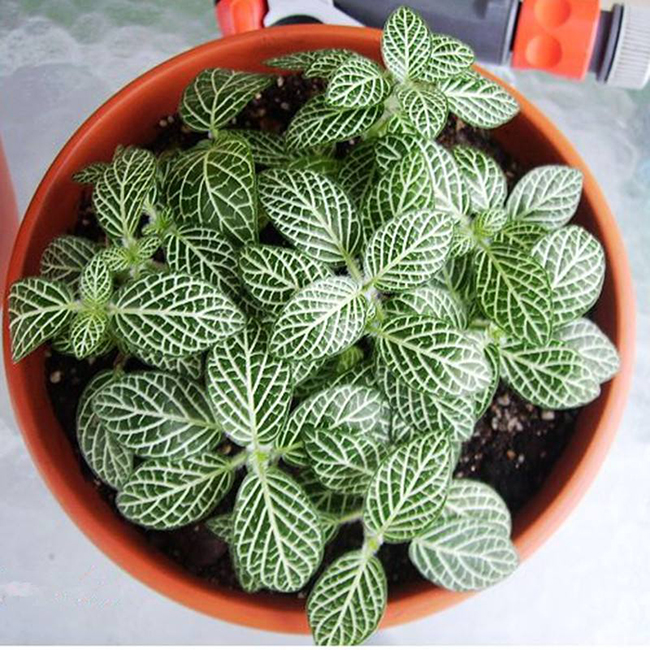
Fittonia Cultivation Methods
1. Potting soil:
The best potting soil for Fittonia is a sandy loam rich in humus. A mix of 50% fine tree-fern fiber, 20% peat moss and 30% river sand can also be used. For potted Fittonia, a mixture of equal parts peat soil, leaf mold and river sand can be used.
2. Potting up:
When potting up Fittonia cuttings, be careful not to damage the roots, and keep them separate from the fertilizer to avoid root burn. After planting, water to settle the roots, then return to normal care.
3. Light:
Fittonia prefers moderate light intensity and dislikes direct sunlight, but it is also fairly shade-tolerant. Indoors, it is best placed by a bright window.
4. Watering:
Fittonia must be watered carefully. If the potting soil is allowed to dry out completely, the leaves will curl and drop; if it is too wet, the stems are prone to rot.
5. Fertilizing:
For vigorously growing Fittonia plants, apply a nitrogen-based compound fertilizer at half the normal concentration once every two weeks.
6. Temperature:
Fittonia likes warmth, and the optimum growing temperature is 18-25°C. Fittonia has poor cold tolerance; when the temperature falls below 12°C the leaves will suffer cold damage, and at about 8°C the plant may die.
7. Diseases:
Common diseases of Fittonia include leaf rot and root rot. For leaf rot, spray with a 1000-fold dilution of 25% carbendazim wettable powder. For root rot, soak the roots in a 1000-fold dilution of streptomycin to sterilize them.
8. Pests:
Pests of Fittonia include scale insects, red spider mites and snails. For scale insects and red spider mites, spray with a 1000-fold dilution of 40% omethoate emulsifiable concentrate. Snails can be caught by hand or lured and killed with metaldehyde.
Best propagation time:
Under suitable temperature conditions, Fittonia can be propagated by cuttings all year round, but cuttings taken from May to September, when temperatures are slightly higher, give the best results.
Best growing soil:
To prepare the growing soil for Fittonia, first place a layer of coarse-grained substrate or expanded clay about 2 cm thick at the bottom of the pot as a drainage layer, then sprinkle a layer of fully rotted organic fertilizer as a base fertilizer about 1-2 cm thick, then cover with one of paddy soil, pond mud or leaf mold. A mixed soil of vegetable garden soil : furnace slag = 3:1, or garden soil : medium-coarse river sand : sawdust (mushroom residue) = 4:1:2 can also be used.
Growing humidity requirements:
Fittonia prefers a humid environment and needs relatively high air humidity during the growing period. Especially in the hot summer season, when water evaporation is high and the air is dry, in addition to watering to increase the moisture of the potting soil, misting the leaves and sprinkling water on the ground are even more necessary. Maintaining relatively high air humidity is beneficial to the growth of Fittonia stems and leaves. However, the potting soil must drain well and must not become waterlogged, and the leaves must not be soaked in water mist for long periods, otherwise the leaf color will turn white and the leaves will easily drop and rot. But in winter or on rainy days, the potting soil can be slightly drier and the air humidity can be moderate.
Best growing temperature:
Fittonia likes warmth, and the optimum growing temperature is 18-25°C. Fittonia has poor cold tolerance; when the temperature falls below 12°C the leaves will suffer cold damage, and at about 8°C the plant may die.
Best growing light:
Fittonia prefers moderate light intensity and dislikes direct sunlight, but it is also fairly shade-tolerant. Indoors, it is best placed by a bright window.
Precautions for Growing Fittonia
Applying fertilizer:
When fertilizing Fittonia, also follow the principle of "light fertilizer applied frequently, small amounts but many times, complete nutrition"; top-dress with compound fertilizer just once a month.
Key watering points:
Try to water Fittonia in the morning when the temperature is lower. In summer, water in the morning or evening when the temperature is low, and also mist the plant frequently. In winter: during the dormant period, try to water at noon on sunny days when the temperature is higher.
Key propagation points:
When propagating Fittonia, cut cuttings of about 10 cm long from the creeping stems growing out of the pot surface, generally keeping 3-4 stem nodes. Remove the lower leaves, let them dry slightly, then insert them into a sand bed. Keep the cutting medium at 24-30°C. Generally, roots form 7-14 days after insertion, and they can be transplanted into pots after 1 month.
Repotting:
When potting up Fittonia cuttings, be careful not to damage the roots, and keep them separate from the fertilizer to avoid root burn. After planting, water to settle the roots, then return to normal care.
Pest and disease control for Fittonia:
1. Common diseases of Fittonia include leaf rot and root rot. For leaf rot, spray with a 1000-fold dilution of 25% carbendazim wettable powder. For root rot, soak the roots in a 1000-fold dilution of streptomycin to sterilize them.
2. Pests of Fittonia include scale insects, red spider mites and snails. For scale insects and red spider mites, spray with a 1000-fold dilution of 40% omethoate emulsifiable concentrate. Snails can be caught by hand or lured and killed with metaldehyde.
Tips for growing Fittonia:
1. In summer, Fittonia needs enhanced air circulation so that the heat inside the plant can be released. It is recommended to place it in partial shade, or give it 50% shading. Mist it appropriately, 2-3 times a day.
2. In winter, Fittonia needs to be moved indoors to a bright spot for care. If it is grown outdoors, it can be wrapped in plastic film to overwinter, but the film must be opened every two days at noon when the temperature is higher to let it breathe.
3. When applying fertilizer that is not absorbed through the leaves, carefully lift the leaves to avoid the fertilizer touching the leaves and causing fertilizer burn.
White Fittonia Cultivation Methods and Precautions
The white Fittonia plant is small and delicate, with elegant leaf color and even veining. It is a very good small potted plant. So how do you grow white Fittonia? What should you pay attention to when growing it? Let's find out together.
I. White Fittonia Cultivation Methods
1. Soil: For potted white Fittonia, a sandy loam rich in humus is ideal. A mix of 50% peat soil or coconut coir, 30% pond mud and 20% river sand can also be used, as can a loose, water-retaining peat nutrient soil. Because its root system is relatively shallow, it does not need a tall, deep pot for planting; a wide, shallow pot is better.
2. Light: White Fittonia dislikes exposure to the scorching summer sun, but it needs suitable sunlight to grow. Therefore, there should be 4-6 hours of diffused light every day. If the light indoors is insufficient, you can place the potted plant under a fluorescent lamp at night to increase the number of light hours and ensure the plant's need for weak light.
3. Temperature: The most suitable growing temperature for white Fittonia is 18°C-30°C. It dislikes cold and frost; in the cold winter, the overwintering temperature needs to be kept above 10°C. When the winter temperature drops below 4°C, it enters a dormant state, and if the ambient temperature approaches 0°C, it will die from frost damage.
4. Watering: For white Fittonia, watering should follow the principle of "better wet than dry", but it must never become waterlogged. Normally, keep the soil moist. When a cold wave hits in winter, pay attention to keeping it warm and blocking wind, and reduce the amount of watering. Watering in the morning is best, to avoid water remaining on the leaves at night, which can cause cold damage and rot.
5. Fertilizing: White Fittonia can grow well without fertilizing. Once every 1-2 months, apply a granular compound fertilizer or a dilute liquid fertilizer to make the leaf color and luster brighter. When fertilizing, be careful to avoid the fertilizer touching the leaf surface. To keep the plant shape attractive, newly potted seedlings should be pinched back several times to encourage more branching.
II. Precautions for Growing White Fittonia
Common pests and diseases of white Fittonia include cabbage caterpillars, aphids, red spider mites, anthracnose and leaf blight. Use a 1000-1500-fold dilution of 40% omethoate emulsifiable concentrate to control pests, and spray a 1000-fold dilution of 50% carbendazim wettable powder to control diseases. White Fittonia leaves are easily damaged by woodlice and snails, developing holes. In addition, too strong direct sunlight will also scorch the leaves and cause holes.
The above iswhite Fittonia cultivation methodsand precautions. We hope it is helpful to everyone. White Fittonia is currently loved all over the world and is one of the quite popular indoor plants.
Fittonia Cultivation Methods and Precautions Does It Bloom
Fittonia is a very fresh and delicate potted plant, and it is very popular at home and abroad. If grown well, it is truly fresh and delicate; if it is accidentally not grown well, then you should also learn from the experience. Let's find out about Fittonia cultivation methods and precautions. Does Fittonia bloom?
I. Fittonia Cultivation Methods and Precautions
Fittonia Cultivation Methods:
1. Light and temperature
Fittonia relatively prefers a semi-shaded growing environment and dislikes direct sunlight. In summer, Fittonia needs to be shaded, blocking out most of the sunlight. In winter, Fittonia can be moved indoors to a spot that receives sunlight for care.
The suitable growing temperature for Fittonia is between 18-24°C. It is relatively intolerant of cold; the overwintering temperature in winter is best above 10°C, and should not fall below 8°C.
2. Soil
When planting Fittonia, you can choose soil rich in humus. It requires strong air permeability and also strong water retention. Peat soil can also be used.
3. Watering and fertilizing
Watering Fittonia requires a certain amount of skill, because Fittonia's root system is relatively shallow, so when watering, whether there is too much water or too little, the effects are both bad. Basically, keep the potting soil slightly moist; it must not be too dry or too wet. Too dry will cause the leaves to lack water, and too wet will cause Fittonia's roots and stems to rot.
Fittonia has a relatively high demand for fertilizer, but fertilizing should follow the rule of light and frequent applications. During the period of vigorous growth, fertilize Fittonia once every half month. To make the leaves emerald green, you can spray the leaves with some manganese sulfate solution.
4. Propagation methods
Fittonia is usually propagated by division, cuttings and tissue culture.
Precautions for Growing Fittonia:
1. Pests and diseases
During Fittonia's growth, pests and diseases often appear, including diseases such as leaf rot and root rot, and pests such as scale insects, snails and red spider mites.
2. Pinching back
During Fittonia's growing period, in order to encourage more branching and control the height of the plant, it needs to be pinched back frequently. This is beneficial to vigorous growth of Fittonia.
II. Does Fittonia Bloom?
Fittonia does bloom. But Fittonia is a foliage plant, and its flowers are not attractive, and blooming also consumes Fittonia's nutrients, so it is best to pinch off the flower stems to prevent Fittonia from blooming. However, Fittonia blooming is very rare. If you want to see Fittonia's flowers, you can also keep the flower stems.