How to Grow a Ponytail Palm (Beaucarnea recurvata)? Detailed Guide to Cultivation Methods and Precautions
Introduction to the Ponytail Palm
The ponytail palm is an evergreen foliage small tree in the Agavaceae family, genus Beaucarnea. Potted plants are generally 0.5-1.0 m. Its underground roots are fleshy, and the stem is upright, shaped like a wine bottle; the swollen stem has bark with a thick cork layer, appearing grayish-white or brown. The leaves are borne at the top of the stem, slender and linear, leathery and drooping, with fine serrations along the leaf margins. The epidermis of old plants cracks, resembling a tortoise shell, which is quite distinctive. The leaves are linear, with entire or finely toothed margins, soft and drooping, and the flowers are white.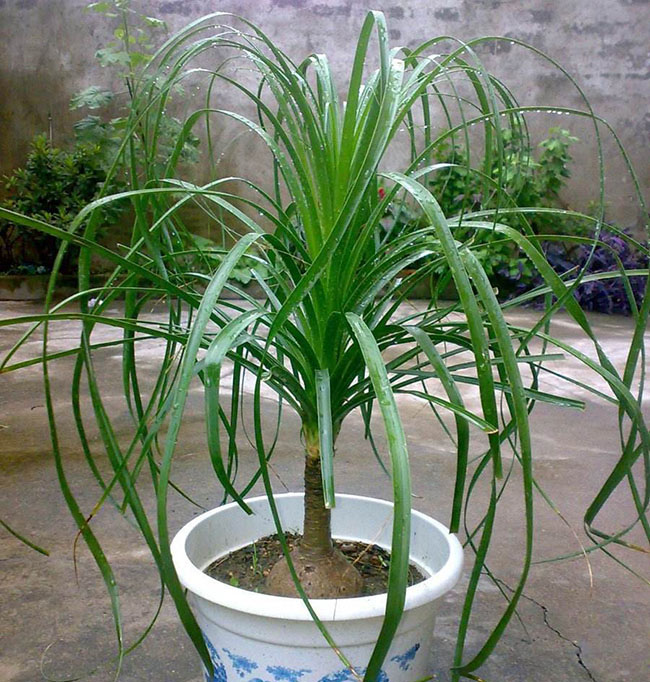
Morphological Characteristics of the Ponytail Palm
An evergreen plant that can grow up to 5 m tall, with an obviously massive stem. Its underground roots are fleshy, and the stem is upright, with the lower part enlarged and shaped like a wine bottle, able to store water. The swollen stem has bark with a thick cork layer, appearing grayish-white or brown. The epidermis of old plants cracks, resembling a tortoise shell, which is quite distinctive. From the top of the single stem grows a cluster of strap-shaped, inward-curving, leathery leaves.
Growing Environment of the Ponytail Palm
It prefers a warm, humid environment with ample sunlight, and is relatively drought-tolerant and cold-tolerant. The suitable growing temperature is 16-28°C, and the overwintering temperature is 0°C. It prefers fertile soil and grows best in sandy loam that drains and aerates well and is rich in humus.
Propagation Methods of the Ponytail Palm
Seed propagation:
Seed propagation of the ponytail palm is generally carried out in late autumn, early spring, or winter. After sowing, it sprouts in about 20-25 days. When the seedlings are 4-5 cm tall, they are potted. The seedlings grow slowly and can be enjoyed in the second year. After sowing the ponytail palm, when a cold wave with low temperatures occurs, you can wrap the flower pot with plastic film to help keep it warm and moist. After the seedlings emerge, promptly uncover the film, and let the seedlings receive sunlight before 9:30 every morning or after 3:30 in the afternoon; otherwise, the ponytail palm seedlings will grow very weak and spindly.
Cutting propagation:
Ponytail palm cuttings are often taken as softwood cuttings in late spring and early autumn using current-year branches, or as hardwood cuttings in early spring using last year's branches. When taking softwood cuttings, from late spring to early autumn when the ponytail palm grows vigorously, select robust current-year ponytail palm branches as cuttings. After cutting off the branches, choose the sturdy parts and cut them into sections 5-15 cm long, each section carrying more than 3 leaf nodes
Cultivation Methods for the Ponytail Palm
Soil:
The ponytail palm prefers loose sandy soil and humus soil, and is tolerant of drought and poor soil. The potting soil should be chosen for good drainage. You can mix 3 parts fertile garden soil with 1 part cinder, then add a small amount of soybean cake or chicken manure as base fertilizer.
Sunlight:
The ponytail palm prefers ample sunlight but also has a certain tolerance for shade. If light is insufficient, the leaves grow thin and weak, and the plant grows less robustly. In spring and autumn, place it in a spot with ample light; in summer, provide appropriate shade, otherwise the leaf tips will scorch and the leaf color will turn yellow. To prevent the plant from growing lopsided, rotate the pot 180° every 4-6 weeks.
Humidity:
The ponytail palm prefers a humid climate, with the relative air humidity during growth at 70-80%. If humidity is too low, the lower leaves will turn yellow and fall off, and the upper leaves will lose their luster.
Water:
Because its stem can store water for use when water is scarce, the ponytail palm is especially drought-tolerant and can still grow normally without watering for half a year. When watering, aim for the potting soil to be moist, and follow the principle of preferring dry over wet. Never let water accumulate in the pot, otherwise the fleshy roots and stem are prone to rot. After late autumn, as temperatures drop, reduce the amount of watering to improve the tree's cold resistance.
Fertilizer:
Spring, summer, and autumn are the peak growing seasons for the ponytail palm. Apply liquid fertilizer or compound fertilizer once every 2-3 weeks to promote swelling at the base. When fertilizing, pay attention to increasing phosphorus and potassium fertilizer, with a nitrogen-phosphorus-potassium ratio of 5:10:5. Stop fertilizing in winter
Pest and Disease Control for the Ponytail Palm
The ponytail palm is sometimes affected by leaf spot disease, which can be controlled by spraying Bordeaux mixture (1:1:100) once every half month. For damage by mirid bugs, whiteflies, and scale insects, spray with a 1500-fold dilution of 40% omethoate emulsion
Main Value of the Ponytail Palm
As a foliage plant grown for its ornamental stem and leaves, the ponytail palm gives a novel and distinctive feeling when used to decorate living rooms and studies, or to adorn hotels and conference venues. It can be planted in various sizes for indoor decoration. Small plants grown in exquisite pots and placed on a desk or tabletop appear elegant and refined. Medium and large potted plants used to decorate halls, meeting rooms, reception rooms, hotels, shopping malls, and other places are full of tropical charm and highly enjoyable to admire.
How to Grow a Ponytail Palm: Cultivation Methods and Precautions
The ponytail palm is something many people have probably never heard of but have all seen. Its stem is slender, but its base is relatively thick and large, just like a wine bottle, with a unique shape. Its leaves are thin and long, drooping naturally and softly like willow leaves, looking very elegant and beautiful, and deeply loved by everyone. So do you know the cultivation techniques for the ponytail palm? Let's learn about it together with the editor below!
How to Grow a Ponytail Palm
1. Soil: The ponytail palm prefers loose sandy soil and humus soil, and is tolerant of drought and poor soil. The potting soil should be chosen for good drainage. You can mix 3 parts fertile garden soil with 1 part cinder, then add a small amount of soybean cake or chicken manure as base fertilizer.
2. Sunlight: The ponytail palm prefers ample sunlight but also has a certain tolerance for shade. If light is insufficient, the leaves grow thin and weak, and the plant grows less robustly. In spring and autumn, place it in a spot with ample light; in summer, provide appropriate shade, otherwise the leaf tips will scorch and the leaf color will turn yellow. To prevent the plant from growing lopsided, rotate the pot 180° every 4-6 weeks.
3. Humidity: The ponytail palm prefers a humid climate, with the relative air humidity during growth at 70-80%. If humidity is too low, the lower leaves will turn yellow and fall off, and the upper leaves will lose their luster.
4. Water: Because its stem can store water for use when water is scarce, the ponytail palm is especially drought-tolerant and can still grow normally without watering for half a year. When watering, aim for the potting soil to be moist, and follow the principle of preferring dry over wet. Never let water accumulate in the pot, otherwise the fleshy roots and stem are prone to rot. After late autumn, as temperatures drop, reduce the amount of watering to improve the tree's cold resistance.
5. Fertilizer: Spring, summer, and autumn are the peak growing seasons for the ponytail palm. Apply liquid fertilizer or compound fertilizer once every 2-3 weeks to promote swelling at the base. When fertilizing, pay attention to increasing phosphorus and potassium fertilizer, with a nitrogen-phosphorus-potassium ratio of 5:10:5. Stop fertilizing in winter.
6. Pests: The ponytail palm is sometimes affected by leaf spot disease, which can be controlled by spraying Bordeaux mixture (1:1:100) once every half month. For damage by mirid bugs, whiteflies, and scale insects, spray with a 1500-fold dilution of 40% omethoate emulsion.
7. Pruning: In winter, cut off the weak, diseased, pest-infested, dead, and overly dense branches of the ponytail palm.
Cultivation Methods and Precautions for the Ponytail Palm
1. When growing the ponytail palm, its light exposure must be controlled. During cutting propagation, light is indispensable, because the cuttings still need to continue photosynthesis to produce nutrients and rooting substances to supply their rooting needs.
2. When growing the ponytail palm in summer, strengthen air circulation so that the internal heat can dissipate. Grow it in a semi-shaded spot, or provide 50% shading for it. Spray 2-3 times a day to lower the temperature and increase air humidity.
3. When growing it in winter, place it in a bright indoor spot. If grown outdoors, wrap it with plastic film to overwinter, but uncover the film every two days at the warmer midday period to let it breathe.
4. When fertilizing, be sure to increase phosphorus and potassium fertilizer, with a nitrogen-phosphorus-potassium ratio of 5:10:5. Stop fertilizing in winter.
5. During the winter dormant period, control the application of fertilizer and water well. Generally, fertilizer and water management follows the cycle: fertilizer, clear water, clear water, fertilizer, clear water, clear water, applied once every 3-7 days. After the beginning of winter and before the beginning of spring, you can apply a small amount of fertilizer to it, but do not water.
What to Do If the Ponytail Palm Gets Too Tall
First, we need to find a tool sharp enough to carry out this operation. Next is choosing where to make the cut. Many friends who have just started growing this plant do not know where it is best to start, but it is actually very simple. Generally, after a plant has grown for some time, everyone will notice that the base becomes harder and harder, and from the base upward the hardness of the stem decreases, with the top being the softest. If we cut at a relatively high point, that part is too tender and very easily loses water, and is also easily invaded by bacteria at the wound surface. In that case, after cutting, the plant will neither easily develop roots, and the wound will easily soften before it heals. So we should choose to cut at a relatively hard position not too far from the root-stem. Generally, you can choose to cut at 1/3 of the plant; if the plant is too tall, you can go even lower. Once you have found the position, you can make the cut, and note that the cut surface should be as flat as possible.
What to Do If the Ponytail Palm Has Root Rot
1. A very common cause of root problems is too much water and overly wet potting soil. This plant itself is a very drought-tolerant plant, so excess water is completely harmful and not beneficial to it. Long-term high humidity erodes the plant's roots, and the root-stem is very prone to rot. So watering should usually be controlled, and be sure not to let water accumulate in the pot. On rainy days, it must never be allowed to get rained on, also to prevent water accumulation. If it is watered by rain and the moisture is not removed in time, after some time the plant's root-stem will definitely begin to blacken and rot.
2. Root problems may also mean the plant is sick. There is a type of bacterium that erodes its root-stem, causing the roots to blacken and rot. In this case, we should discover it in time and treat it early. In the early stage of the disease, dilute agricultural streptomycin at 1:1000 and spray it on the affected parts of the plant, or you can water with a 1:800 dilution of 65% dexon, which has a very good effect.
As described above, the ponytail palm stays green all year round. It can be especially beautiful and elegant when used to decorate a room or balcony, and it also has benefits such as purifying the air and absorbing formaldehyde. If you are a friend who grows flowers and plants, you might as well grow a ponytail palm!
Cultivation Methods and Precautions for the Ponytail Palm
Soil for the Ponytail Palm
The ponytail palm is relatively tolerant of poor soil and drought, so the potting soil should have good drainage, and it is suitable for growing in sandy loam rich in humus. The soil can be prepared by mixing fertile garden soil, leaf mold, and river sand.
Temperature for the Ponytail Palm
The ponytail palm likes warmth, and a growing environment of 20-28°C is most suitable. It can survive in a high-temperature environment of 33°C, but it is not cold-tolerant. Generally, it stops growing at around minus 13°C. In winter, the temperature should be kept at a minimum of above 10°C, otherwise it will cause rot at the base, causing the plant to wither.
Light for the Ponytail Palm
The ponytail palm is suitable for growing in an environment with ample light. Because of its strong growth vigor, it also tolerates a certain amount of shade. Insufficient light will cause the leaves to become thin and weak, which is not conducive to the plant's survival and development.
Except in summer, the ponytail palm needs to receive ample sunlight to ensure its vigorous growth. During the summer growing period, it needs to be shaded, with the shaded area reaching more than half of its own area, otherwise the leaves will turn yellow and wither.
When receiving light, change its position regularly to facilitate even lighting, which can give the plant a graceful appearance. It is best to turn the flower pot once about every month and a half.
Water for the Ponytail Palm
The ponytail palm likes moisture. Therefore, the relative air humidity should be maintained at 70%-80%. If it is too low, the leaves will turn yellow, wither, or fall off, becoming dull and lusterless, affecting the overall ornamental value.
The ponytail palm has a thick, sturdy root-stem, so it has good drought tolerance and can still grow and develop without watering for about half a year. As long as you manage the humidity for the ponytail palm well, you can keep the potting soil slightly dry, reduce watering in autumn and winter, and never allow water to accumulate in the pot.
How to Fertilize the Ponytail Palm
Generally, the ponytail palm is mostly given compound fertilizer or liquid fertilizer containing nitrogen, phosphorus, and potassium. Stop fertilizing in winter.
How to Repot the Ponytail Palm
As long as it is cared for properly, the ponytail palm will grow very quickly. When it grows to a certain size, you should consider giving it a larger pot so that it can continue to grow vigorously. For the potting soil and component ratio used for repotting, you can choose one of the following: vegetable garden soil:cinder = 3:1; or garden soil:medium-coarse river sand:sawdust (mushroom residue) = 4:1:2; or one of paddy soil, pond mud, or leaf mold.
How to Remove the Ponytail Palm from Its Pot
Place the flower that is to be repotted on the ground. First, lightly pat around the pot with your palm to make the root system vibrate and separate from the pot wall. Turn the flower pot upside down and place it on your left hand. Gently clamp the plant between the index and middle fingers of your left hand, with your wrist and fingertips braced against the pot rim. Pat the bottom of the pot with your right hand, then use your thumb to push the root soil downward from the drainage hole, letting the plant slip out. After it comes out, gently pat the potting soil with both palms to let excess soil fall away.
Winter Care for the Ponytail Palm
Move it indoors to a bright spot for care
Outdoors, you can wrap it with plastic film to overwinter, but uncover the film every two days at the warmer midday period to let it breathe.
Light: In autumn, winter, and spring, you can give ample sunlight, but in summer provide more than 50% shade. When keeping it indoors, place it in a spot with bright light as much as possible, such as a well-lit living room, bedroom, study, and similar places. After keeping it indoors for a period (about one month), move it outdoors to a shaded spot (with cold protection conditions in winter) for care for a period (about one month), and alternate back and forth in this way.
Fertilizer and water: For potted plants, in addition to adding organic fertilizer when potting, proper fertilizer and water management should also be carried out during routine care. Spring, summer, and autumn are the peak growing seasons for the ponytail palm. Fertilizer and water management follows the cycle: fertilizer - clear water - fertilizer - clear water, with an interval of about 1-4 days. On sunny days or during high temperatures, the interval is shorter; on rainy days or during low temperatures, the interval is longer or no watering is done.
During the winter dormant period, the main task is to control fertilizer and water well. Fertilizer and water management follows the cycle: fertilizer - clear water - clear water - fertilizer - clear water - clear water, with an interval of about 3-7 days. For plants grown in the ground, in spring and summer, according to drought conditions, apply fertilizer and water 2-4 times: first dig a small ditch in a ring 30-100 cm outside the root collar (the larger the plant, the farther from the root collar), with the ditch width and depth both 20 cm. Spread 25-50 jin of organic fertilizer into the ditch, or 1-5 liang of granular compound fertilizer (chemical fertilizer), then water thoroughly. After the beginning of winter and before the beginning of spring, apply fertilizer once more according to the above method, but do not water.
Pruning: In winter, when the plant enters dormancy or semi-dormancy, cut off the weak, diseased, pest-infested, dead, and overly dense branches. You can also tidy up the branches in combination with taking cuttings.
Pest and Disease Control for the Ponytail Palm
Pests and diseases can also trouble the growth and development of the ponytail palm, especially leaf spot disease, which can be prevented and controlled by spraying 1:1:100 Bordeaux mixture once every 15 days. The main pests include whiteflies, scale insects, and others, which can be controlled by spraying with 40% omethoate emulsion.