How to grow a Boston fern? Cultivation methods and points to note
Boston Fern Encyclopedia
A perennial evergreen fern herbaceous plant, it is a type of drooping fern foliage plant, native to the tropics and subtropics, and is distributed in Taiwan province, China. A drooping fern foliage plant, suitable for indoor hanging ornamental potting, potted culture and vertical greening; its stolons can be cut off and used as decorative arrangement material. The Boston fern can absorb about 20 micrograms of formaldehyde per hour, so it is considered the most effective biological “purifier”. It can remove: xylene, toluene, formaldehyde.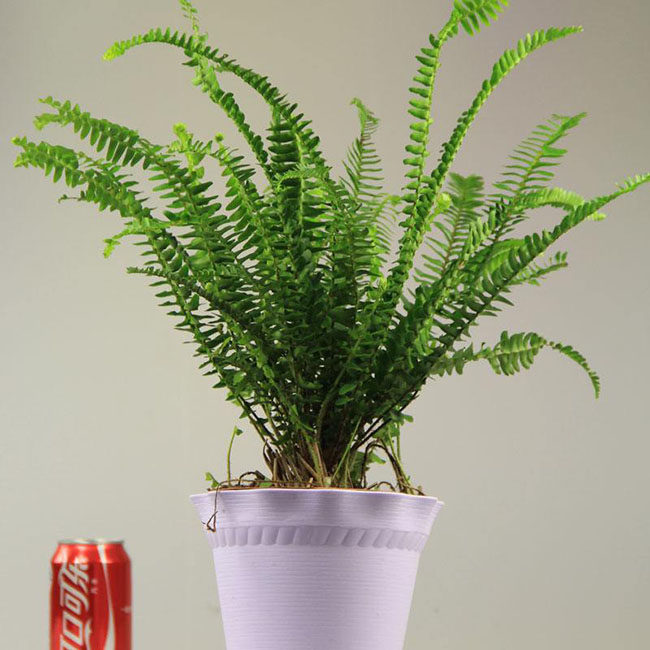
Boston Fern Morphological Characteristics
It is a perennial evergreen fern herbaceous plant. The rhizome is upright, with stolons. The leaves are clustered, can reach more than 60 cm in length, with slender compound leaves; after unfolding, the leaf blades droop, and the leaf blades are bipinnately deeply lobed, with the base of the pinnules having an ear-shaped oblique offset. The sori are semicircular, borne on the back of the leaves near the leaf margin.
This plant is a type of drooping fern foliage plant, suitable for indoor hanging ornamental potting, and its stolons can be cut off and used as decorative arrangement material.
Boston Fern Growing Environment
Generally place it in a spot with bright scattered light indoors for cultivation; it must not be exposed to direct strong light, but it also must not be placed in a dark spot for cultivation. The suitable growth temperature is 15-25°C, and in winter it can safely overwinter above 10°C.
Although it is drought-tolerant, it still needs sufficient water, and it should not be too wet or too dry; keep the potting soil consistently moist. In summer, water 1-2 times a day, and frequently spray water on the leaf surface. It does not need much fertilizer; during the growing season, applying a thin decomposed cake fertilizer once every 4 weeks is enough. Do not use quick-acting chemical fertilizers. When fertilizing, never let it stain the leaves, so as to avoid damage.
Boston Fern Distribution Range
Native to the tropics and subtropics, and distributed in Taiwan province, China. It likes warm, humid and semi-shady environments, and also likes ventilation; it dislikes extreme heat.
Boston Fern Propagation Methods
The Boston fern does not produce fertile fronds, so it can only be propagated by division or runners. Division can be carried out throughout the year, with spring and autumn being better. After division, water thoroughly, place in a shady spot, and it will quickly resume growth. The division method is commonly used for propagation; in summer, cut off the small rooted plantlets growing on the stolons from vigorously growing plants, and plant them separately.
Boston Fern Cultivation Methods
1. Substrate:
The Boston fern cultivation substrate is loose, well-drained and well-aerated imported peat of the Klasmann 10-30 mm specification. Break up the peat, add water and mix well; after mixing with water, tightly squeeze a handful of peat and water seeps out between the fingers, then it is ready for potting. A 12 cm pot uses about 350 ml of peat per pot; one 300 L bag of imported peat can fill about 800 cups.
2. Potting:
For potting the Boston fern, choose high-quality seedlings from professional production, with a seedling height of 7-8 cm and a crown width of 4-5 cm, free of pests and diseases, and free of dead or yellow leaves. First pot them in 12 cm specification pots, 1 clump/pot, and grow for 3-4 months. Then transfer to 18 cm pots, and after 6-7 months of growing they can be shipped.
3. Temperature:
The suitable temperature for the Boston fern is 18-35°C; growth is poor both above 35°C and below 15°C. During overwintering it must not go below 5°C. Winter maintenance requires heating equipment; if there is no heating facility, double-layer insulation facilities can be used. In winter, when the temperature drops to 22-24°C in the afternoon, the greenhouse should be sealed in time. Summer maintenance requires cooling equipment (exhaust fan and water curtain).
4. Light:
The Boston fern likes bright scattered light. In spring and summer, it should be placed in a spot with bright scattered light indoors. When the sunlight is strong, it must not be placed in direct sunlight; direct sunlight will turn the leaves yellow. In winter, light should be appropriately increased, otherwise the leaf color easily turns yellow or the leaf margins dry up.
5. Water:
The Boston fern likes a humid environment and requires relatively high soil moisture and air humidity. Because the roots of the Boston fern are adventitious roots, their ability to absorb and retain water is relatively poor, so water must be supplied in time; otherwise, if it dries out for too long, the leaves easily turn yellow and fall off. In spring and summer, the potting soil must always remain moist, but it must not become waterlogged; it should not be too wet, and it is best to keep the potting soil consistently moist. In summer, in addition to watering in time, also frequently spray water on the leaf surface. When the indoor temperature is low in winter, watering should be reduced, and keeping the soil slightly moist is enough.
6. Fertilizing:
The Boston fern should not be fertilized at too high a concentration, otherwise the roots are easily damaged. The best way to fertilize is to first add decomposed barnyard manure when potting (repot once every 1 year in spring), and then during the peak growing season apply a thin fertilizer as a top dressing. When fertilizing, avoid letting the fertilizer liquid stain the leaves; if it is accidentally stained, immediately spray clean water to rinse it off.
Pest and Disease Control
The main diseases are leaf spot and damping-off. The main pests are the damage caused by caterpillars, scale insects, mealybugs and nematodes, etc.
Boston Fern Care
Water and Fertilizer Management:
The Boston fern should keep the potting soil moist, and during the growing season water should be supplied adequately. Although the soil should be kept moist, for the Boston fern, if it is often dried out, the lower leaves will wither and fall off.
Temperature Management:
The suitable temperature for the Boston fern is 18°C-35°C; growth is poor both above 35°C and below 15°C. During overwintering it must not go below 5°C. Winter maintenance requires heating equipment; if there is no heating facility, double-layer insulation facilities can be used. In winter, when the temperature drops to 22-24°C in the afternoon, the greenhouse should be sealed in time. Summer maintenance requires cooling equipment (exhaust fan and water curtain). If there is no heating or cooling equipment, shading and ventilation should be strengthened at noon in summer, and leaf-surface water and ground water should be added to achieve the purpose of cooling. At the same time, long-distance multi-span greenhouses should not be used; independent single-span greenhouses should be used instead.
Humidity Management:
It likes a high-humidity environment and cannot tolerate dryness. During maintenance, water should be frequently sprayed on the plants and the growing environment to increase humidity. The suitable humidity is about 75%-80%. Excessive dryness will cause the leaf margins to turn yellow, and even the whole leaf to turn yellow.
Light Management:
The Boston fern likes a warm, semi-shady environment and is suitable for scattered light; it must not be exposed to direct sunlight, otherwise it easily wilts and curls. 15 days after planting, controlling light at 2000-3000 Lux is more suitable for the growth of small seedlings. In the first month after planting, the overall light control at 3000-4000 Lux is more suitable. In the second month after planting, the overall light control at 5000-6000 Lux is more suitable. Afterwards, the overall light control at around 7000-8000 Lux is more suitable. In winter, according to actual conditions, it can be controlled at 10000-15000 Lux. Excessive light causes the plant's leaf margins to scorch and fall off, the leaves to curl, and growth to be hindered.
Fertilizer Management:
Use Peter's 20-20-20 water-soluble fertilizer, calcium nitrate, potassium nitrate.
Boston Fern Main Value
A drooping fern foliage plant, suitable for indoor hanging ornamental potting, potted culture and vertical greening; its stolons can be cut off and used as decorative arrangement material. The Boston fern can absorb about 20 micrograms of formaldehyde per hour, so it is considered the most effective biological “purifier”. It can remove: xylene, toluene, formaldehyde.
How to grow a Boston fern: Boston fern cultivation methods and points to note
Ferns are liked by more and more people because their leaf shapes are relatively beautiful, and they have gradually become a type of plant that people grow at home. The Boston fern is a type of fern that has developed relatively well in recent years. Growing a Boston fern at home can add a touch of green and vitality to the household, and can very well show the life and vitality of the courtyard. At the same time, the Boston fern is also a very good air-purifying plant.
How to grow a Boston fern
1. Propagation: The Boston fern is commonly propagated by division. In summer, cut off the small rooted Boston ferns growing on the stolons from vigorously growing Boston fern plants, and plant them separately.
2. Light: Boston ferns are generally cultivated indoors, using pots, and cultivated in bright scattered light indoors. They must not be exposed to direct strong light, but they also must not be placed in a dark spot for cultivation.
3. Temperature: The suitable growth temperature for the Boston fern is 15-25°C, and in winter it can safely overwinter above 10°C. Winter maintenance of the Boston fern requires heating equipment; if there is no heating facility, double-layer insulation facilities can be used.
4. Humidity: The Boston fern likes a high-humidity environment and cannot tolerate dryness. During maintenance, water should be frequently sprayed on the Boston fern and the growing environment to increase humidity. The suitable humidity is about 75%-80%. Excessive dryness of the Boston fern will cause the leaf margins of the Boston fern to turn yellow, and even the whole leaf to turn yellow.
5. Soil: When choosing soil for the Boston fern, a mixed culture soil of leaf mold, river sand and garden soil should be selected. If conditions permit, using sphagnum moss as the growing medium will make it grow better. The Boston fern should be repotted once a year. For outdoor cultivation of the Boston fern, about half expanded plastic artificial soil can be mixed into ordinary culture soil and stirred evenly.
6. Watering: Although the Boston fern is drought-tolerant, it still needs sufficient water, and the Boston fern should not be watered too wet or too dry; keep the potting soil consistently moist. During the growing season water should be supplied adequately. If the Boston fern is often dried out, the lower Boston fern leaves will wither and fall off. In summer, water 1-2 times a day, and frequently spray water on the Boston fern leaf surface.
7. Fertilizing: The Boston fern does not need much fertilizer; during the growing season, applying a thin decomposed cake fertilizer once every 4 weeks is enough. The Boston fern should not use quick-acting chemical fertilizers. When fertilizing, never let it stain the Boston fern leaves, so as to avoid damaging the Boston fern.
8. Pests and diseases: The main diseases of the Boston fern are leaf spot and damping-off, and the main pests are the damage caused by caterpillars, scale insects, mealybugs and nematodes, etc.
Boston Fern Cultivation Methods and Points to Note
1. Soil Requirements
For potting, use a mixed culture soil of leaf mold, river sand and garden soil. If conditions permit, using sphagnum moss as the growing medium will make it grow better. Repot once every other year in spring.
2. Watering Method
Water with the principle of keeping it moist. The Boston fern has relatively strict water requirements; it should not be too wet, nor too dry, and it is best to keep the potting soil consistently moist. In summer, some wet sand can be spread on the ground around the flower pot, and some water sprayed, to increase the environmental humidity. When the indoor temperature is low in winter, watering should be reduced, and keeping the soil slightly moist is appropriate.
In summer, water once every 1-2 days, but in winter the amount of watering should be controlled. Spray water on the plant and the surrounding environment 2-3 times a day to increase air humidity. In autumn and winter, water again when the soil is half dry. If the plant wilts due to lack of water, the whole pot can be soaked in water to revive it, and the leaves should be sprayed more. If after soaking for 24 hours it still has not regained an upright position, you might as well cut off all the leaves to promote the growth of new leaves. The root system of the Boston fern is weak and extremely sensitive, so the fertilizer concentration should not be too high, otherwise it is easily damaged. But ferns also all like fertile soil that retains water, so the best way is to first add decomposed barnyard manure when potting, and later apply a thin fertilizer as a top dressing. When fertilizing, avoid letting the fertilizer liquid stain the leaves; if it is accidentally stained, immediately spray clean water to rinse it off. In addition to using culture soil plus decomposed compost as the growing medium, to avoid it being too compacted, coarse sand can be added, and remember to first use coarse gravel and small stones as a bottom layer at the bottom of the pot.
3. Repotting
Generally repot once every 1 year in spring, and the potting soil should be a mix mainly of leaf mold with a small amount of river sand. If conditions permit, using materials such as moss as the growing medium will make it grow even better. In addition, the Boston fern. It likes a warm environment, and the suitable growth temperature is 15-25°C; the overwintering temperature should not be lower than 5°C. In winter, the indoor temperature should preferably be kept above 6°C. If the lower old leaves are found to be withered and yellow, they should be cut off in time to keep the plant shape beautiful.
Propagation of the Boston Fern
In early summer, the stolons growing on the plant will grow rapidly and produce small rooted plantlets. In summer, choose vigorously growing plants, then cut off the above-mentioned small rooted plantlets and plant them separately. When dividing in combination with repotting, first invert the plant and take it out of the flower pot, shake off all the old soil, then cut it into several clumps and plant them separately, then place them in a shady spot, and after about a week they can be maintained normally. When potting, the soil can be a mixed culture soil of leaf mold, river sand and garden soil; if sphagnum moss can be used as the growing medium, that would be even better.
Is the Boston Fern Suitable for Indoor Cultivation
As mentioned above, the Boston fern is not only non-toxic, but can also purify the air, so it is very suitable for indoor cultivation, helping people absorb harmful gases and playing a certain role in ensuring air quality and human health. Therefore, the Boston fern is especially suitable for placing in newly renovated homes. In addition, placing the Boston fern indoors for cultivation can also play a role in beautifying the home environment and decorating the room. The fresh green leaves look very beautiful and pleasing to the eye, making people feel the breath of spring, thereby relaxing the mood. It is precisely because the mood is relaxed that sleep quality is also improved, so the Boston fern can also improve people's sleep quality.
The key points for growing a Boston fern are nothing more than light, soil, water and fertilizer, while also paying attention to some aspects of repotting and propagation of the Boston fern, and relatively good growing results can be achieved. In fact, growing a Boston fern should not be difficult; after all, before people cultivated them, ferns were just wild grass in the mountains.
Boston Fern Cultivation Methods and Points to Note, Boston Fern Pictures
The Boston fern is a terrestrial fern foliage plant of the family Nephrolepidaceae, genus Nephrolepis. Native to the tropics and subtropics, it is distributed in Taiwan province, China. It is a perennial evergreen fern herbaceous plant. The rhizome is upright, with stolons. The leaves are clustered, can reach more than 60 cm in length, with slender compound leaves; after unfolding, the leaf blades droop, and the leaf blades are bipinnately deeply lobed, with the base of the pinnules having an ear-shaped oblique offset. The sori are semicircular, borne on the back of the leaves near the leaf margin. This plant is a type of drooping fern foliage plant, suitable for indoor hanging ornamental potting, and its stolons can be cut off and used as decorative arrangement material. The Boston fern, I believe many friends who do not usually know much about flowers are hearing about it for the first time, but in fact this plant is a relatively popular indoor potted plant at present. In modern home life, potted plants are a very common plant decoration, so the small potted Boston fern has gradually appeared in people's lives. So what exactly is this Boston fern, and how should it be grown? Today let us take a look at the Boston fern.Boston Fern Cultivation Methods and Points to Note, Boston Fern Pictures
The Boston fern is a perennial evergreen fern herbaceous plant of the family Nephrolepidaceae, genus Nephrolepis. It is native to the tropics and subtropics, and is a type of drooping fern foliage plant. At present it is relatively widely distributed in Taiwan province, China. The Boston fern, as a type of drooping foliage plant, has high ornamental value and is often potted by people and placed indoors for hanging ornament, and its stolons are also cut off as decorative arrangement material, so it is still relatively common in people's lives. In addition, it is understood that the Boston fern has good air purification ability. When used for indoor decoration, it can effectively absorb formaldehyde from the air. It is recognized as the most effective biological purifier, and each hour it can absorb about 20 micrograms of formaldehyde, so it is still very popular.
At present there are actually not many cultivation methods for the Boston fern, because this plant is relatively unique: it does not produce fertile fronds, so to a certain extent it can only be propagated by division or runners, and among these the method commonly used by people is the division propagation method. When growing it, it is generally chosen in summer each year: from robust and vigorously growing Boston fern plants, cut off the small rooted plantlets growing on the stolons, use them as cuttings and plant them separately into flower pots. After division, water thoroughly and place in a cool indoor spot, and the plant will quickly take root and sprout.
1. Soil Management
As a relatively good foliage plant, the Boston fern is often grown by people as a potted plant. So how should the Boston fern be grown? First of all, everyone needs to pay attention to the soil issue. The Boston fern has relatively high soil requirements. When growing it in pots, it needs to be prepared by mixing leaf mold, river sand and garden soil in certain proportions. The soil fertility should be sufficient, and it should be loose and breathable with good drainage. If conditions permit, an amount of sphagnum moss can also be added to the soil, making the soil even more perfect and allowing the Boston fern to grow more healthily. In addition, to maintain sufficient nutrients in the potting soil, it needs to be replaced once every spring.
2. Light Management
The Boston fern likes light and warmth. During cultivation, its light and temperature issues need to be carefully noted. Although the plant likes light, the Boston fern is still relatively suited to a semi-shady environment. During cultivation, try to avoid exposing the plant to direct sunlight, otherwise its leaves will gradually wither and curl. Growing it under scattered light is best.
3. Temperature Management
The suitable growth temperature for the Boston fern is between 18 and 35°C. Too high or too low a temperature is unfavorable to the plant's growth, especially when the temperature is above 35°C or below 15°C. Moreover, the Boston fern is not cold-tolerant. When the winter temperature is below 5°C, the plant will be at risk of cold damage. Pay attention to controlling the plant's growth temperature, and cool or keep it warm appropriately.
3. Water and Fertilizer Management
The Boston fern does not have particularly high requirements for water and fertilizer. In terms of watering, an appropriate amount of water is enough; it does not need too much or too little. During the vigorous growing period, just maintain an adequate water supply; keep the soil moist, and the plant can grow normally and healthily. In summer, watering 1 to 2 times a day is enough. If there is no water replenishment for a long time, the Boston fern easily turns yellow and drops leaves. In addition, in terms of fertilizing, during the growth period the Boston fern needs to be given a thin decomposed cake fertilizer once every 4 weeks. When fertilizing, be sure to be careful not to let the fertilizer stain the Boston fern leaves, otherwise the leaves will be damaged.