Detailed Explanation of Key Points of Eggplant Substrate Bag Cultivation Technology
Eggplant is one of the main facility-cultivated vegetables in China. With hot summers and frequent heavy rain, and cold winters with little sunlight, facility eggplants are usually produced in two crops per year, and mainly early spring cultivation, with a concentrated harvest period and a short market supply period, so basically there is no local eggplant supply in winter and spring. Using this model to cultivate eggplant gives high yields, and the market period is right in the slackest period of market supply, so the benefits are very significant.
1. Cultivated variety
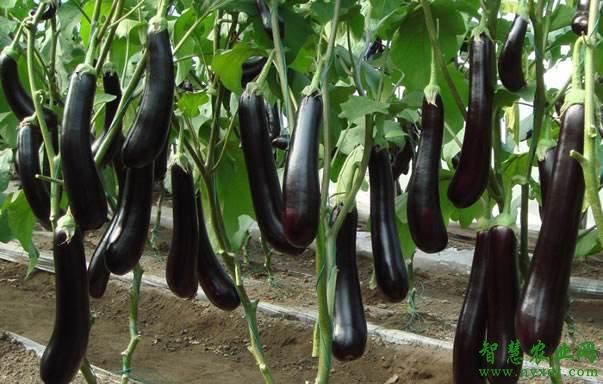
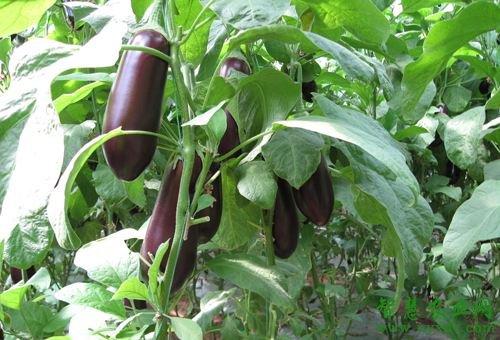
Choose Bulita, which has a large plant spread, small calyx, medium-sized leaves, no thorns, early maturity, good yield performance, fast growth, and a long harvest period. The fruit is long, with an average fruit length of 25 to 30 cm, a transverse diameter of 6-8 cm, and a single fruit weight of 400 to 450 g. The fruit is purple-black, smooth and glossy, with a green stem and green calyx, delicious taste, long shelf life, and good marketability. The yield per 667 sq m is more than 18,000 kg, making it very suitable as a variety for the north.
2. Cultivation substrate
Mix imported peat, vermiculite, and perlite at a volume ratio of 8:1:1 as the cultivation substrate. In addition, nutrient solution is also used for irrigation.
3. Preparation of substrate bags
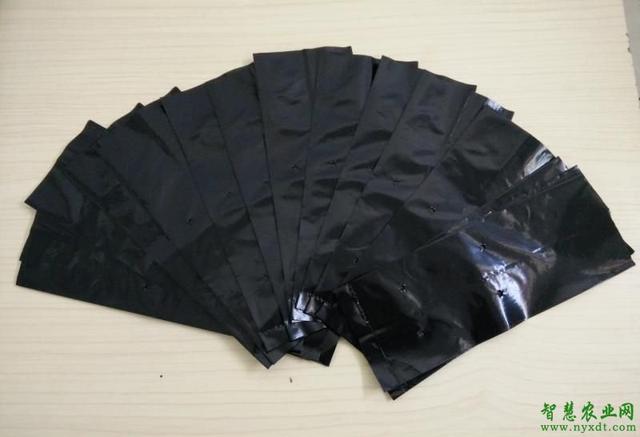
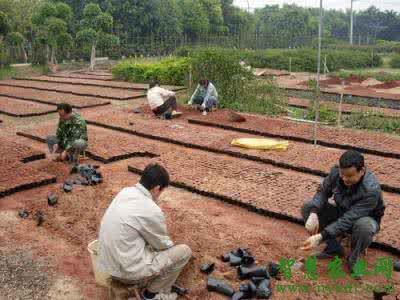
Fill the cultivation substrate into substrate bags with a specification of 40*80 cm, so that after sealing, the height of the substrate bag when placed horizontally is 20-25 cm. Arrange the substrate bags neatly in the cultivation greenhouse at a row spacing of 160 cm, with the direction depending on the greenhouse orientation (generally north-south orientation), and lay steel pipe trolley tracks with a heating function between every two rows of substrate bags, while also preparing drip irrigation facilities.
4. Planting
For planting, the plant spacing is 20 cm, and about 2,000 plants are planted per 667 sq m. The planting method is as follows: before planting, use a special hole puncher to punch holes in the substrate bags at a plant spacing of 20 cm, and dig the planting holes into pits 6 cm deep, then cut off the bottom of the nutrient pot containing the grafted seedling with a knife, and plant the bottom-cut nutrient pot directly into the planting hole and press it firmly. After planting, arrange the nutrient solution drip irrigation facilities, insert each dripper into the nutrient pot, and drip irrigate once thoroughly so that the substrate in the substrate bags absorbs water to saturation, then poke 4-6 drainage holes at the bottom of each side of each substrate bag so that excess water can seep out.
Since the substrate in the substrate bags contains no nutrients, nutrient solution must be drip irrigated every day to maintain normal eggplant growth. The nutrient solution should preferably have a pH of about 6.5, and the EC value should preferably be 1.5-2.0 mS/cm. Because imported peat has good permeability and water-holding capacity, under normal conditions when the substrate reaches saturated water-holding capacity it still has good permeability, so nutrient solution should be drip irrigated 2-3 times per day. Under normal conditions, before the first fruit sets, drip irrigate about 100 mL of nutrient solution per plant each time, and then gradually increase it. When the plant height reaches 1.5 m, drip irrigate about 300 mL of nutrient solution per plant each time. Regularly test the EC value of the substrate extract; if the EC value exceeds 2.5 mS/cm, then drip clean water 2-3 times as appropriate. During field observation, close attention must be paid to eggplant growth so as to avoid nutrient deficiency or element toxicity in the plants.
Harvesting and storage and transportation
To judge eggplant maturity, observe the white or light green ring-shaped band at the junction of the calyx and the fruit. When this band tends to become inconspicuous or is disappearing, it is the suitable harvest time. When harvesting, use scissors to cut off the fruit stalk to prevent damage to the main stem, reduce respiration intensity, and reduce water evaporation. Harvesting should be chosen in the evening or morning. After harvesting, wrap each fruit with a layer of paper or put it into a plastic bag, then place the eggplants layer by layer with heads facing heads and tails facing tails. The basket for loading eggplants should not be too large; the eggplants should be filled in and packed tightly, which can both prevent the fruits from shifting and pressing against each other during transportation and avoid damage to the fruit skin caused by friction. For transportation in winter and early spring, use insulated vehicles, or wrap with cotton quilts for insulation; eggplants harvested in summer need to be cooled with cold water after being loaded into baskets, and for long-distance transportation, ice blocks should be placed in the baskets (preferably made by freezing clean water in polyethylene plastic bottles and then putting them into the baskets).
Article source [China Smart Agriculture Official Website]