Potted strawberry growing techniques: you can grow them even on an unused balcony
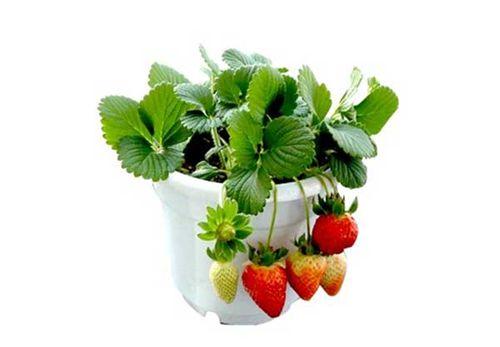
Unused balcony: potted strawberry growing techniques
[Common questions] How do you grow potted strawberries on an unused balcony?
[Expert answer]
1. Choosing pots, soil and varieties. For potted growing, choose ceramic pots or plastic pots with a rim diameter of 20-30 cm. Use soil with a relatively high humus content for the potting mix. For home growing, it is best to use everbearing varieties, so they keep fruiting and you always have berries to eat; good choices for potted growing include everbearing strawberry varieties such as ELAN, Baol, Climbing AR, Climbing H, and Sewa. They can flower and fruit several times throughout the year. Single-season varieties are also fine, but their fruiting period is short; however, the berries taste excellent, such as the Japanese cream strawberry Zhangji, Hongyan and others.
2. Cultivation techniques. The best time for potting is spring or autumn, when the survival rate is high. Choose strong, healthy seedlings; when lifting the seedlings, keep plenty of soil around the roots, remove old and damaged leaves, and trim the roots to about 10 cm. Let the roots spread out and plant them into the potting soil. The planting depth should follow the principle of not exposing the roots and not burying the crown. Firm the soil to fix the seedling in place, keeping the soil surface 3-4 cm below the rim of the pot. After planting, water thoroughly, place in a shady spot for 3-5 days, then move to a spot with plenty of light.
3. Fertilizer and water management. Everbearing strawberries flower and fruit many times a year, consuming a lot of nutrients, so nutrient supplementation must be strengthened. You can use animal hooves, fish bones, poultry innards, soybean cake and so on, add water and let them rot and ferment, and brew them into liquid fertilizer; be sure to dilute it with water until it is very weak before watering, otherwise the strawberries will die from fertilizer burn; or apply a compound fertilizer as a top dressing. When applying top dressing, keep it some distance from the roots and do not let the fertilizer touch the roots. For outdoor potted plants, to prevent them from drying out in summer, it is best to water once in the morning and once in the evening every day. When watering, let the water warm up in the sun first; never water directly with well water or tap water.
4. Plant management. Potted strawberries should have their plants managed carefully. First, thin flower buds, remove leaves and remove runners at the right time. That is, remove ineffective high-level flowers in appropriate amounts during the bud dispersal stage. Remove old leaves, damaged leaves, diseased leaves and excess runners to reduce nutrient consumption and improve fruit quality. Second, support the fruit and shape it. That is, use wire or bamboo sticks to make fruit supports of different shapes, place them in the flower pot to prop up the fruit clusters, promote air circulation and light exposure for the fruit clusters, give the fruit even coloring, prevent soil from contaminating the fruit, and reduce disease and pest damage. Third, use corresponding integrated control measures to prevent and control diseases and pests.
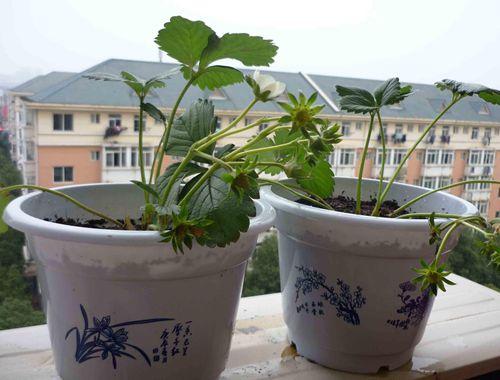
Unused balcony: potted strawberries
5. Repotting. After potted strawberries have fruited for 2 years, they should be repotted or given fresh potting soil after fruiting. When repotting, first take the plant out of the pot, cut off aged roots, dead roots and the lower aged rhizome, then plant it into new potting soil.
[Editor's comment] The article "A Brief Introduction to Potted Strawberry Growing Techniques," compiled by Yuelan of First Agricultural Economics Network, mainly explains in 5 aspects the techniques for growing potted strawberries on an unused balcony. Flower lovers have learned another trick!
---------------------------------------
Flower-growing knowledge
WeChat: yanghua29
Flower-growing knowledge, questions and answers, solving flower-growing problems!