Money Tree Growing Methods and Propagation Techniques Explained in Detail
The money tree originates from the tropical (savanna) climate zone of eastern Africa, where rainfall is relatively low. It likes warm, hot and slightly dry conditions, semi-shade, and an environment with small annual average temperature fluctuations. It is relatively drought-tolerant, but fears cold, avoids strong direct sunlight, and dreads heavy, sticky soil and water accumulating in the pot. If the pot soil has poor aeration and drainage, it easily leads to rot of its tubers.
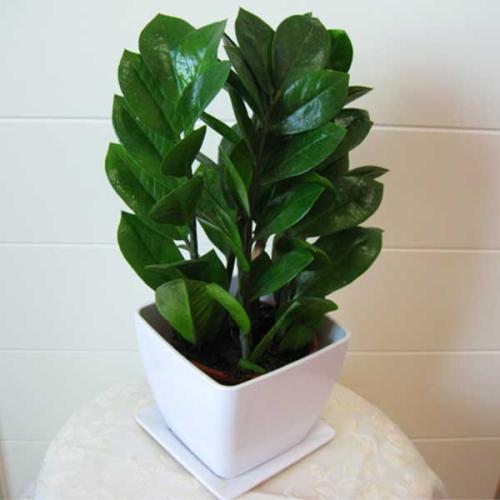
It requires loose, fertile soil that drains well, is rich in organic matter, and is acidic to slightly acidic. It has strong sprouting ability; after cutting off the thick compound leaves, new leaves quickly emerge from the top of its tubers. Next, I will tell you exactly how to grow a money tree:
1. Environmental requirements for growing a money tree
Soil for growing a money tree:
Because of the special climatic conditions of its place of origin, the money tree has developed strong drought resistance, so the basic requirement for the growing medium is good permeability.
The basic requirement for the growing medium is good permeability. The growing medium is mostly a mix of peat, coarse sand or washed coal cinders with a small amount of garden soil, with its pH adjusted to between 6 and 6.5, in a slightly acidic state.
Because of its large tubers, well-developed root system and relatively long pinnate compound leaves, during the growing season you should promptly observe its growth to decide whether to repot and change the soil. Always keep the growing medium well aerated, so as to create a root environment with good air flow and drainage. During the plum rain season, check frequently, and if water accumulation in the pot is found, repot and change the soil promptly.
Temperature for growing a money tree:
The suitable growing temperature is 20-32°C. Whether potted or planted in the ground, it requires small annual average temperature fluctuations, and commercial cultivation is best carried out in a temperature-controlled greenhouse. Every summer, when the temperature reaches above 35°C, the plant grows poorly, so measures such as adding black shade netting and spraying water on the surrounding environment should be used to cool it down, creating a suitable environment with a suitable ambient temperature that is also relatively dry.
In winter, it is best to maintain a greenhouse temperature above 10°C. If the room temperature is below 5°C, the plant is prone to cold damage and its survival is seriously threatened. In late autumn and early winter, when the temperature drops below 8°C, it should be moved promptly to a well-lit indoor spot, and throughout the wintering period the temperature should be kept between 8°C and 10°C, which is relatively safe and reliable.
2. Fertilizer and water management for growing a money tree
The money tree likes fertilizer relatively well. Besides adding an appropriate amount of composted cake fertilizer or multi-element slow-release compound fertilizer to the growing medium, during the growing season you can water in 2-3 times a month a mixed solution of 02.% urea plus 0.1% monopotassium phosphate, or water in a balanced fertilizer 20-10-20 (20-20-20) at a concentration of 200-250 ppm in combination with calcium nitrate.
After mid-autumn, to help it survive the winter safely, nitrogen fertilizer should be stopped, and 0.3% monopotassium phosphate solution should be applied as a top dressing 2-3 times in a row to promote the hardening and filling out of its young leaf stalks and newly emerged leaves. After the temperature drops below 15°C, all forms of top dressing should be stopped to avoid fertilizer damage to the roots under low-temperature conditions.
To care well for a potted money tree, you should strive to create an environment that is both moist and on the dry side. In commercial cultivation, for plants kept in a greenhouse, when the room temperature reaches above 33°C, the plant should be sprayed with water once a day. Because this plant has strong drought tolerance, it is better to keep the pot soil slightly moist and on the dry side, but an occasional excessive watering or fertilizing will not necessarily cause root rot.
In winter, pay attention to spraying water on the leaf surfaces and the surrounding environment so that the relative air humidity reaches above 50%. After mid-autumn, reduce watering, or use spraying instead of watering, to help the newly emerged tender leaves survive the winter safely. In addition, in winter special attention should be paid to keeping the pot soil from being too wet; it is better on the dry side, otherwise under low-temperature conditions, overly wet pot soil more easily leads to root rot, and even the death of the whole plant.
3. Potted care for growing a money tree
Potted money trees like loose, fertile, well-drained sandy loam soil. At home, you can use a mix of leaf mold, peat soil plus an appropriate amount of perlite or river sand as the nutrient soil. Do not use clayey soil, otherwise the permeability is poor and root rot is very likely.
Potted money trees like ample scattered light and avoid strong light. After spring arrives, the light gradually intensifies. Be careful to move the plant to a place with ample scattered light; too strong light easily scorches the leaves, especially when new leaves have just sprouted, so pay even more attention. In winter the light is weaker, so it can be placed in a sunny and warm spot. During care, never keep it in too much shade for a long time, otherwise the newly emerged leaf stalks will grow leggy, droop and become soft, and the ornamental quality will be poor.
The suitable growing temperature is 20-28°C. When the temperature is above 35°C, growth is hindered, the ability to absorb nutrients becomes poorer, and the plant grows poorly; in winter, no lower than 12°C is best, and if it is below 5°C for a long time, cold damage may occur. If the soil moisture is too high, the bulb is very likely to rot.
Potted money trees have relatively strict water requirements. During the growing period, keep the soil moist; although it is relatively drought-tolerant, soil that is too dry provides insufficient water and the plant's leaves droop softly, which is unfavorable for growth. If it is too wet for a long time and ventilation is poor, root rot easily occurs. In winter, water must be controlled, keeping the soil on the dry side, and never water too much. When it is both low-temperature and overly wet, the roots and bulb easily rot, which is the main reason for failure in winter care of money trees. In summer and autumn, when the air is too dry, spray the plant to maintain moisture.
Potted money trees should be repotted once every 2 years. Because the money tree's tubers are large and easily damaged, when taking it out of the pot, be careful to remove it slowly, get rid of part of the old soil, and cut off overly long roots, dead roots and rotten roots. After potting, gently press the soil firm, and water thoroughly once a day later. To improve soil permeability, you can loosen the soil regularly, but be careful not to damage the bulb, otherwise it easily rots.
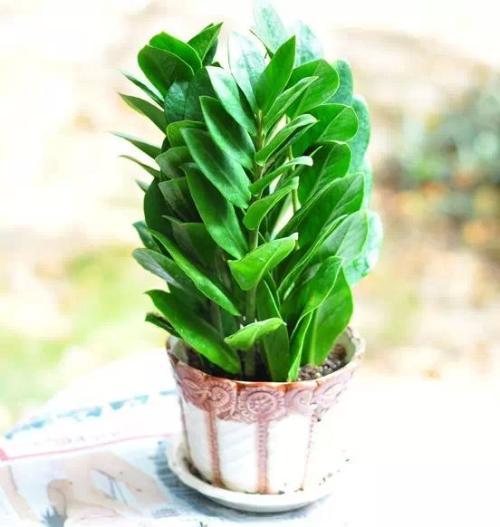
4. Propagation methods for growing a money tree
Money trees are mostly propagated by seed, and can also be propagated by cuttings.
Leaf cuttings are commonly used for propagation, and it is best done during the growing season. Using whole-leaf cuttings, insert the lower 1/4-1/3 into a dry sand bed or sand pot, keep the seedbed moist, and spray water on the leaf surface 2-3 times a day to increase air humidity.
3-4 weeks after cutting, small tubers can be seen beginning to form at the lower end of the leaf stalk, and after another 3-4 weeks, buds begin to grow. From cutting to sprouting takes 6-8 weeks. During the cutting period, the key is to provide strong shading and maintain relatively high air humidity. It can also be propagated by dividing the bulbs. It is often grown as a potted plant; the pot soil should preferably be made by mixing equal parts river sand, peat and leaf mold, or by mixing river sand, peat and an appropriate amount of decomposed organic fertilizer.
Place it in a shade shed or greenhouse for cultivation. During the growing season, maintain sufficient moisture and frequently spray water on the leaf surface to raise air humidity, and fertilize twice a month. It needs relatively more nitrogen, potassium, calcium and magnesium; when potassium and calcium are insufficient, the leaves easily droop. In winter, reduce water appropriately, and pay attention to keeping warm and preventing cold.
5. Precautions for growing a money tree
① Note that the money tree likes a warm, humid climate, likes bright scattered light, tolerates shade, and avoids blazing sun. It is not cold-tolerant; below 2°C it easily drops leaves, and above 6°C it can overwinter safely. It likes fertile, loose soil rich in humus with good drainage, likes fertilizer relatively well, avoids water accumulation, and is slightly drought-tolerant.
② Note that the money tree likes light and also tolerates shade, so it is best to place it in a place with ample light but with some shelter, which both satisfies its light needs and avoids direct strong light causing the money tree's leaves to turn yellow.
③ Note that the money tree is very greedy and likes the nourishment of fertilizer. It is best to reach a fertilizing amount of twice a month during its growing stage and when the temperature is above 15 degrees. The fertilizer types are sold at flower markets. But when the temperature is below 15 degrees, fertilizing must be stopped, otherwise it will cause the rhizome to rot and the leaves to turn yellow.
6. Pest and disease control for growing a money tree
Pay attention to preventing brown spot disease of the money tree. This disease mostly occurs on the leaves; the spots are nearly round, grayish brown to yellowish brown, with a slightly darker edge. This disease easily occurs under conditions of high temperature, high humidity and poor ventilation.
Control method: if a small number of diseased leaves are found, remove and destroy them promptly. In the early stage of the disease, use a 600-fold dilution of 50% carbendazim wettable powder or a 500-fold dilution of 40% chlorothalonil suspension, spraying the leaves once every 10 days, for 3 to 4 times in a row, and the control effect is relatively good.
(1) Diseases: mainly brown spot disease. When a small number of diseased leaves are found, remove and destroy them promptly. For brown spot disease, use a 600-fold dilution of 50% carbendazim wettable powder, spraying the leaves once every 10 days, for 3-4 times in a row, and the control effect is relatively good.
(2) Insect pests: mainly scale insects. For scale insects, spray a 1000-fold dilution of 20% buprofezin wettable powder, and the insecticidal effect is good.