How many dental implants can be placed in one session?
We all know that when extracting four impacted wisdom teeth, it is best not to remove them all at once, mainly because of post-operative trauma reactions and the risk of post-operative infection. In addition, the back teeth on both sides may make eating rather inconvenient, and the face swelling up into a ball also affects daily life and work. But what about dental implants? How many dental implants can be placed in one session?
A dental implant involves inserting an artificial tooth root (usually made of pure titanium metal with excellent biocompatibility) into the alveolar bone, then screwing on an abutment, and finally fitting an all-ceramic crown. Because it does not require grinding down the two adjacent teeth, the implanted tooth is not only as functional as the original one, but generally does not need to be replaced again, making it very popular among patients with missing teeth.
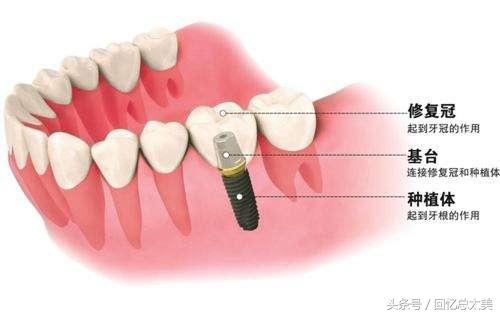
Dental implants
Dental implants can be placed as a single implant or as multiple implants. For example, if three consecutive teeth are missing, implants only need to be placed in the alveolar bone on both sides, and then a porcelain-fused-to-metal fixed bridge is fitted to restore the chewing function of the 3 teeth.
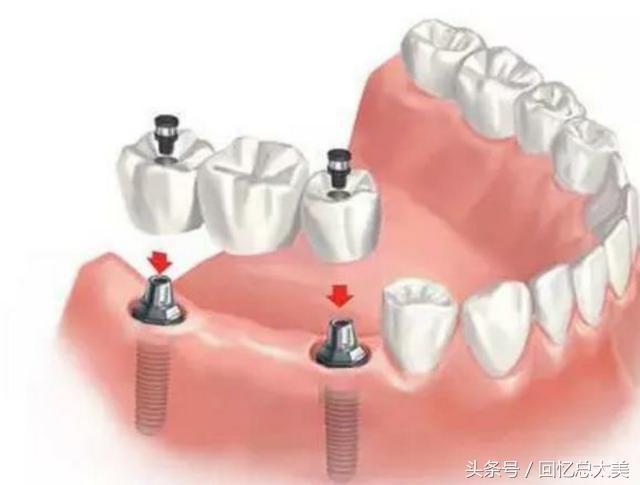
Multiple missing teeth
What if half or all of the teeth in the mouth are gone? Generally, placing 4-8 implants is enough to restore the chewing function of a half-arch or full-arch dentition.
However, the number of dental implants placed in one session must be based on the patient's own actual condition. Before the procedure, a computed tomography CT oral scan must first be performed to obtain three-dimensional data of the oral cavity, achieve 3D precise positioning, and carefully measure the bone density of the dental bed, the height and width of the alveolar bone itself, and other conditions, so as to precisely detect which areas of the patient's dental bed have good bone quality and are suitable for implanting artificial tooth roots, and which areas have low bone volume and need to be avoided or require bone grafting.
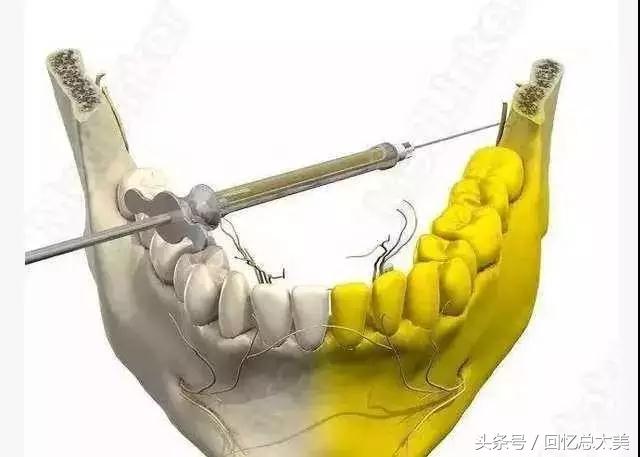
3D precise examination
In addition, because tooth extraction is the removal of a tooth, the resulting wound is open. Even if no pain is felt during the extraction process, discomfort afterward is unavoidable. Dental implantation is different: it involves placing a tooth in, creating a closed wound, and with the use of precise painless dental implant technology, the implantation process is not only painless, but the patient can also eat some relatively soft food the same day.