What are the advantages of planting barnyard grass in crayfish farming?
Every year in May and June, the aquatic plants in many crayfish ponds always rot and collapse in large patches!
What a disaster, right? For the care of aquatic plants, many articles and many experts have offered many good methods. For example, leaving a certain row spacing and plant spacing when planting, ensuring that the aquatic plants cover a certain percentage of the pond, topping the plants at the right time, cutting channels, and so on...
But after all that talk, some of it simply cannot be done!
In fact, with just one thing done well in the aquatic plants for crayfish farming, the "old and rotting" phenomenon can be eliminated.
With conventional Elodea (Canadian waterweed) and black-leaf stonewort, even a slight lapse in management lets the aquatic plants run wild in the pond and turn into a "dense underwater forest," causing poor water exchange in the pond and uneven distribution of dissolved oxygen; and when the aquatic plants grow to a certain height without being controlled in time, they then age and wither, leading to large-scale death of the aquatic plants, which spoils the pond's substrate and water quality, makes crayfish diseases difficult to control, and also brings pest problems that attack the Elodea and black-leaf stonewort themselves... With barnyard grass, there are no such problems in these respects.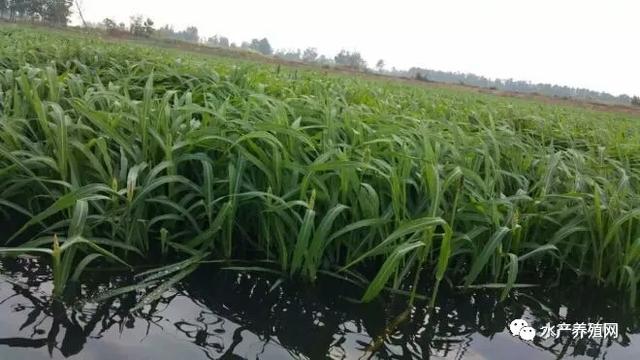
The advantages of barnyard grass
1. Barnyard grass is cold-tolerant and heat-tolerant
The most suitable growth temperature for barnyard grass is 25°C-35°C, and it grows fastest from May to August. Even at high temperatures of 35°C-40°C, it still grows very well.
2. A long sowing window
Generally, it can be sown at temperatures above 10°C, and it can be sown 3-4 times a year. It can be sown in late March, in June, in August, and in the first month of the lunar year.
3. Simple cultivation and management
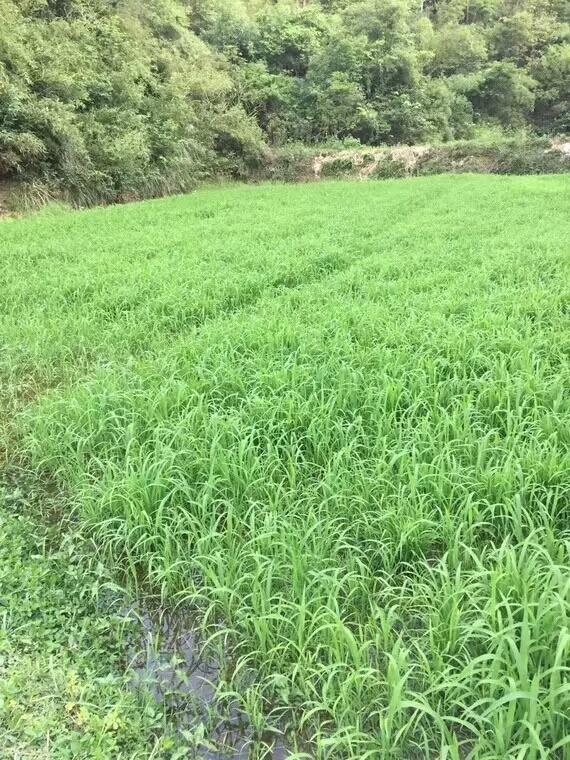
Sowing methods include broadcasting, dibbling, and raising seedlings for transplanting. When broadcasting, sow in rows about 2 m apart with a row spacing of about 4 m. Generally, the seed rate is about 2-3 jin per mu, and it is best for barnyard grass to cover about 60% of the pond. When planting, the pond bottom must be moist; as long as there is sufficient moisture for a long time, barnyard grass will grow vigorously. Barnyard grass is a relatively tall emergent plant with a main stem of uniform thickness that is not prone to lodging. The main stem can reach about 0.8 m long and grows taller with the water depth. Each plant stands as an independent unit, so if there is scattered death in the pond, it is very easy to spot.
4. Unobstructed channels and a high recapture rate with ground cages
Successful farming case
Boss Song, a farmer in Shihe Town, Tianmen City, Hubei Province, has 3 ponds, each 60 mu, planted with barnyard grass in rows every 2 m. The ponds are cleared every October, and after two months of drying, barnyard grass seeds are broadcast. The 3 ponds were sown with a total of 200 jin of seed, and 120 jin of shrimp seedlings per mu were stocked, at a size of 80 tails per jin. The barnyard grass stayed in good condition all year round. The water level was gradually raised each day to about 1 m and then kept fixed, with a maximum summer water depth of 1.2 m. From the end of May to July, "pure brewed lactic acid bacteria" + "amino acid algae-nourishing essence" were often used to culture bacteria and algae, and the whole pond had its bottom improved and calcium supplemented once about every 7 days. Throughout the farming process, the water quality remained "clear, clean, tender, and refreshing." When ground cages were set to catch shrimp, each ground cage recaptured about twenty jin or so, and in about ten days or so, about 70% of the whole pond was harvested.
Throughout the farming process, there is no fear of high temperatures affecting the growth of the grass, and no fear of the aquatic plants growing wildly out of control. This may be what it means to understand the situation and master it; only by better grasping the initiative can one avoid being trapped by the current predicament. May more of us farmers be able to plan the situation and seize the momentum, and win through change!
Many ponds for farming crayfish use Elodea to farm crayfish. Under the influence of various factors, farmers deeply feel that Elodea is difficult to control in many ways, which leads to difficult water quality adjustment and difficult observation during the crayfish farming process, and they call this the "three difficulties" phenomenon.
In production practice, some farmers have created a cultivation method of using barnyard grass to farm crayfish. Barnyard grass is a single-plant grass-family plant that adapts quickly, sprouts early, and grows rapidly.It can both easily control its growth density and make it convenient to observe the living state of crayfish at any time in the crayfish pond, and it can also increase the recapture rate of crayfish.
So, what conditions do ponds for farming crayfish with barnyard grass need to have?
1. Conditions required for farming crayfish in barnyard grass ponds
1. The pond should have sufficient bottom fertility or a relatively thick layer of sludge to ensure that barnyard grass has enough nutrients for growth. In addition, the pond bottom should be as level as possible to ensure uniform water depth, which is beneficial for barnyard grass to sprout and grow.
2. The drainage and irrigation system must be complete, able to both drain and irrigate, and prevent drought and waterlogging.
3. The pond depth should be about 1.5 m, and it is best if the farming pond area is somewhat larger - a deep-water, large pond has a large water capacity and more sufficient dissolved oxygen.
 2. Sowing and management
1. How to sow
① Sowing period: February to August
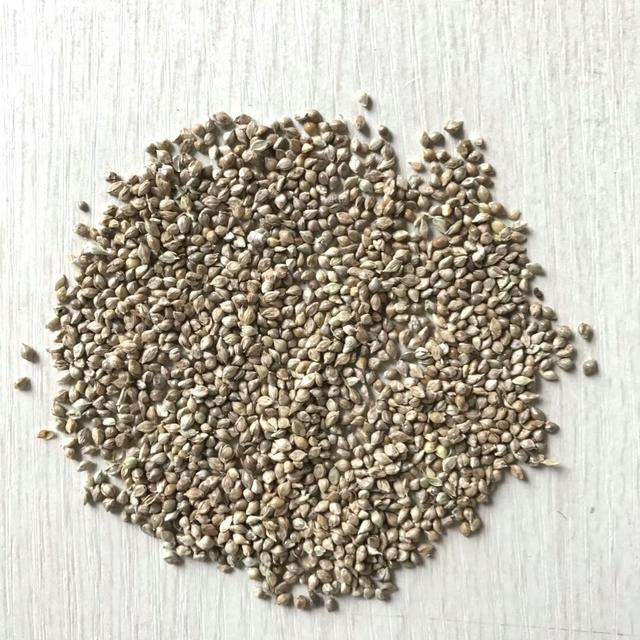
② Sowing rate: 3-6 jin/mu. Adjust the sowing rate according to the germination rate of the barnyard grass. By doing a germination test, you can both identify the quality of the barnyard grass seed and get the sowing rate right.
③ Sowing method: Before sowing, first drain the pond water, then evenly broadcast the barnyard grass seed or the barnyard grass seed that has undergone sprouting treatment in the places where it should be planted. Generally, the area planted with barnyard grass in a crayfish pond accounts for only 60% of the whole pond, with each row 6 m wide and a row spacing of 4 m.
After sowing, scrape on a layer of sludge as much as possible to prevent bird damage. If the transplanting method is used to plant barnyard grass, transplanting can generally be carried out when the barnyard grass seedlings grow to 20 cm.
2. Management of barnyard grass
In terms of management, the main thing is to prevent drought and waterlogging, and to keep the pond bottom often moist or in a state with a small amount of shallow water (there must not be too much standing water). During the growth process, water should be added or drained in a timely manner according to the growth condition of the barnyard grass, to prevent the barnyard grass from drowning due to excessively high standing water or from lodging and dying due to drought caused by too shallow a water level.
Crayfish farming must be considered from the growth environment and needs of crayfish. The living environment determines production yield, and also determines the quality of the crayfish, and at the same time even more determines the management techniques of the manager. With the so-called "high input matched with high output," whether many agricultural products have a high yield is not directly related to high output value! High output value is achieved through continuously improving ideas and concepts and through technological innovation. Therefore, it requires us agricultural people to carry out all-round "one reform," establish new methods and new technologies, and so on, in many aspects before it can be obtained! May all agricultural people achieve both high yield and a bountiful harvest!
Reposted from the Aquaculture Network