Why are dental implants called humanity's third set of teeth?
The youth we once had has gradually drifted away from us. After the age of forty, our appearance, physiology, and body all undergo increasingly greater changes. At this tail end of youth, oral health becomes the key issue.
An elderly person with teethWhat to eat and how to eat it depends on mood; but for elderly people missing teeth, eating has becomethe spirit is willing but the "teeth"are weak.

If you think missing teeth only affects eating,
then you aretoo naive。

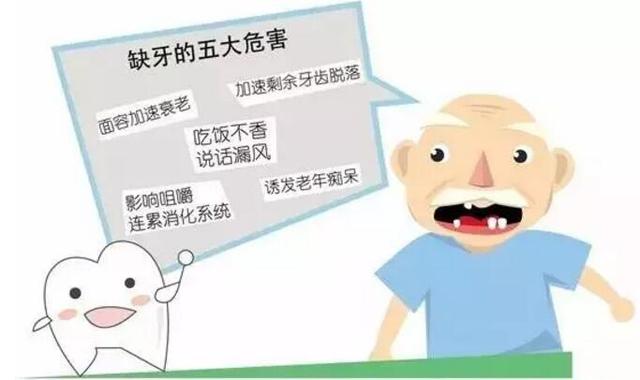
The 5 major harms of missing teeth, by the numbersDevouring health, shortening life by 10 years
Shocking!The diseases suffered by middle-aged and elderly people are almost all related to "missing teeth." Missing teeth have become a fatal killer of the health of middle-aged and elderly people.
The results of a follow-up study of 10,000 middle-aged and elderly people worldwide by dental experts are alarming
※ People with missing teeth have a higher chance of developing gastrointestinal diseases50%
※ The chance of developing Alzheimer's disease is higher by1.9 times
※ After tooth loss, the chance of "disease entering through the mouth" is higher by2 times
※ Average life expectancy is shortened by10-20 years
Although the harms of missing teeth are great, the restoration rate is only18%. The vast majority of elderly people, when facing the problem of missing teeth, first adopt a strategy of "delay, endure, tough it out." When they really cannot bear it anymore, they go get a removable denture.
Professional dentists remind: missing teeth is no small matterImproper handling will only make things worse1Leave it unchecked and eventually you will have no teeth left to use
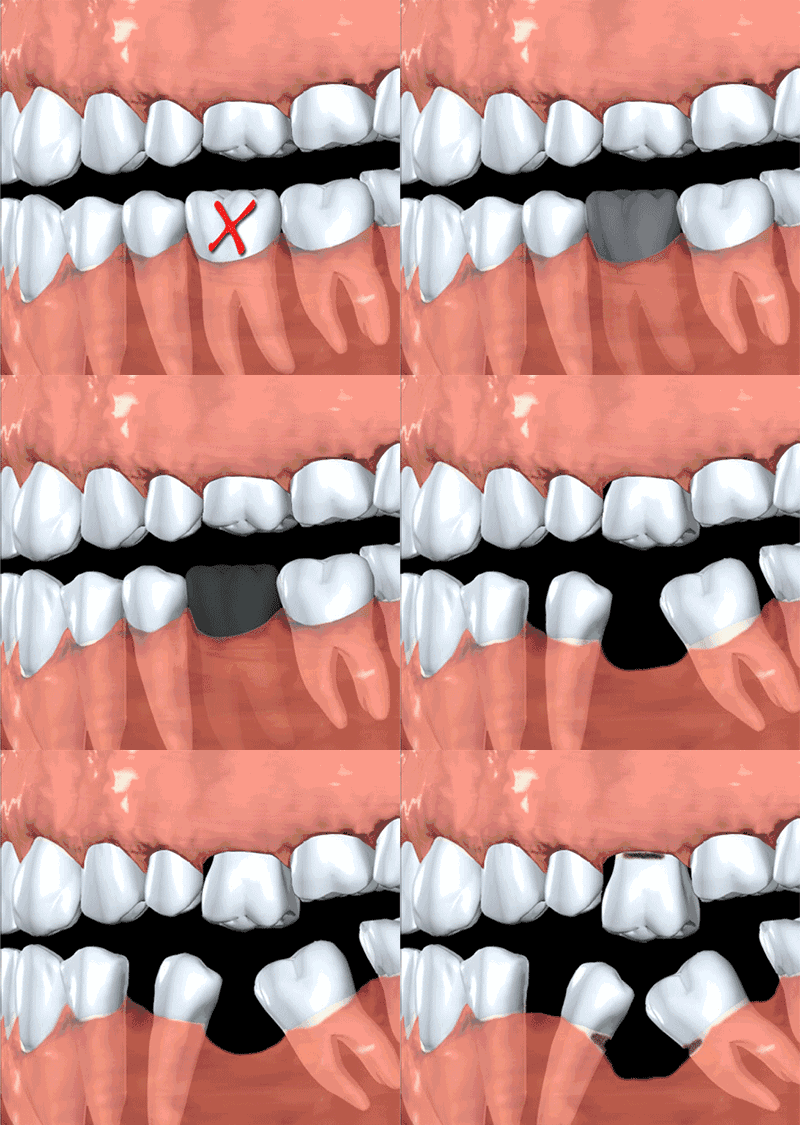
52-year-old Mr. Zhang thought missing one or two teeth was nothing serious, so he left it unchecked. Who would have thought that in just a few short years, the surrounding teeth also gradually became loose and fell out, ultimately leaving him with no good teeth in his entire mouth and causing him great suffering.
Dental experts remind:
Missing teeth should be restored promptly, otherwise it will accelerate the loss of surrounding teeth, lead to alveolar bone resorption and atrophy, and make restoration more difficult, therebyincreasing treatment costs, with more loss than gain.
2Putting it off again and again triggers multiple diseases
73-year-old Mrs. Zhou had a history of missing teeth for many years and always ignored it. In the past six months, she suddenly experienced severe pain, felt unwell all over, and developed multiple diseases.
Dental experts remind:
If missing teeth are not treated for a long time, it can cause periodontal abscess, which can trigger achain reaction of many diseasesin the body, such as diabetes, arthritis, and heart disease.
3Wearing inferior dentures to save money nearly led to canceration
61-year-old Mr. Wang, to save money, went to a small clinic to get a removable denture. After some time, he felt very uncomfortable in his mouth, and there was a bad odor. His originally good teeth also began to loosen, which made Mr. Wang very distressed.
Dental experts remind:
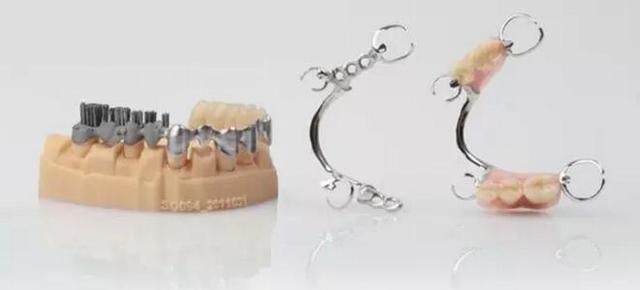
Removable dentures are not easy to clean, food gets trapped, bacteria breed, and natural teeth decay. Long-term irritation from some inferior dentures may also causecancerous changes in oral mucosal tissue。
Getting dental implants = planting health
The best restoration method recognized by the medical community
A dental implant involves placing an "artificial tooth root" with good compatibility with human bone into the alveolar bone, then attaching a crown, and thus a "new tooth" grows out. The advantages of dental implants lie ingood chewing function and long service life(According toclinical literature statistics, the first dental implanthas already been in service for more than 40 years.)Moreover,it causes no damage to adjacent teeth, is stable, attractive, and comfortable, and can rival real teeth,so it is hailed as "humanity's third set of teeth."
Are dental implants expensive?
First, let us analyze from the material cost
The materials and craftsmanship of dental implants. Dental implant materials are mostly imported, and the craftsmanship requirements are extremely strict. The implant must be able to withstand long-term soaking in oral saliva and withstand tens of thousands of chews per day and enormous chewing force. The mechanical connection part between it and the crown has extremely high technological content, requiring precision at the micron level; otherwise, the crown may loosen or break before long.
Second, let us analyze from the technical cost
Dental implant technology: having good materials alone is not enough; it also requires doctors to have solid basic theoretical knowledge and superb surgical and restorative skills. A person must study medicine for at least ten years before entering the professional field of dental implants. Only in this way is it possible to guarantee, in terms of qualifications and technology, the long-term stability of dental implants after implantation into the human body and their ability to perform chewing functions.