How to prevent and control the invisible killer of pepper cultivation? Analysis of key methods
What is the "invisible killer" of peppers?
Root-knot nematodes (Meloidogyne spp.), commonly known as "potatoes growing on roots," are a type of soil-borne parasitic pathogenic microorganism that is extremely harmful to crops, generally causing crop yield reductions of 10%-20%, and in severe cases up to more than 75%. Root-knot nematode disease is one of the main pests and diseases in pepper cultivation and production. It mainly attacks the root system of pepper plants. The main symptoms are the formation of root galls of varying sizes, root rot, etc. on the roots, causing the above-ground pepper plants to grow weak and gradually die, seriously affecting pepper production. The author will introduce several major methods for preventing and controlling pepper root-knot nematode disease from the aspects of agricultural cultivation management, chemical control, physical control, and biological control, for the reference of growers. For knowledge about the harm of root-knot nematodes, please refer to: Morphology and life history of root-knot nematodes, disease images of the "invisible killer" of several crops
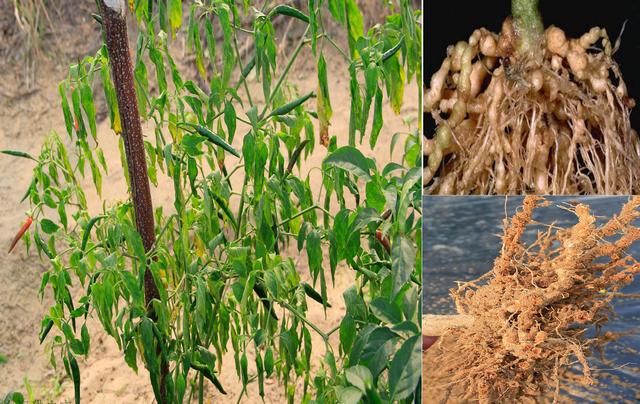
Degree of harm of pepper root-knot nematodes
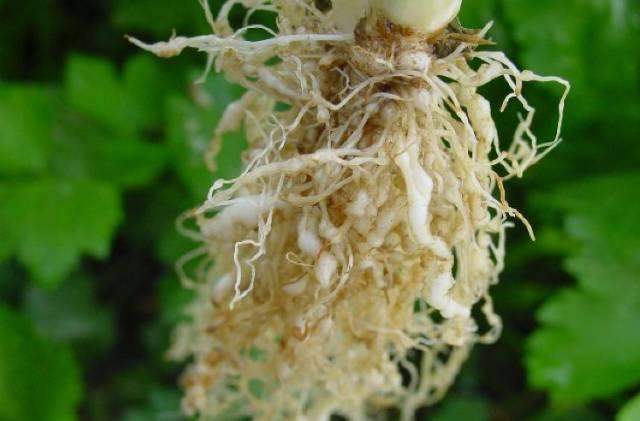
Pepper root-knot nematodes harm the roots of peppers, mainly on fibrous roots and lateral roots. The affected fibrous roots and lateral root tips will form spherical or conical bead-like galls of varying sizes;
Pepper root-knot nematodes use their mouthparts to pierce through the roots, forming densely packed wounds. The wounds will lead to infection of pepper roots by other diseases, such as pepper root rot, Fusarium wilt, etc., especially pepper root rot, which is more likely to cause pepper root rot and rotting roots;
Because root-knot nematodes cause wounds near the pepper root tips, they can induce infection by certain pathogenic bacteria in the soil, accelerating the rotting of the pepper root system, and the plants will gradually show yellow leaves, stunted growth, wilting, and other phenomena;
Currently it is the pepper transplanting period. If transplanted peppers are harmed by pepper root-knot nematodes, uneven seedlings and dead seedlings are likely to occur.
Key methods for preventing and controlling the "invisible killer" in pepper cultivation
Agricultural cultivation management control
Implement crop rotation: For heavily infested fields, highly susceptible fast-growing leafy vegetables such as spinach can be used to trap nematodes in the later stage of production, and antagonistic crops such as onions and garlic can be arranged for rotation in the next cropping season; for lightly infested fields, trapping can be done during the fallow period. In a few areas, consideration can be given to leaving fields fallow in winter, combined with low-temperature freezing to reduce the disease.
Select nematode-resistant varieties. Currently, there are relatively few nematode-resistant pepper varieties available for selection.
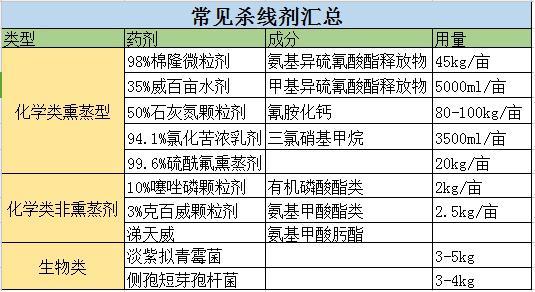
Cultivate healthy seedlings: Select healthy, plump seeds, soak them in warm water at 50-55°C for 15-30 minutes, and sow after germination and whitening. For seedbed and substrate disinfection, fumigants can be used with film mulching fumigation. Use 10 kg of 0.5% formaldehyde solution per square meter of seedbed, or 15 g of 98% dazomet microgranules, cover with film and seal for 5-7 days, remove the film and fully ventilate before raising seedlings; non-fumigant contact-killing agents mixed with soil can also be used, using 5-8 g of 2.5% abamectin emulsifiable concentrate per square meter of seedbed, or 18-20 g of 0.5% abamectin granules, 2.0-2.5 g of 10% fosthiazate granules.
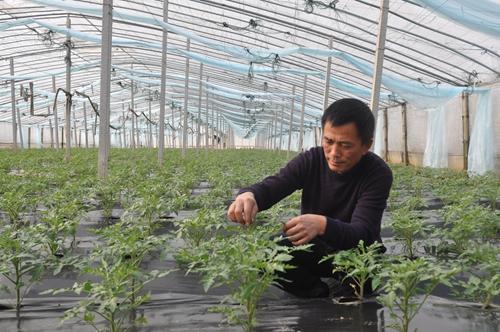
Biological control
Greenhouse high-temperature solarization or flooding soil sterilization. After treatment, before cultivating in the treated soil, pay attention to increasing the application of phosphorus and potassium fertilizers and biological bacterial fertilizers. In summer after pepper harvest, deep plow the soil 40-50 cm, mix in 200 kg of quicklime per mu, and immediately add 500 kg of straw, dig trenches and irrigate with large amounts of water, then cover with greenhouse film for high-temperature solarization. After 15 days, deep plow again and irrigate heavily again for solarization lasting 20-30 days, which can effectively reduce the harm of nematode disease.
Open field soil physical control
Calcium cyanamide treatment: Water the previous vegetable crop 5-7 days before pulling up the seedlings. After pulling up the seedlings, evenly spread incompletely decomposed farmyard manure or crushed crop straw on the soil surface, immediately evenly apply 60-80 kg/mu of calcium cyanamide on the soil surface, rotary till the soil to 10 cm to mix evenly, then water once more, cover with plastic film, and solarize at high temperature for 7-15 days. Then remove the plastic film, ventilate for 7-10 days, and then form ridges for transplanting. Before cultivating in the treated soil, attention should be paid to increasing the application of phosphorus and potassium fertilizers and biological bacterial fertilizers.
Chemical fumigation disinfection: First, use isothiocyanate compounds, using 10-15 kg of 98% dazomet microgranules per mu, or 25-50 g of 20% horseradish essential oil suspension concentrate per square meter, or 100-150 mL of 35% metham sodium aqueous solution; second, use 40-60 L of chloropicrin stock solution per square meter, or 10-15 g of 1,3-dichloropropene liquid, 20-30 g of sulfuryl fluoride, 20-30 g of methyl iodide, etc., or 40-50 kg of dimethyl disulfide per mu; third, mixed fumigation, mixing chloropicrin with other fumigants, has good comprehensive control effects on various soil-borne pests and diseases represented by root-knot nematodes, such as chloropicrin + 1,3-dichloropropene (1:2-2:1 mixture), chloropicrin + dimethyl disulfide (1:1 mixture), and chloropicrin + methyl iodide (2:1-3:1 mixture).
Control during pepper seedling and transplanting period
In terms of chemical application, 2.5-3 kg of 10% fosthiazate granules can be applied in furrows per mu, then cover with soil, sprinkle water, seal and cover with film, and loosen the soil for transplanting after one week. Alternatively, 3-4 kg of 10% cadusafos granules or 3-5 kg of 3% isazofos granules can be applied in furrows per mu, or 2 kg of 40% phoxim emulsifiable concentrate + 200 g of 1.8% abamectin emulsifiable concentrate can be mixed and applied as hole irrigation treatment. In terms of biological application, 2-3 kg of Paecilomyces lilacinus at 200 million viable spores/g can be mixed with soil and evenly spread, or 2.5 kg mixed with soil applied in furrows or holes; 2-3 kg of Verticillium chlamydosporium at 200 million viable spores/g can be mixed with soil and evenly spread, or 2.5 kg mixed with soil applied in furrows or holes.
Control during pepper growing period
Per mu, 1.5 kg of 10% fosthiazate granules can be used, or 15.0-17.5 g of 0.5% abamectin granules, 0.3-0.4 kg of 5% cadusafos granules, 0.3-0.4 kg of 3.2% abamectin-phoxim granules, 2.5 kg of Paecilomyces lilacinus at 200 million viable spores/g, 2.0-2.5 kg of Verticillium chlamydosporium at 200 million viable spores/g mixed with soil and applied in concentrated side furrows at the plant roots; use 300-500 mL of 2.5% abamectin emulsifiable concentrate diluted 2000 times for root drenching per plant.
Drip irrigation under film through pipes: Use 35% metam sodium aqueous solution at a concentration within 1000 mg/L, using 30-50 L of solution per square meter; fumigant chemicals such as dazomet, horseradish essential oil, and dimethyl disulfide can all be used for control through drip irrigation under film.
Intercropping trapping: Within one week after crop transplanting, highly susceptible fast-growing leafy vegetable crops such as bok choy or spinach can be sown to trap nematodes in the soil. Pull out the trap crops after 20-25 days. For heavily infested fields, trapping can be repeated.