Orchard Green Manure Crop: Rattail Fescue and Sowing Key Points
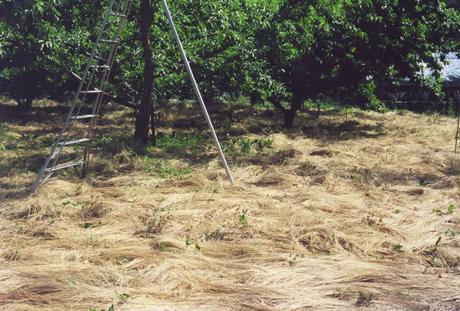
Planting rattail fescue in peach orchards
Cultivated or wild green plant matter applied directly to the soil or after composting as fertilizer is collectively called green manure. Crops specifically grown for green manure are called green manure crops. Green manure also has multiple functions such as building and improving soil fertility, serving as feed, soil and water conservation, and restoring barren slopes and wasteland. This article mainly introduces rattail fescue, which is currently used more widely in orchards.
Rattail fescue, also known as rat-tail fescue, is a herbaceous green manure plant that is highly cold-tolerant but not heat-tolerant. The aboveground part of rattail fescue grows as clustered linear needle-like leaves, naturally lodging and creeping along the ground, with needle-like leaves reaching 60-70 cm long. The growth period of rattail fescue is basically the same as that of wheat. Because its growing period is relatively long and its growth is dense, it sprouts new leaves earlier after overwintering and can cover the soil to suppress other weeds. In the north, it naturally dries up and dies in June-July each year, and re-sprouts in September-October of the same year.
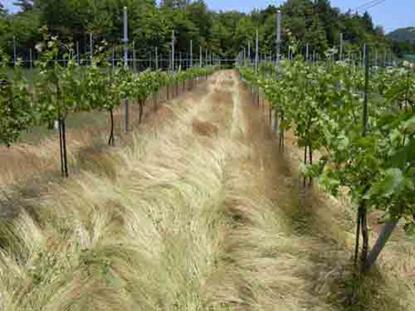
Planting rattail fescue between grapevines
The main benefits of planting rattail fescue in orchards are:
1. Preventing soil erosion.
2. Supplementing soil organic matter. Rattail fescue produces 600-700 kg of hay per mu per year.
3. Loosening the soil through its root system. The roots of rattail fescue can penetrate to a soil depth of 30 cm, improving soil drainage and aeration.
4. Suppressing weeds. It covers the ground for a long period and can suppress weeds year-round.
5. Maintaining stable soil moisture and temperature.
6. Increasing VA mycorrhizal fungi.
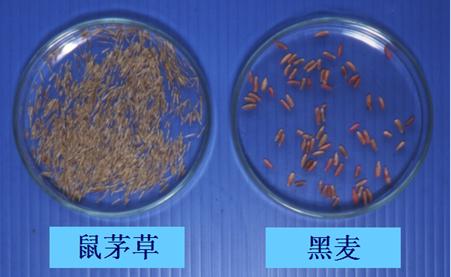
Difference between rattail fescue and ryegrass seeds
For farmers sowing rattail fescue in orchards for the first time, the following points should be noted when sowing:
1. First, cleanly remove the weeds on the ground (herbicide or tillage weeding).
2. Strictly observe the sowing period (mid-September to mid-October), and choose a windless day before rain.
3. Sow evenly and in an appropriate amount (1.5-2.0 kg per mu).
4. Do not cover with soil (do not sow deeply).
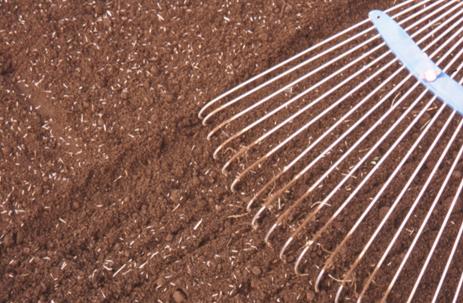
Sowing rattail fescue