Detailed steps and precautions for growing strawberries at home
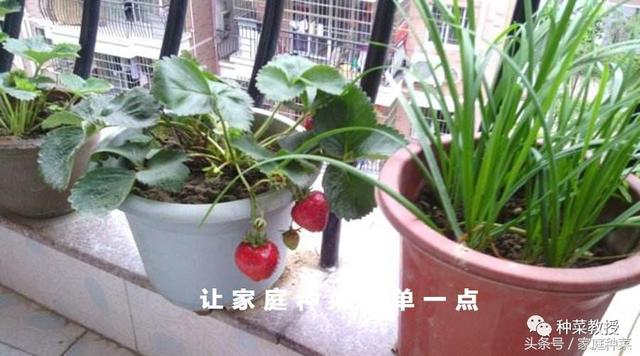
The day before yesterday, I shared quite a few videos of strawberry picking gardens spraying pesticides at night and selling them during the day:
"Word bro, after watching this I nearly peed my pants! I'll never go strawberry picking again!"
After that, quite a few fellow gardeners asked about the specific method for growing strawberries on a balcony, so today I've put it together to share with you.
It also happens to be almost the season for spring outings and strawberry picking, so if you like strawberries you can grow some at home and experience the fun of picking green, safe strawberries.
Below is the specific growing method
▼
[Judging whether your environment is suitable for growing them]
1. Temperature:The optimal temperature is 15-30°C (slightly higher or lower is also fine, but below 0°C or above 40°C will seriously affect strawberry flowering and fruiting);
2. Light:Likes light; a south-facing balcony, terrace or rooftop will all work (east- or west-facing balconies will barely work too);
Notes:
1. Growing strawberries in farmland is affected by the seasons, but at home, as long as temperature and light conditions are met, they can be grown all year round;
2. When light is insufficient, you can also make up for it with a plant grow light (these can be found on online shopping platforms such as Taobao).
3. Humidity: Not tolerant of drought, nor of waterlogging; just keep the soil from drying out.
[Some preparation work you need to do before planting]
1. Strawberry seedlings (or seeds);
2. Planting container (a depth of about 20 cm is ideal);
3. Loose, well-draining, fertile potting soil;
4. Trowel, spray bottle.
Notes:
1. Planting container:It's fine if the container is a bit deeper (it's best to have drainage holes at the bottom);
2. Potting soil:You can directly buy potting soil suitable for strawberries online (some come pre-mixed with base fertilizer), or mix your own. Before sowing, the potting soil should be sterilized, which can help prevent pests and diseases.
For example, a homemade potting soil of organic fertilizer, coconut coir bricks and coarse vermiculite mixed at a volume ratio of 1:1:1 is fluffy and rich in organic matter, making it quite suitable for growing strawberries on a balcony. I myself once, due to choosing the wrong soil, casually dug up some soil by a small river back home to grow strawberries (without sterilizing the soil either), and as a result 80 percent of the strawberries went to the snails - it's all tears when I talk about it.
3. Common pests and diseases:Problems such as powdery mildew, gray mold and nematodes may appear (generally the probability is low). If pests or diseases appear, you can check whether they are caused by these few types and then deal with them accordingly.
4. Commonly chosen varieties:The varieties grown more commonly are milk strawberry, Mibao, Baojiao, Dana, Zhangji and so on; you can ask the seller about varieties suitable for local planting.
5. It's best to choose second-year strawberry seedlings, as at this time the strawberry fruiting rate is the highest; in addition, you can buy several varieties and compare for yourself which strawberry suits your taste better.
[Planting methods]
There are two methods:1. Strawberry seeds 2. Strawberry seedlings
On one hand, strawberry seeds take a relatively long time to sprout (about 25 days) and sometimes need pre-sprouting; on the other hand, strawberry plants can reproduce asexually through their roots and stems (that is, taking part of a strawberry plant's root or stem and directly transplanting it to grow a new plant).
So Professor suggests that the first time you grow themyou can buy a few strawberry seedlings from a flower market, a strawberry garden (when picking strawberries you can ask the owner to give you one or two plants), an online shop, etc., and after that there's no need to buy more.
[Specific planting steps]
▼
01
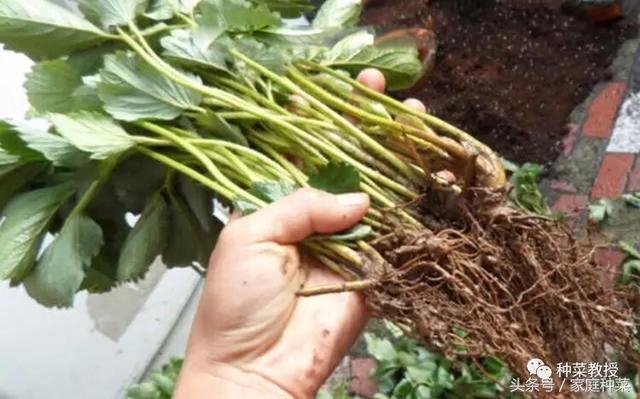
Selecting seedlings
Please click here to enter an image description
▲
Choose high-quality seedlings with intact plants, no pests or diseases, 4-5 leaves and a well-developed root system.
02
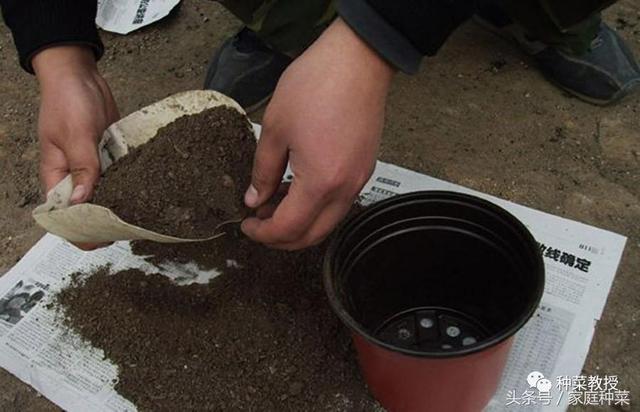
Filling soil and digging holes
Please click here to enter an image description
▲
Put the potting soil into the container (don't fill the soil too full; leave a little distance from the rim of the pot), dig small holes in the container spaced about 20 cm apart, pour in an appropriate amount of water, and once the water has seeped in, transplant the strawberry seedlings into them.
03
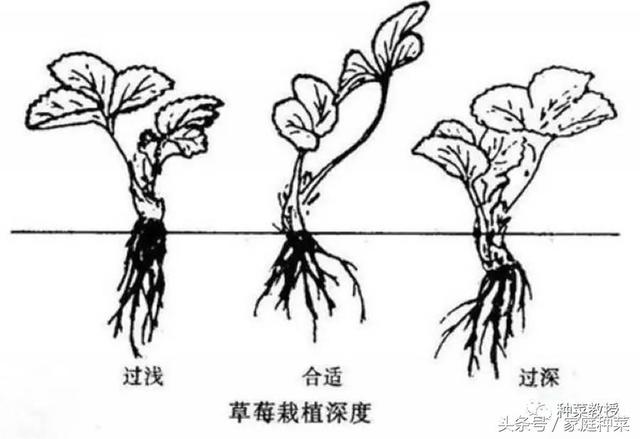
Transplanting and planting
Please click here to enter an image description
▲
Trim off the damaged roots, old leaves and runners from the strawberry seedlings, leaving 2-3 small leaves.
Then plant them into the holes, cover with soil and press flat, then water thoroughly, and put them in a shaded place for 2-3 days (they must not be exposed to the sun at this time). Once the plants have revived, put them in a place with good light to prevent leggy growth.
Notes:
1. If the temperature is relatively low, you can cover with plastic film to keep warm and retain moisture.
2. After planting, water frequently and just keep the soil moist; the soil should not be too dry or too wet (watering should be done in the morning or evening).
04
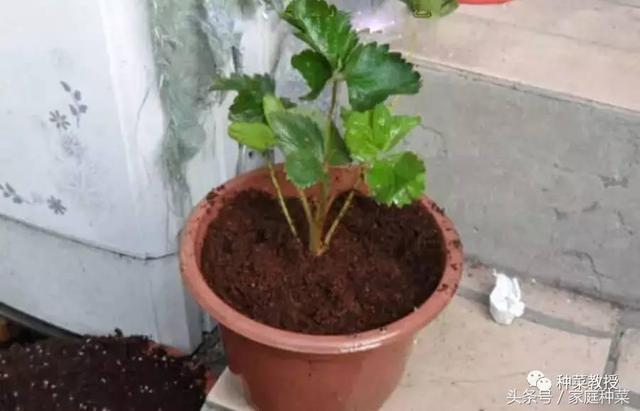
Top dressing
Please click here to enter an image description
▲
Every half a month, apply organic fertilizer once as a top dressing according to the actual situation (the concentration should not be too high; you can make some organic nitrogen fertilizer yourself)
Introducing 3 common methods for making homemade organic fertilizer:"Shared by an expert: the 3 simplest methods for making homemade organic fertilizer without composting and without odor..."
Notes:
1. During the seedling growth stage, you can apply some nitrogen fertilizer as a top dressing; during the flowering and fruiting stage, you can apply some phosphorus and potassium fertilizer;
2. If the homemade organic nitrogen fertilizer is relatively concentrated, you can dilute it before watering.
05
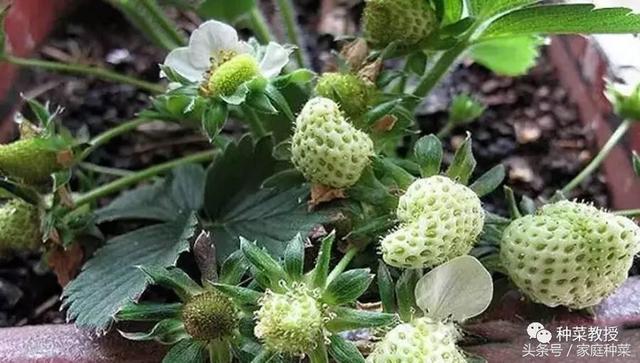
Flowering and fruiting
Please click here to enter an image description
▲
During growth, promptly remove any yellowing old leaves you find (if it's winter, you can keep the yellow leaves until new leaves grow out the following spring, then remove the dead yellow leaves)
During the flowering and fruiting stage, promptly remove the runners; the cut-off runners can be directly replanted to grow into new plants.
After flowering for a period, the flowers slowly fade and then fruiting begins. During this period, put the flower pot in a place with sufficient light, and apply some phosphorus and potassium fertilizer as a top dressing appropriately, which can improve the quality of the fruit.
Notes:During the flowering period, if poor ventilation on your balcony or rooftop might affect the success rate of strawberry pollination, you can carry out hand pollination (strawberries are monoecious, meaning a single flower has both female and male parts.You just need to use a cotton swab to move it in circles over the strawberry flower)。
Please click here to enter an image description
(monoecious)
06
Harvesting
Please click here to enter an image description
▲
About 30 days after flowering, once the fruit turns red it can be harvested (it's best to harvest in the morning).
Notes:You can harvest by pulling up the whole plant, or harvest from a distance above the roots (this way you can harvest continuously like with chives).
[Special reminders]
1. Strawberries are perennial plants, and some strawberry varieties can flower and fruit multiple times within a year; when buying you can ask the seller and choose accordingly;
2. Strawberries can be picked once they turn red. When picking, don't yank the strawberry off forcefully; instead cut or pinch off the strawberry's fruit stalk.
3. Strawberries generally have a three-year harvest cycle. In the first year you can only harvest relatively few strawberries, in the second year you'll harvest a lot, but by the third year or after three years, strawberry yields drop noticeably and the plants need to be replaced.
4. Some fellow gardeners, in order to make strawberry plants bear more strawberries in the second year, will also, after a one-year-old strawberry flowers, remove the flowers and not let it bear strawberries, only letting it grow more leaves (to eat strawberries as soon as possible, you can harvest in the first year).
/End/
[Fellow gardeners say]
Question:Professor, I've grown strawberries before, but the fruit often rots. What's going on?
Answer:Strawberry fruit rots fairly easily if it often gets splashed wet by water; you can think about whether there's a problem in that regard. Sometimes pests and diseases can also cause it, so you can check whether there are pests or diseases. After fruiting, you can spread some dry grass or other material at the base of the plant to prevent the strawberries from touching the soil and rotting; you can also make some natural insecticides to spray on the soil: "20 homemade pure natural insecticides: easy to use and pollution-free, no need to ask others for help when growing flowers and vegetables on a balcony...
Vegetable Growing Professor, a public account that seeks benefits only for urban fellow gardeners! Add Vegetable Professor on WeChat 1622315520 (note when adding that you're claiming an e-book) to get 20 essential e-books for home flower and vegetable growing for free.