What makes growing cordyceps difficult? Detailed answers to common questions
What is commonly cultivated on the market today is Cordyceps militaris (also known as pupa cordyceps). When growing it, the main points to note are:
1. Use high-quality liquid spawn;
2. Choose an appropriate culture medium formula, and sterilize thoroughly;
3. During inoculation and mycelium incubation, keep the temperature within 18°C;
4. During the fruiting-body induction and fruiting stages, pay attention to increasing oxygen, increasing light, replenishing water, ventilating, and varying the temperature.
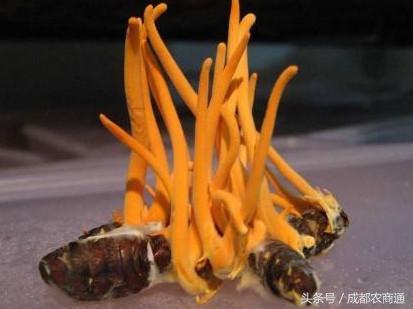
But if you are growing Cordyceps sinensis, it is difficult. After so many years of research, there is still no stable cultivation method.
1. This insect is no ordinary one
Cordyceps sinensis is formed when the Cordyceps sinensis fungus parasitizes the larvae of ghost moths in alpine meadow soil, causing the larvae to become rigid, and under suitable conditions, in summer a long club-shaped stroma grows out from the head end of the rigid insect.
So the Cordyceps sinensis we see is divided into two parts: one part is the insect body, and the other part is the stroma.
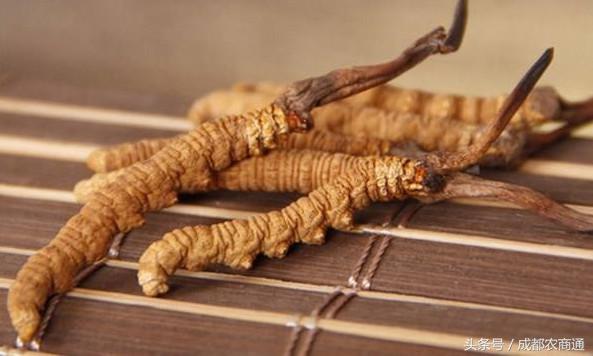
The ghost moth larvae that make up the insect body part are mainly distributed in mid-altitude mountainous areas, and the species itself is relatively rare. Someone once introduced it to the north, but the attempt failed, because the reproduction of this insect has strict environmental requirements.
In recent years, research on rearing ghost moths has shown:
1. Ghost moths spend 98% of their lives in soil, so soil is one of the keys to survival under artificial rearing. The most suitable soil for ghost moth growth is alpine meadow soil; next is mixed soil of scree slopes and meadow; next is alpine brown forest soil. Other soils will cause poor growth of ghost moths.
2. Feed selection is particular. Ghost moth larvae prefer to eat the tender shoots of plants such as Polygonum sphaerostachyum, Polygonum viviparum, Astragalus, Rheum officinale, and Rheum nanum; if the above plants are unavailable, they can be reared on tender shoots of grasses (highland barley, malt, grain sprouts) and tender roots of Brassicaceae and Cyperaceae. In low- and mid-altitude areas, rearing with Rumex patientia, carrot, white radish, sweet potato, potato, apple, and the like can also allow them to survive.
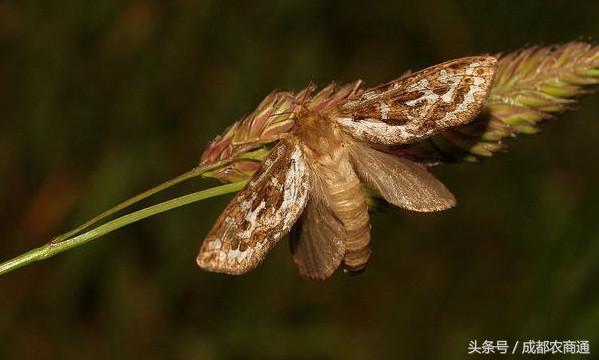
3. There are strict requirements for temperature and humidity. Ghost moths tolerate low temperatures and fear high temperatures, and are suitable for growing in an environment of 15-19°C; the most suitable relative humidity is 75-85%, and soil moisture content is 40-45%.
2. Low inoculation success rate
According to research results from the Chongqing Academy of Chinese Materia Medica, the main route by which the Cordyceps sinensis fungus invades ghost moth larvae is through oral feeding, entering the digestive tract along with food, and then passing through the inner wall of the digestive tract into the hemocoel.
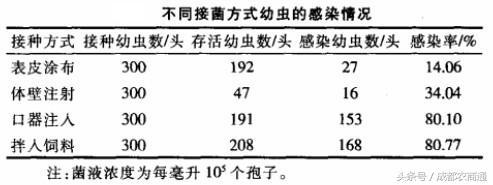
The mycelium develops in the hemocoel, intertwines into a sclerotium, and the sclerotium germinates to produce a stroma, and ultimately it may, note, it may form Cordyceps sinensis.
3. Inoculation and infection are one thing; whether it can grow out is another
Through the unremitting efforts of researchers, it was found that the larvae most suitable for mycelial infection are 3rd-4th instar larvae. The entire process of Cordyceps sinensis fungus infecting host larvae takes from 50 days to half a year, and can make the host infection rate reach more than 90%.
This time span is very large, and some factors among them are still unclear. The detailed process by which the Cordyceps sinensis fungus invades host larvae is still under study.
Both mycelium incubation and fruiting of Cordyceps militaris require attention to increasing oxygen, increasing light, replenishing water, ventilating, and varying temperature. Cordyceps sinensis is even rarer, and the factors affecting its fruiting are no fewer. It is also unrealistic to completely simulate the plateau environment, the fruiting rate cannot be controlled, and failure is very normal.
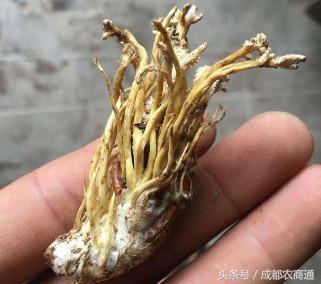
Because of its excellent medicinal value, Cordyceps sinensis has been over-harvested, the ecological environment has deteriorated, and natural resources are increasingly depleted. At present, artificially cultivated cordyceps has already been mixed with wild cordyceps and sold on the market.
But at present, artificial cultivation has not yet been fully successful.
The reason is that people have insufficient understanding of the fungal pathogenicity of the Cordyceps sinensis fungus during the process of infecting the host, its adaptability to the high-altitude ecological environment, and the genetic basis behind it.
A recent paper on cordyceps in Science reports that Chinese and American researchers have determined the reference genome map of Cordyceps sinensis, laying a solid foundation for analyzing the fungal pathogenicity of the Cordyceps sinensis fungus, its high-altitude ecological adaptation, and its population genetics at the genomic level.