What are the steps in the whole dental implant process?
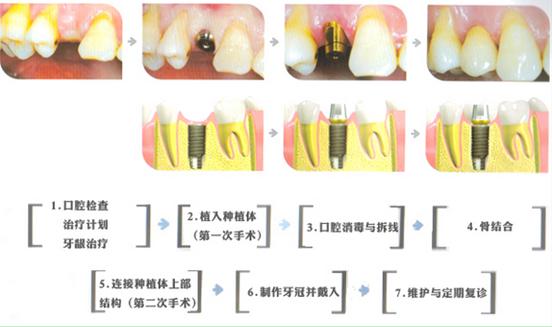
Dental implants are currently the most popular method of tooth restoration, but many people do not really understand the specific steps involved. In fact, dental implantation is a minimally invasive procedure, but no matter how small the surgery is, nothing can be taken lightly before, during or after it, and every step must be properly prepared. The following explains the whole dental implant process.
How many steps does the dental implant process involve?
1. Carry out a periodontal examination before implantation
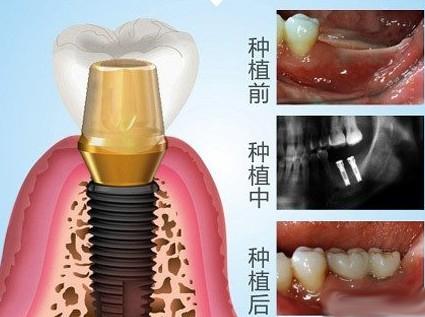
Mild periodontal disease only affects the gum tissue, but if it is not treated early it will spread to deeper areas and destroy the periodontal ligament, alveolar bone and cementum. People with periodontal disease must have it treated properly before dental implantation, otherwise the bacteria of periodontal disease may very likely invade the jawbone along the implant, leading to bone loss; once the foundation around the implant is gone, the implant will fail.
How many steps does the dental implant process involve?
2. Bone assessment
Bone assessment should be carried out before implantation. Generally, the longer a tooth has been missing, the more severe the bone loss will be. Once the width of the alveolar bone is insufficient, it is best to first perform guided bone regeneration, or bone remodeling and bone regeneration, before implantation, so that the jawbone conditions are sufficient for implantation. Generally, artificial synthetic bone powder, or animal heterogeneous bone with the diseased source removed, is used for bone grafting; when necessary, bone may even have to be harvested from the patient's mandible or the alveolar bone behind the wisdom teeth for autologous bone grafting under general anesthesia.
How many steps does the dental implant process involve?
3. Take a full-mouth computed tomography scan
Another indispensable preparatory task is to take a full-mouth computed tomography scan to assess the three-dimensional position of the bone, which can help the dentist accurately understand the patient's oral condition and reduce the patient's fear of the implant surgery.
4. Make a surgical template
When the dentist makes a precise surgical positioning template, it can guide the implant position in the jawbone toward a better direction while avoiding risks, reducing sudden variables during surgery.
How many steps does the dental implant process involve?
5. On-site monitoring system for safety without error
The greatest fear in surgery is an accident. Possible accidents in dental implantation include piercing the sinus in the upper jaw and hitting the mandibular nerve in the lower jaw, so a precise monitoring system is necessary. A monitoring system lets the dentist place the implant while watching, allowing the implant to be placed more precisely where it should be, without fear of placing it too deep and causing an accident, or too shallow, which makes the implant unstable and prone to failure.
Integrated detection during implantation ensures safety, and poor occlusion dooms the implant to failure
Once the implant is placed, the dentist will judge based on experience whether the bone is sufficient to support a denture. There are now new instruments for osseointegration detection that can determine the density and speed of bone growth, allowing a more scientific, precise and rapid judgment. Because implant surgery requires adjusting the placement position according to the current state of the bone, the implant in the oral cavity may be tilted or misaligned depending on the amount of bone and its density. At this point, the occlusal design of the denture is very important; otherwise, even if the implant succeeds, it will be declared a failure within 2 to 3 years due to poor occlusion. Therefore, choosing a dentist with full-mouth reconstruction experience is very important.
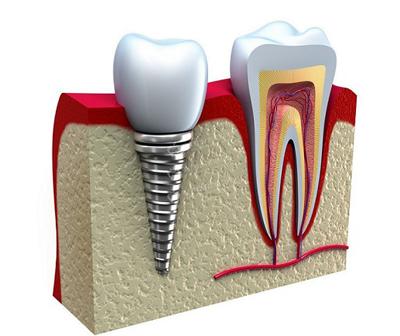
How many steps does the dental implant process involve?
6. Periodontal maintenance
After implantation, the top priority is tooth cleaning and care, because implants are still like real teeth and can be attacked by periodontal disease. If soft tissue or hard tissue problems occur and cannot be properly handled in time, the implant may become contaminated and even become a failed implant. Therefore, everyone should do the corresponding nursing work after surgery, so that the surgery can achieve the best implant surgery results.