Planting Techniques and Daily Care Management Methods for Small-Flowered Crape Myrtle
Planting Techniques and Daily Care Management of Small-Flowered Crape Myrtle
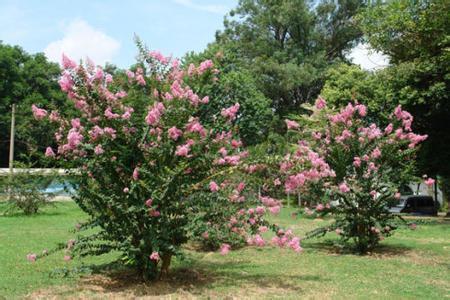
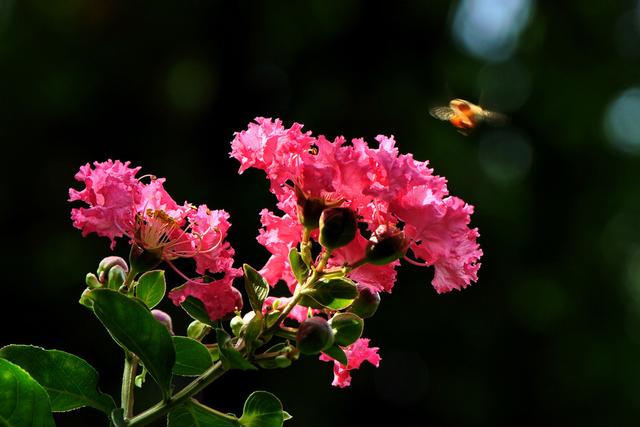
Small-flowered crape myrtle comes in many colors and has 2 varieties: upright and weeping. The most representative upright variety is the red crape myrtle, whose branches are tall, straight, and upright, with a long flowering period, vivid flower color, andno fruit set; with proper care it can bloom continuously for4months. Most of what is planted are weeping varieties, whose branches droop; thisvariety has a short flowering period, generally blooming forabout 20 dbefore it begins to set fruit, and it comes in a wide range of flower colors.
1 Planting of Small-Flowered Crape Myrtle
1.1 Selection of Plants
Choose seedling specifications according to need. Plants should be robust, free of disease and insectdamage, with a full canopy and an upright trunk.
1.2 Preparation of the Planting Site
First clear weeds, stones, and debris from the soil. If the soil has beencontaminated, it also needs to be replaced. Apply fertilizer appropriately before planting; plant ash,
fertilizer, chicken manure, and other materials can be used to improve the soil and increase nutrients, then mix the soil andfertilizer evenly.
1.3 Planting Process
1.3.1 Lifting seedlings. Small-flowered crape myrtle is a deciduous variety, and it is best to plantbefore bud break in spring, which gives the highest survival rate. In Guangxi this is generally from November to February of the followingyear; it can also be done in other growing seasons, but the requirements for the root ball and planting are higher. The root ball size should generallybe 5 to 10 times the trunk diameter at breast height; after digging it out, wrap it to prevent the root ball from breaking apart.
1.3.2 Size of the planting hole. This depends on the size of the root ball, and is generally30 to 40 cm larger than the root ball, to make it easier to backfill quality soil and tamp it down, which helps theseedling roots bind with the soil. The depth should be such that after planting the root ball sits 5 cm belowground level; too deep will affect plant growth, while too shallow is unfavorable for the seedling's water storage.
1.3.3 Planting density. Choose a suitable density according to the size of the plant and the purpose offuture cultivation. If it is to be grown into a larger small tree, the plant spacing should be appropriatelyincreased, generally 2.5 to 4.0 m; if height and crown width are to be controlled by annual pruning, this canbe determined as needed, generally 1 to 1.5 m; if too dense, it easily leads to poor ventilation andlight penetration, breeding of pests and diseases, reduced flowering quality, and increased care difficulty.
2 Regular Care Management
2.1 Light
Crape myrtle prefers a growing environment with ample sunlight and good ventilation. After planting for a certainperiod, plants shaded by surrounding trees should be transplanted, or the trees should bereasonably pruned, to ensure sufficient light.
2.2 Water Management
Sufficient water can ensure good plant growth. Watering of small-flowered crape myrtle isgenerally determined by the weather, season, degree of soil dryness, and the appearance of the plant. Wateringmethods mainly use manual irrigation or drip irrigation. If there is rain or arainy season, attention should be paid to drainage and waterlogging prevention.
2.3 Fertilization
2.3.1 Base fertilizer. Fertilization is generally done by burying, and the number of applications is1 time in the planting hole at planting; in other growing seasons, 1 additional application each in spring and beforewinter is sufficient. Generally, treated odorless organic fertilizer and compound fertilizer are mixedand applied. The amount of fertilizer must not be too much; for a trunk diameter at breast height of 5 to 8 cm, it is generally100 to 150 g per plant, buried in 2 opposite positions.
2.3.2 Topdressing. Topdressing is generally done in the initial stage just after planting; topdressing can promoterapid growth of the plant in a short period, with a fairly obvious effect. Generally, urea solutionapplication and spraying of some foliar fertilizer are used. The best time for topdressing is before 10:00 in the morning or after16:00, to avoid fertilizer damage caused by excessively high temperatures.
2.4 Proper Pruning
2.4.1 First pruning. Generally after the Beginning of Spring, pruning and shaping of small-flowered crape myrtlebegins. Prune reasonably as needed, cutting off thinbranches, dead branches, diseased and pest-infested branches, and excess branches that affect the shape; pruned branchesshould be cleaned up promptly. After new buds emerge in mid-March, bud removal should be done promptly; generally3 to 5 buds are retained per main trunk; too many buds easily cause poor nutrition, thinbranches, poor ventilation and light penetration, and breeding of pests and diseases, thereby affecting flowering.
2.4.2 Second pruning. After flowering in mid-May each year, after a flowering period of about1.5 months, prune the flowering branches around mid-July. According to the differing lengthsof the flowering branches, generally cutting off 1/3 of the branch is sufficient.
2.5 Pest and Disease Control
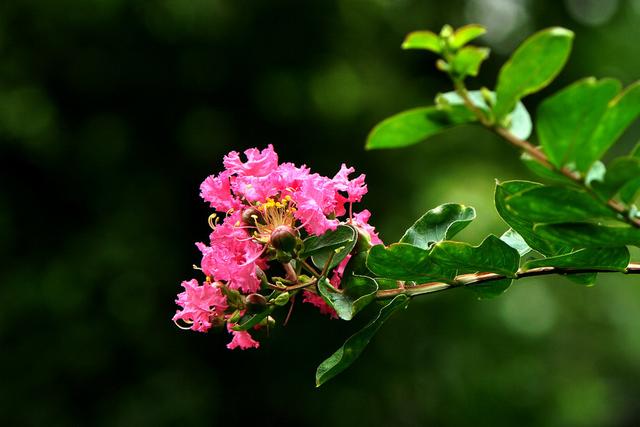
2.5.1 Control of powdery mildew. Powdery mildew mainly harms leaves, and also causes a certain degree of damage to branches, flowerbuds, and shoot tips. In the early stage of the disease, white spotsor patches appear on the leaves, the flower surface is covered with a layer of white powder, the flower spikes becomedeformed, and the whole plant stops growing or even dies. Control methods: (1) Appropriate fertilization andirrigation. (2) Promptly prune diseased and dead branches to prevent transmission to other branches.(3) Spraying 25% dinocap wettable powder at 3000 times dilution or 80% zinebwettable powder at 500 times dilution can be used for control.
2.5.2 Control of sooty mold. The symptoms of sooty mold are: patchesof black spots on leaves or shoot tips, or a thin paper-like black layer, which is unfavorable for normalgrowth; over time the leaves turn yellow or even fall off. Control methods: (1) Reasonable cultivation; plantingdensity must not be too high; ensure good light and ventilation; prune diseased branches promptly.(2) For plants affected by sooty mold during the growing season, spraying 50% carbendazim wettablepowder at 1000 times dilution can be used for control.
2.5.3 Crape myrtle aphid. The aphid mainly lays eggs in winter in bud crevices, branchforks, and other places; when crape myrtle buds in spring, the disease begins, with problems such as winglessviviparous aphids appearing. Control methods: (1) Prune appropriately in winter and remove diseased branches. (2) Spraying20% imidacloprid at 1500 times dilution or 40% omethoate emulsifiable concentrate at 1000 times dilutioncan be used for control.