Detailed Guide to Bletilla striata Understory Cultivation Techniques and Environmental Requirements
Bletilla striata Understory Cultivation Techniques Bletilla striata Cultivation Environmental Requirements
1 Woodland Selection
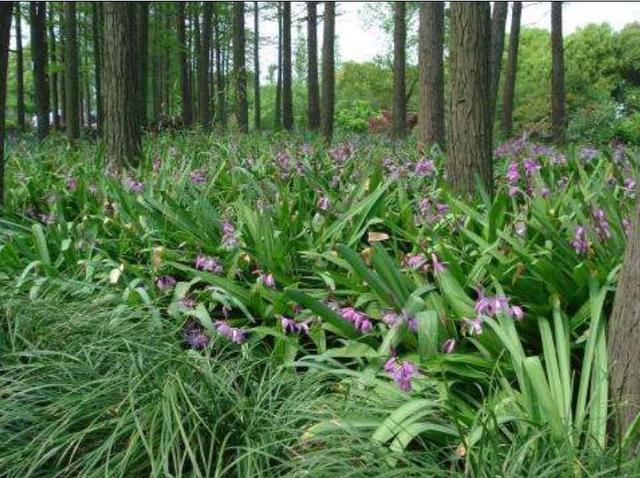
Bletilla striata has the habit of preferring shade and moisture and being intolerant of waterlogging, making it very suitable for understory cultivation. In areas with an average annual temperature of 15-20°C, annual rainfall of 900 mm or more, and relative air humidity above 75%, select contiguous understory plots with a slope of ≤25° for planting. Bletilla striata is suitable for planting in fertile, loose, humus-rich slightly acidic sandy loam or humus loam, and alkaline soil and clay soil should be avoided. The selected planting site should be far from industrial and urban pollution sources.
2. Land Preparation and Bed Making
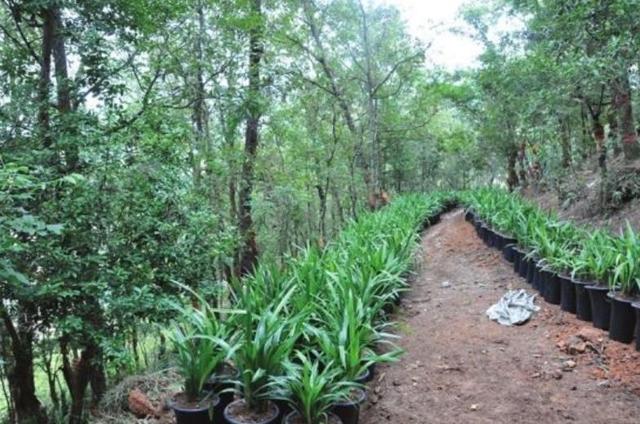
Clear away dead branches, weeds, shrubs, and low side branches in the woodland. In combination with thinning and pruning, adjust the understory light transmittance to 30%-50%. After carefully removing stones and other debris, evenly spread organic fertilizer or fully decomposed farmyard manure on the ground surface. Then deep plow more than 30 cm, break the soil into fine particles and rake it level, and make beds along the contour lines, with a bed surface width of 100-120 cm, a height of 15 cm, and unlimited length. The bed ditches and perimeter ditches should be 40 cm wide and 15 cm deep, and the ditches should be connected to facilitate drainage.
3. Planting Time
Planting can be done in both spring and autumn.
4. Planting Method
Carry out planting on cloudy days or in the afternoon when sunlight is weak. On the bed surface, open transverse furrows 4-6 cm wide and 5-7 cm deep at a plant-row spacing of 20 cm X 25 cm. Apply 1 cm of organic fertilizer or fully decomposed farmyard manure at the bottom of the furrow, mix it evenly with the soil, then place the seedlings at the plant spacing determined by the planting density, requiring the apical bud tip to face upward. Take care to spread the root system, then cover the previous furrow with soil from digging the second furrow, and so on. After planting, cover the bed surface with humus soil or rice straw, with a thickness that preferably does not expose the soil. During planting, care should be taken to protect the apical buds and fibrous roots, and after planting, water thoroughly once with root-setting water.
5 Post-Planting Management
5. 1 Thinning and ReplantingIn the year of planting, according to the current growth status of the seedlings, appropriately remove some plants that are too dense, weak, or affected by pests and diseases, and replant in time. After replanting, water thoroughly with root-setting water to ensure seedling survival and a reasonable understory planting density of Bletilla striata.
5. 2 Weed ControlBletilla striata seedlings are slender and cannot suppress weeds. Within the first 1-2 a after planting, weed frequently, pulling weeds as soon as they appear. After 2 a of planting, weeding can be arranged according to the growth of weeds. Chemical herbicides are prohibited.
5. 3 TopdressingBletilla striata likes fertilizer. To ensure the quality of the medicinal material, topdressing should mainly use organic fertilizer or fully decomposed farmyard manure, and compound fertilizer may be supplemented in an appropriate amount. In the first year after planting Bletilla striata, topdressing may be omitted or applied in a small amount. In the second year after planting, topdressing should be carried out before rain in combination with weeding, that is, before Bletilla striata emerges in spring, evenly broadcast organic fertilizer or fully decomposed farmyard manure on the bed surface; in summer during the vigorous growth period of Bletilla striata, apply diluted human and livestock manure urine water to the roots, or broadcast organic fertilizer or fully decomposed farmyard manure mixed with compound fertilizer at a volume ratio of about 1/4; in autumn, according to specific conditions, broadcast plant ash or fully decomposed farmyard manure to the roots. The applied organic fertilizer or fully decomposed farmyard manure should be mixed into the soil by shallow hoeing, and the fertilization amount should be determined according to the soil fertility of the plot. In the autumn of the year of harvesting, do not apply topdressing.
5. 4 Water ManagementBletilla striata likes moisture and is not drought-tolerant. During continuous drought weather, pay attention to timely watering, with the watering amount based on maintaining soil moisture. In rainy seasons, dredge ditches and drain water in time, and avoid water accumulation on the bed surface to prevent root rot.
5. 5 Winter ManagementBletilla striata is not tolerant of severe cold. In high-altitude planting areas where ice and snow freeze in winter, grass should be covered on the bed surface for cold protection to ensure that Bletilla striata overwinters safely.
6 Pest and Disease Control
Woodland with no obvious pests and diseases should be selected for planting. During the cultivation of Bletilla striata, in early spring and late autumn, promptly remove residual leaves, withered stems, withered grass, and fallen leaves from the planting site, regularly prune dense branches and leaves or thin overly dense bamboo clumps to enhance ventilation; keep woodland drainage unobstructed. May to September is the growing season of Bletilla striata, and manual weeding and shrub cutting should be arranged according to the situation.
After pests and diseases occur, biological treatment and physical treatment measures should be given priority. When pesticides must be applied, choose the minimum dosage and pesticides that are efficient, low-toxicity, low-residue, and have a short residual period. Pesticides banned by the state are prohibited. The use of pesticides is prohibited 60 d before harvest.
6. 1 Root RotIn the early stage of disease onset, apply 1% ferrous sulfate solution or quicklime into the diseased holes for disinfection, or spray a 0.2% concentration solution of 50% carbendazim wettable powder, spraying once every 7 d for 2 to 3 consecutive times. After disease onset, promptly pull out diseased plants and irrigate the diseased area with a 0.2% concentration solution of copper sulfate.
6. 2 Stem RotIn the early stage of disease onset, pull out diseased plants and spray a 0.125%-0.167% concentration solution of 75% chlorothalonil wettable powder or a 0.1%-0.125% concentration solution of 50% thiram, at an interval of 7-10 d, spraying continuously 3-4 times.
6. 3 Leaf SpotBefore disease onset and in the early stage of disease onset, spray 1.1.100 Bordeaux mixture, or a 0.1% concentration solution of 50% thiram, or a 0.167%-0.2% concentration solution of 65% zineb wettable powder. Spray once every 7-10 d, for 3-4 consecutive sprays.
6. 4 Leaf BlightIn the early stage of disease onset, spray Bordeaux mixture at a concentration of 0.5%, or a 0.125%-0.2% concentration solution of 50% thiophanate-methyl, or a 0.1% concentration solution of 50% carbendazim wettable powder, at an interval of 10-15 d, for 3 consecutive sprays.
6. 5 CutwormsDuring the adult stage, trap and kill with black light lamps or sugar-wine-vinegar liquid; during the larval stage, mix 10% diazinon granules and 5% chlorpyrifos granules with dry fine soil, mix evenly, and broadcast into the soil.
6. 6 Scarab Beetles (White Grubs)In the peak hatching period of larvae, mix 10% diazinon granules and 5% chlorpyrifos granules with dry fine soil, mix evenly, and broadcast into the soil; during the adult stage, use black light lamps or mercury lamps to trap and kill adults; during the egg stage or larval stage, per 667 m2, mix 1.5-2 kg of white grub-specific Beauveria bassiana with 15-25 kg of fine soil, and apply the pesticide at the roots.
7 Harvesting
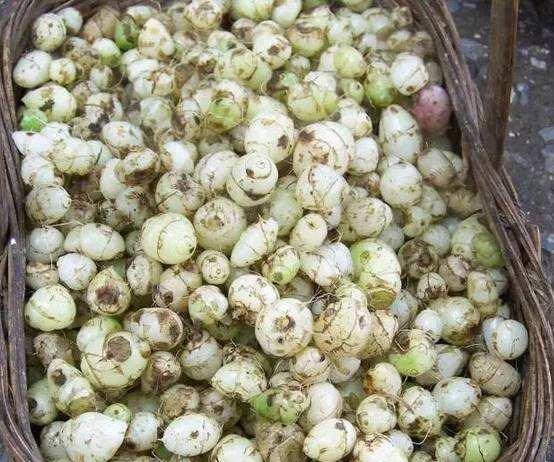
At 4 a after planting, after the plants return to dormancy in autumn and before sprouting in spring, choose a sunny day, first remove aboveground residual stems and withered leaves, dig up the rhizomes together with soil, shake off the soil, cut off the stems, cut the rhizomes with bud scales as seeds, remove the fibrous roots from the remaining parts, wash clean with clear water, place in boiling water and boil for 5-10 min until there is no white core inside, then sun-dry or dry at ≤70°C. Store in a cool, dry, ventilated place, taking care to avoid light and prevent insects.