A Detailed Guide to the Planting Methods and Propagation of the Buddhist Pine (Podocarpus macrophyllus)
Potted Buddhist pine (Podocarpus macrophyllus) stays green all year round, with deep green leaves and an elegant form. It gives off wafts of fragrance throughout the year, purifies the air and helps repel mosquitoes, and is extremely shade-tolerant, making it very suitable for venues, courtyards and indoor displays. It is one of the increasingly popular potted flowering trees and shrubs. So how is Buddhist pine grown? What good methods are there for growing it? And what points need attention when growing Buddhist pine? Please read on with me, carrying your questions!
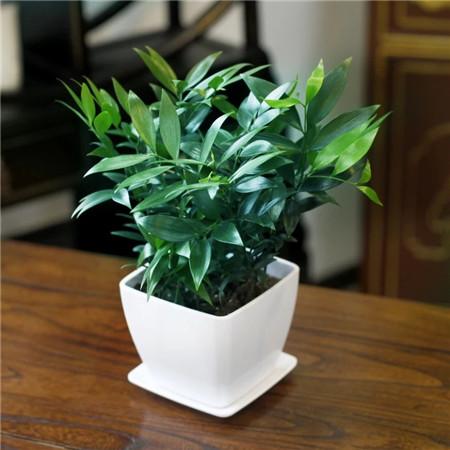
Growing methods for Buddhist pine (basic knowledge):
Best propagation time: Buddhist pine is best propagated in late spring and early autumn.
Best growing soil: For Buddhist pine, a loose, moist, acidic sandy loam to light clay soil with a thick humus layer is more suitable.
Growing humidity requirements: For Buddhist pine, frequently spray water on the leaf surface and around the plant to increase air humidity, so that the leaf color becomes deep green and glossy, and to prevent the leaf edges from drying up due to dry air.
Best growing temperature: The most suitable annual average temperature for Buddhist pine is 18-26°C.
Best growing light: On sunny slopes with strong sunlight, the root crown of Buddhist pine will suffer sunscald or die. Annual light of 500-800 hours is sufficient, and natural regeneration under the forest canopy is good.

Points to note when growing Buddhist pine:
Fertilizer application: Potted Buddhist pine plants do not need to grow too fast, so generally no additional fertilizing is needed. However, to ensure deep green leaf color, apply alum fertilizer water two or three times during the peak growing season.
Key watering points: During the growing period of Buddhist pine, keep the potting soil moist but not waterlogged. Both excessive drought and waterlogging are unfavorable to normal plant growth.
Pruning essentials: In winter, when Buddhist pine enters dormancy or semi-dormancy, cut off weak, diseased, pest-infested, dead and overly dense branches. You can also tidy up the branches in combination with taking cuttings.
Potting soil replacement: As long as Buddhist pine is cared for properly, it will grow very fast. When it grows to a certain size, consider giving it a larger pot so that it can continue to grow vigorously. For the potting mix and component ratios used when repotting, you can choose one of the following: vegetable garden soil: cinder = 3:1; or garden soil: medium-coarse river sand: sawdust (mushroom residue) = 4:1:2; or one of paddy soil, pond mud, or leaf mold.
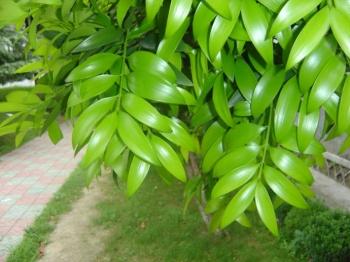
Propagation essentials: Buddhist pine is commonly propagated by sowing, cuttings, layering and other methods.
1. Sowing: Seeds can be sown in a greenhouse as soon as they are collected, or sown outdoors in spring. After sowing, cover with soil two to three cm thick, and cover with straw or weeds for shading. Seeds begin to germinate after 20 days. After that, gradually remove the covering, and the seedlings emerge completely within 30 to 50 days. Because the root system of the seedlings is not yet fully developed, waterlogging, heavy rain, high temperatures and exposure to strong sun can all cause their death, so management at ordinary times must be especially careful.
2. Cuttings: Generally carried out in March, and also possible in mid-September. Cut current-year or one-year-old tender branches as cuttings, and cut off part of the leaves to reduce water evaporation and ensure survival. You can also treat them with rooting powder and other substances to promote rooting. Insert them into coarse sand, vermiculite or other media with good drainage and aeration. After inserting, water frequently and spray frequently, keep the medium and air moist, and avoid exposure to strong sun. The survival rate is quite high.
3. Layering: The air layering method is mostly used. In the growing season, choose robust and plump one-year-old branches, make a ring cut at a suitable position, then wrap soil around the wound, and use a plastic bag to wrap the soil tightly and keep it moist. After rooting, cut it off and plant it in a pot.
Pest and disease control:
1. Pests of Buddhist pine include: aphids, for control use 50% pirimicarb 3000-5000 times dilution or 40% omethoate 1500-2000 times dilution; scale insects, for control use fenitrothion 2000 times dilution, or 1605 at 1500 times dilution; leaf miner moths, for control use dichlorvos or fenitrothion 1000-1500 times dilution, or 90% trichlorfon 1500 times dilution.
2. Disease control of Buddhist pine: black spot disease, spray 40% carbendazim 800 times dilution or 65% zineb 400-500 times dilution in early June; rust fungus, use 1500-2000 times dilution of rust fungicide or 65% zineb wettable powder 500-600 times dilution; powdery mildew, 50% carbendazim wettable powder 1000-1500 times dilution; anthracnose and sooty mold, carbendazim 800 times dilution or low-concentration virus inhibitor solution.
3. Control of nutrient deficiency: It can be controlled by pouring trace fertilizer into rock crevices or spraying trace fertilizer on the leaves.
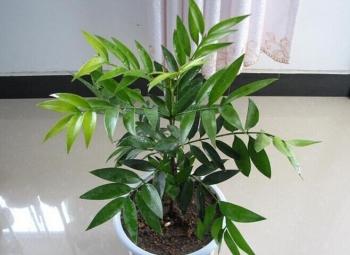

Tips for growing Buddhist pine:
1. In winter, place it indoors in a bright spot, control watering, and it can overwinter safely as long as the temperature does not drop below 0°C.
2. When planting, refer to the method for making bamboo bonsai, pay attention to the staggering of height and the positions front, back, left and right, so that the spacing is appropriate, and it looks delicate and elegant. You can also spread a layer of stones or moss on the surface of the potting soil to increase its ornamental value.