Master high-yield grape cultivation techniques, and growing for prosperity becomes easier
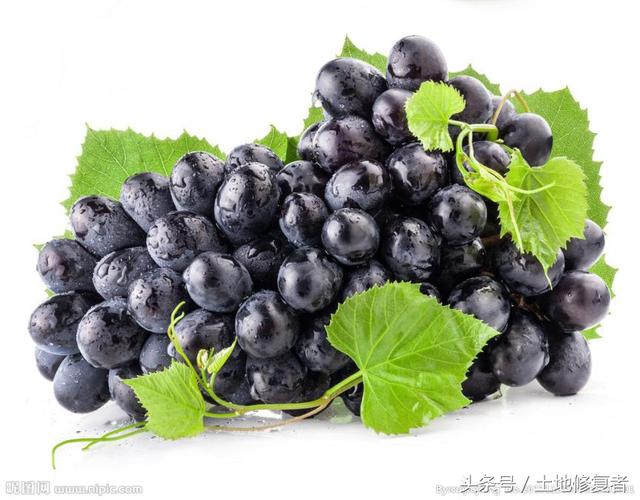
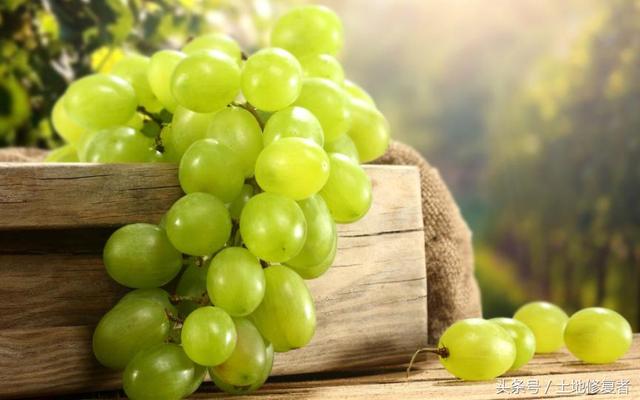
Grapes are one of the oldest fruit tree species in the world. Grape plant fossils have been found in Tertiary strata, indicating that they were already widespread across Europe, Asia and Greenland at that time. Grapes originated in western Asia and are cultivated all over the world, with about 95% of the world's grapes concentrated in the Northern Hemisphere. Grapes can be eaten fresh or made into raisins, and can also be used for winemaking; the lees left after winemaking can be used to extract tartaric acid, and the roots and vines can be used medicinally to stop vomiting and prevent miscarriage.
Nutritional value:Nutritional composition of grapes: Grapes are not only delicious but also highly nutritious. In ripe berries, the sugar content of grapes reaches as high as 10%-30%, mainly glucose. The various fruit acids in grapes aid digestion, and eating a moderate amount of grapes can strengthen the spleen and stomach. Grapes contain minerals such as calcium, potassium, phosphorus and iron, as well as various vitamins including vitamin B1, vitamin B2, vitamin B6, vitamin C and vitamin P, and also contain a variety of amino acids needed by the human body. Regular consumption of grapes is greatly beneficial for neurasthenia and excessive fatigue.
Research has found that grapes can prevent blood clot formation better than aspirin, and can lower human serum cholesterol levels and reduce platelet aggregation, playing a certain role in preventing cardiovascular and cerebrovascular diseases. Eating an appropriate amount of fresh grapes every day not only reduces the risk of cardiovascular disease, but is also especially beneficial to the health of patients with ischemic heart disease and atherosclerotic heart disease. The flavonoids in fresh grapes can "clean" the blood and prevent the formation of cholesterol plaques. The darker the grape, the more flavonoids it contains, but eating the grape skin and seeds together gives even better heart protection.
Grape carbon-based fertilizer
Medicinal value:Traditional Chinese medicine holds that grapes are neutral in nature and sweet-sour in taste, entering the lung, spleen and kidney meridians, and have the effects of supplementing qi and blood, benefiting the liver and kidneys, promoting body fluid production, strengthening bones and muscles, relieving cough and restlessness, tonifying qi and blood, and promoting urination. The resveratrol in grape skins and the proanthocyanidins in grape seeds are present in higher amounts than in other parts of the grape and higher than in most other fruit trees, and have extremely high medicinal value, making them an important worldwide commodity that is both nutritional and medicinal.
Economic value:Wine is the most important processed product made from grapes. Because of its cultural connotations, wine has become a high-grade consumer product. In China, its consumption has risen steeply. In addition, the newly developed grape seed oil is used abroad as a premium nutritional oil for infants and the elderly, and as a premium health oil for high-altitude workers and flight personnel, and has attracted considerable attention worldwide. Compared with other fruits, grape products are far more diverse. Based on daily needs, storage and transportation requirements for processed products, nutritional and health effects and other factors, people also process grapes into common products such as raisins, grape juice, grape seed beverages and grape seed oil.
Grape carbon-based fertilizer
Establishing the vineyard
(1) The vineyard site should be located as far as possible in a place with convenient transportation, to facilitate shipping out the products.
(2) The terrain should be open and flat (mountain and hilly land should be appropriately modified), with good drainage. Narrow gullies and valleys are not suitable as vineyard sites because of insufficient light and easy accumulation of cold air, making them prone to frost.
(3) There should be a good water source for irrigation.
(4) The soil layer should be relatively thick, and the soil fertile and loose, with good permeability and water retention.
(5) In windy places, it is best to choose a site with a natural windbreak (such as forest, buildings or hills) for the vineyard; otherwise a shelterbelt should be established.
(6) Dividing planting blocks: divide into several planting blocks (also called operation blocks) according to terrain aspect and slope. The planting blocks should be rectangular, with the long side consistent with the row direction, which is conducive to drainage, irrigation and mechanical operations.
(7) Road system: determine the road grade according to the total area of the vineyard and the terrain. The main road should run through the central part of the vineyard; for small areas one road is set, while for large areas roads can cross lengthwise and crosswise, dividing the whole vineyard into 4, 6 or 8 large blocks. Branch roads are set at the boundaries of the operation blocks, generally perpendicular to the main road. Within the operation blocks, working paths are set, connected to the branch roads; these are temporary roads and can use the open space between grape rows. The main road and branch roads are permanent roads, and their foundations and surfaces should be firm and durable.
(8) Drainage and irrigation system: the vineyard should have a good guaranteed water source, and a three-level irrigation system of main irrigation canal, branch canals and irrigation furrows should be set up (for smaller areas, a two-level system of irrigation canal and irrigation furrow can also be used). The elevation of each level of channel should be designed with a 5 per thousand gradient, that is, the main canal is higher than the branch canals, and the branch canals are higher than the irrigation furrows, so that water can flow by gravity for irrigation in the channels. The drainage system is also divided into three levels: small drainage ditches, medium drainage ditches and main drainage ditches, but the elevation difference gradually decreases from the small ditches to the large ditches. Drainage and irrigation channels should be closely integrated with the road system, generally set on both sides of the roads.
(9) Shelterbelt: setting up a shelterbelt in the vineyard improves the microclimate within the vineyard and has the effect of protecting against wind, sand, frost and hail. For vineyards of more than 100 mu, the direction of the shelterbelt should be perpendicular to the prevailing wind direction, and sometimes a secondary shelterbelt perpendicular to the main shelterbelt should also be established. The main shelterbelt is composed of 4-6 rows of trees and shrubs, and the secondary shelterbelt is composed of 2-3 rows of trees and shrubs. In areas with severe wind and sand, the spacing between main shelterbelts is 300-500 m, and the spacing between secondary shelterbelts is 200 m. A boundary forest of 3-5 rows is set at the orchard boundary. Generally, shelterbelts occupy about 10% of the total orchard area.
Grape carbon-based fertilizer
(10) Others include trellis type, trellis materials, row and plant spacing, etc.
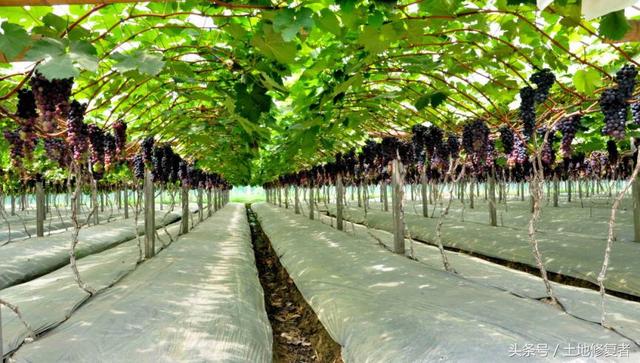
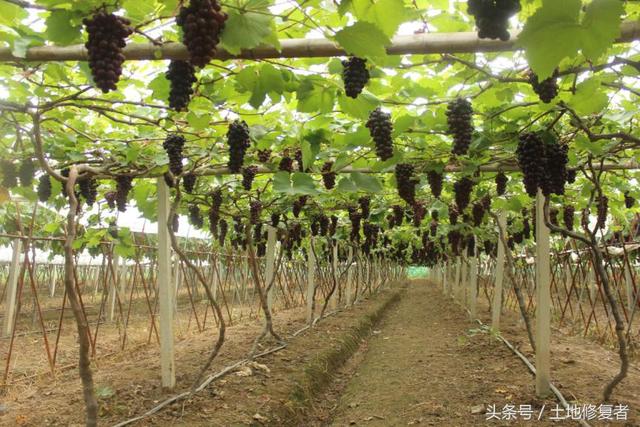
① Trellis type. The choice of trellis type should generally be determined according to variety characteristics, local climate characteristics and local planting habits. Generally, in the region north of the Great Wall in China, overhead trellises are mostly used, so as to have wider row spacing for taking soil to protect plants from cold in winter, and to prevent the root system from being exposed and suffering cold damage due to large amounts of soil removal. However, in order to achieve rapid high yield, cold-resistant rootstock grafted seedlings should be used as far as possible to reduce row spacing. In the grape-producing areas south of the Great Wall to the Yellow River basin, trellis fences are mostly used. The most commonly used in production is the single-wall trellis fence, which has the advantages of convenient management and relatively good ventilation and light conditions.
② Setting of plant and row spacing. The plant and row spacing of grapes varies with trellis type, variety and climate conditions. For grapes trained in overhead trellis form, row spacing ranges from 4-10 m. Varieties with particularly strong growth vigour and easy formation, such as Longyan, can adopt a large row spacing of 6-10 m, while varieties with moderate growth vigour generally adopt a row spacing of 4-6 m. Plant spacing is determined according to the number of main vines left on the trellis surface; for 1 plant with 1 vine, the plant spacing is about 0.5 m. Then according to local climate conditions, in warm areas with a longer growing season, plant and row spacing can be slightly larger; conversely, in colder winter areas with a shorter growing season, plant spacing can be slightly smaller. When using trellis fences, too wide a row spacing is not conducive to increasing the trellis surface and effective trellis surface per mu. In non-soil-burying areas or lightly soil-burying areas, the row spacing of a single trellis fence should be equal to or slightly greater than the trellis height, that is, preferably between 2-2.5 m. If the row spacing is too narrow, the lower part of the trellis surface will have insufficient light and become ineffective trellis surface. In northern soil-burying areas, the row spacing should be appropriately widened (generally 2.5-3 m) to facilitate taking soil for cold protection in winter. The trellis height should preferably be 1.8-2.0 m; too high is not conducive to summer pruning and other management operations.
③ Trellis materials and investment required for the vineyard. The required amount of trellis materials varies with different trellis structures. Sloping small overhead trellis: 60 cement posts per mu. The shape of the cement posts is generally square or rectangular, with side length 8-12 cm. The length of the cement posts is generally 2-2.5 m. In addition, 30 bamboo poles are needed, and No. 8 or No. 10 iron wire, with a total of 10 strands of about 1100 m. The trellis material cost is about 570 yuan. Connected horizontal overhead trellis: 60 cement posts of 10 cm square per mu. Each mu requires 24 m of iron rod with a diameter of 6.5 mm, 180 m of No. 8 iron wire, and 1100 m of No. 10 iron wire; the trellis material cost is about 480 yuan. Single-wall trellis fence: each mu requires 66 cement posts 2-2.5 m high, and 800 m of No. 8 or No. 10 iron wire. The trellis material cost is 380-400 yuan. [6]
Grape carbon-based fertilizer
Digging trenches and planting
Grapes are perennial vine plants with a relatively long lifespan. After planting, they grow and bear fruit in a fixed position for many years, so they need a relatively large underground nutritional volume. The young root tissues of grapes are fleshy, and their growing points extend downward and outward and stop advancing when they encounter resistance. In order to enable the grape root system to occupy a relatively large nutritional area in the soil and achieve "deep roots and luxuriant leaves", planting trenches must be dug well before planting grapes.
(1) Digging planting trenches: the time for digging planting trenches is generally best in northern regions from after autumn to before the soil freezes. For mountain vineyards, the planting trenches should be appropriately deeper and wider, generally with a depth and width of 1 m, while for flat land trenches 0.8 m deep can be dug. First set lines according to row spacing, then dig trenches according to the trench width, placing topsoil on one side and subsoil on the other, then backfill soil. When backfilling, first place a 20 cm layer of organic matter at the bottom of the trench. On flat land, if the groundwater level is relatively high, 20 cm of cinder or garbage can be placed as a filtering layer. Then fill back one layer of topsoil and one layer of carbon-based nutritional microbial bacterial fertilizer mixed with topsoil. When backfilling, improvement should be carried out according to different soil types; if the soil is heavy and clayey, an appropriate amount of sand should be mixed in for backfilling to improve soil structure and facilitate root growth and development. When backfilling to 10 cm from the surface, irrigate to settle the planting trench, then backfill level with the surface for planting seedlings.
(2) Planting seedlings: select qualified seedlings, requiring a complete root system with more than 5 lateral roots, with a diameter of 2-3 mm. The seedling thickness should be more than 5 mm, fully mature and lignified, with more than 3 plump buds on it. The seedlings should be free from disease and insect damage. If grafted seedlings, the rootstock type should meet the requirements, and the graft interface should be completely healed without cracks. Planting time: in the Beijing area, it is preferably from late March to early April in spring; south of the Yangtze River, seedlings can be planted in autumn, generally from November to December. Before planting, the seedlings should be properly pruned, cutting off dead stubs, and overly long roots should be cut to 20-30 cm. Then soak them in clean water for 24 hours to allow them to fully absorb water. When planting, dig holes, spread the seedling roots out in all directions, do not coil the roots, cover with soil and press firmly so that the roots are closely combined with the soil. The planting depth should not be too deep or too shallow; too deep means lower soil temperature, which is not conducive to seedling recovery, while too shallow means the roots are easily exposed above ground and air-dried. Generally, grafted seedlings are covered with soil up to 1 cm below the graft interface, and for cutting seedlings it is appropriate for the original root collar to be level with the planting trench surface. After planting, irrigate thoroughly once, and after the water seeps in, cover with soil again so that the roots are not exposed. In arid areas, after planting seedlings, cover with sandy loam, with the soil mound height preferably exceeding the uppermost bud eye by 2 cm, to prevent the bud eyes from drying out; irrigate again after 5 days, so as to ensure seedling survival. It is best to use plastic film mulching, which helps raise soil temperature and preserve moisture, and promotes root growth.
Grape carbon-based fertilizer
(3) Management techniques for planted seedlings in the same year: bud removal, shoot selection and pinching are very important for planted seedlings. When the bud eyes germinate, grafted seedlings should promptly remove the germinating buds below the graft interface, so as to avoid the growth of sprouts consuming nutrients and affecting the germination of scion bud eyes and the growth of new shoots. When the seedling height reaches 20 cm, carry out shoot selection and thinning according to planting density; if plant spacing is relatively large, generally leave 2 shoots, otherwise leave 1 shoot. Remove excess shoots and keep strong shoots rather than weak ones, so that nutrients are concentrated in the retained shoots and plant growth is favoured. When the seedling is 1 m high, pinching of the main shoot and treatment of secondary shoots should be carried out. First remove secondary shoots below 30 cm from the ground; secondary shoots above that generally retain 1-2 leaves and are repeatedly pinched, while relatively thick secondary shoots can retain 4-5 leaves and be repeatedly pinched for control. When the main shoot length reaches 1.5 m, pinch again. In the Beijing area, with good seedling management, plants can generally reach about 2 m by early September, and a final pinching of the main shoot should also be carried out. Through repeated pinching many times, thickening of the seedlings, lignification of branches and flower bud differentiation can be promoted. During winter pruning, cut on main vines that are fully mature with a diameter of more than 1 cm; generally the main vine is left with a length of 1-1.2 m. When secondary shoots growing from the main shoot reach a thickness of 0.5 cm, they can be cut back leaving 1-2 buds as fruiting mother branches for the next year.
(4) The most critical part of early high-yield cultivation techniques is fertilizer and water management. When the seedling height is 40-50 cm, carry out the first topdressing. Since planted seedlings have very small root systems and therefore absorb relatively few nutrient elements, frequent light applications should be made, with 2-3 topdressings per year, at intervals of 20-30 days, mainly with carbon-based nutritional microbial bacterial fertilizer. After topdressing, irrigate promptly, loosen the soil, and cultivate and weed. Attention should also be paid to disease and pest control.
Grape carbon-based fertilizer
Fertilizer and water management
Fertilization: base fertilizer is the most important part of vineyard fertilization. Base fertilizer is applied in autumn, and can be carried out from after grape harvest until the soil freezes. However, production practice shows that the earlier the autumn base fertilizer is applied, the better. Base fertilizer is usually mainly carbon-based nutritional microbial bacterial fertilizer. Base fertilizer has a good effect on restoring tree vigour, promoting root absorption and flower bud differentiation. Methods of applying base fertilizer include broadcast application over the whole vineyard and trench application. Overhead trellis grapes mostly use broadcast application, and after application the fertilizer is turned under with an iron shovel or plough. Broadcast application often causes the grape root system to rise, so broadcast application should be changed to trench or hole application as far as possible. Trellis fence grapes often use trench application. The method is to open a trench 50 cm from the plant, 40 cm wide and 50 cm deep, apply 2-5 kg of carbon-based nutritional microbial bacterial fertilizer per plant, and fill the trench layer by layer with one layer of fertilizer and one layer of soil. In order to reduce the workload of fertilization, the method of alternate-row trench fertilization can also be used, that is, in the first year dig trenches and fertilize in rows 1, 3, 5..., and in the second year dig trenches and fertilize in rows 2, 4, 6..., alternating trench application so that the whole vineyard soil is deeply turned and improved. The amount of base fertilizer applied accounts for 50%-60% of the total annual fertilization amount.
Topdressing: applied during the grape growing season; generally a high-yield vineyard needs topdressing 2-3 times per year. The first topdressing is carried out in early spring when buds begin to swell. At this time flower buds are continuing to differentiate, new shoots are about to begin vigorous growth, and a large amount of nutrients is needed; apply carbon-based nutritional microbial bacterial fertilizer, with the application amount accounting for 10%-15% of the annual fertilizer amount. The second topdressing is carried out after flower drop in the early stage of young fruit enlargement, mainly with carbon-based nutritional microbial bacterial fertilizer, combined with spraying the carbon-based humic acid water-soluble fertilizer developed by Professor Liu Cunshou. This topdressing can not only promote young fruit enlargement, but is also beneficial to flower bud differentiation. This stage is the vigorous growth period of grapes and also the key period determining the next year's yield, also called the "critical period of water and fertilizer"; the water and fertilizer management of the vineyard must be handled well. Topdressing during this period is mainly carbon-based nutritional microbial bacterial fertilizer, with the fertilization amount accounting for 20%-30% of the total annual fertilization amount. The third fertilization is carried out in the early stage of fruit colouring, with the fertilization amount accounting for about 10% of the annual fertilizer amount. Topdressing application method: it can be applied directly into the soil at the plant roots in combination with irrigation or on rainy days. In addition, root-outside topdressing can also be carried out, that is, diluting the carbon-based humic acid water-soluble fertilizer and spraying it onto the plants to facilitate leaf absorption. Root-outside topdressing can also be sprayed together with pesticide spraying for disease and pest control, to save labour. Modern grape fertilization mainly relies on the analysis of mineral elements in leaves for judgement and decision-making. When the content of a certain element in grape leaves is lower than the lower limit of the appropriate range, supplementation of that element should be appropriately carried out.
Grape carbon-based fertilizer
Water management: grape growth requires a large amount of water. During several key periods, such as after budding to before flowering, and after fruit set to the fruit colouring stage, timely watering should be done during drought. On rainy days, field ditches should be promptly cleared to drain accumulated water.
Flower and fruit management: in order to increase fruit set rate, enlarge berries, and improve yield and quality, artificial pollination can be used. Nail rabbit fur with hair onto a wooden board to make a pollination brush, and in the early full-bloom stage, in the morning when there is no dew, use the brush to stroke the grape inflorescences to assist pollination.
Flower and fruit thinning: for varieties such as Kyoho, methods such as thinning inflorescences, pinching off secondary inflorescences, thinning flower buds and thinning young fruit can be used to remove excess berries and improve fruit quality. Inflorescence thinning is completed about half a month before flowering. Pinch off one-fifth to one-third of the end of the inflorescence, and thin out poorly differentiated secondary inflorescences. Flower bud thinning is carried out 5-10 days before flowering, gently stroking the inflorescence by hand so that some flower buds fall off. Young fruit thinning is carried out after physiological fruit drop; for large-berry varieties such as Kyoho, only about 50 berries need be retained per cluster.
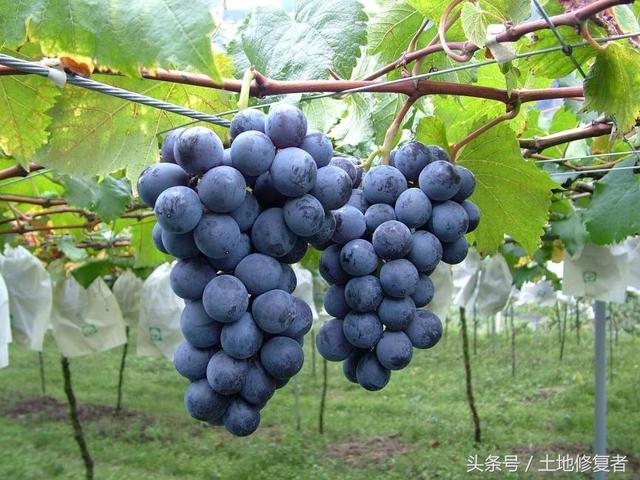
Fruit bagging: generally about 40 days after flowering, when berries are the size of soybean, bagging is carried out to prevent fruit diseases and pests. Seven days before bagging, spray comprehensively once with an insecticide and fungicide such as 50% carbendazim wettable powder at 800-1000 times, or 80% Daconil M-45 wettable powder at 600-800 times, or 70% thiophanate-methyl wettable powder at 800-1000 times. Choose to bag before 10 a.m. and after 4 p.m. each day to prevent midday high temperatures from scalding the berries.
Training and pruning: for courtyard horizontal overhead trellis, a multi-main-vine fan shape can be used, with the trunk height above 1 m, and multiple main vines on the trellis surface growing on the extended trunk.
Summer pruning: bud removal, tying shoots and removing tendrils. In the early growth stage, remove excessive useless tender shoots. When new shoots are about 30 cm long, tie them to the iron wire to prevent them from being broken by wind, and at the same time remove the tendrils. Pinching and removing secondary shoots: pinch about 5 days before flowering to increase fruit set rate. Generally leave more than 5 leaves above the fruit cluster and pinch off the tender tip. After pinching, secondary shoots begin to sprout; remove all secondary shoots below the fruit cluster, and for secondary shoots above the fruit cluster, leave 2 leaves and pinch again. After pinching again, the secondary shoots produce second-order secondary shoots; for second-order secondary shoots or third-order secondary shoots produced later, continue to pinch in the same way. Secondary shoots at the top of the main shoot can retain a few more leaves.
Winter pruning: winter pruning should preferably be carried out after leaf fall and before February of the following year; after February there is often bleeding, so pruning is not suitable. When pruning, select and retain branches on the main vine that are full-grown, well matured and free from diseases and pests as fruiting mother branches. Cutting fruiting mother branches to leave 2-4 buds is short-spur pruning, 5-7 buds is medium-spur pruning, and cutting to leave more than 8 buds is long-cane pruning. Vigorous varieties such as Kyoho often use mainly medium and long canes, combining long, medium and short canes for pruning. Thick strong branches can be left long, and thin long branches can be left short. Leave some short spurs on the lower part of the main vine and side vines as renewal spurs, to renew the vines.
Grape carbon-based fertilizer
Pest control
First stage: dormancy period to bud break period. During dormancy, clean the vineyard, prune off dead branches and mummified fruit, etc., sweep up fallen leaves and burn them centrally or bury them deeply, to reduce overwintering sources of disease. At bud break, spray once with 3°Be lime sulfur mixture plus 0.2%-0.3% organosilicon agricultural adjuvant, to eliminate overwintering sources of disease.
Second stage: new shoot growth period to before flowering. Spray 1:0.5:200 Bordeaux mixture, mainly to control black pox and gray mold damaging young leaves, tender shoots and inflorescences.
Third stage: after flower drop to the early fruit colouring stage. After flower drop, spray 1-2 times with 3000 times fenvalerate solution to control grape clearwing moth larvae damaging tender shoots. Every 10-15 days, alternately spray 1:0.5:200 Bordeaux mixture or 1000 times 70% thiophanate-methyl solution; triazole fungicides and strobilurin fungicides can also be used to prevent black pox, white rot, anthracnose, etc. When there is more rainy and low-temperature weather in the early growth stage, if downy mildew occurs on leaves, 800 times 25% metalaxyl solution can also be sprayed; in the early stage of disease occurrence, dimethomorph can be used for control. If leafhoppers cause damage around the flowering period, 25% imidacloprid 2000 times solution can be sprayed for control. In mid-to-late June, when berries are the size of soybean, bagging is carried out to prevent fruit diseases and pests.
Fourth stage: fruit colouring stage to fruit maturity stage. Use manual capture to control hawk moth larvae. Spray 1:1:200 Bordeaux mixture to control downy mildew, anthracnose, gray mold, white rot, etc.
Fifth stage: fruit harvest period to dormancy period. When second-generation hawk moth larvae cause damage, 3000 times fenvalerate solution can be sprayed. When there is more rainy weather in autumn, focus on controlling downy mildew, and 1:1:200 Bordeaux mixture can be sprayed.
This article was compiled by Qinshuqiao Agriculture, and sharing is welcome. Readers who want to learn more can enter L581220L and note "planting" to learn more.