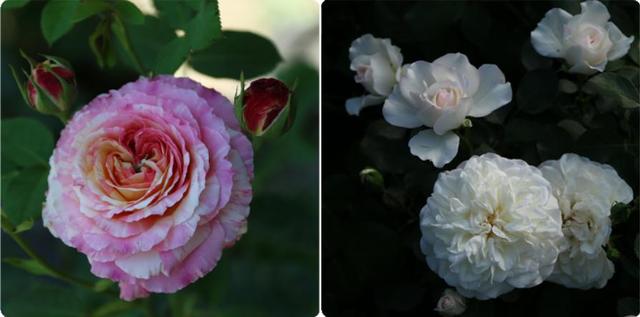
Propagation Methods, Planting and Field Management of Multi-Season Roses
Propagation Methods, Planting and Field Management of Multi-Season Roses
The multi-season rose is a variety of rose with strong environmental adaptability and many flowering seasons.
1 Propagation methods of multi-season roses
The multi-season rose is a plant propagated asexually, and its main propagation method is cutting. That is, after leaf fall in autumn, rose branches are appropriately cut, trimmed into cuttings with 3-4 buds and a length of 10-15cm, and treated with various disinfectants, such as lime sulfur mixture and Bordeaux mixture. After treatment, the cuttings are cultivated in a greenhouse for overwintering. If there is no greenhouse, the cuttings can be buried in leeward, sunny soil to effectively ensure the germination rate of the cuttings. Before cutting in early spring, the cuttings should be soaked in a rooting powder solution for 5-10 minutes, then inserted into a prepared sandy loam cutting bed. The row spacing of this bed is 10cm, the spacing of each cutting at the time of insertion is 5cm, and the insertion depth is half of the cutting. After that, compact the soil and water thoroughly once. Build a small arch shed where the multi-season rose cuttings are inserted, which can play a role in heat preservation and moisture retention. To ensure soil moisture in the sandy loam cutting bed, water through the film every 10 days. Watering should be done at noon on sunny days. After 1 month, the cuttings can take root and sprout. In early May, the film can be removed, and then planting management can be carried out in the conventional way. Generally, softwood cuttings are taken during the plum rain season. Before cutting, first trim the softwood shoots into cuttings with 2-3 nodes and a length of 15-20cm. The cutting method is the same as above, and after softwood cutting there is no need to cover with film. However, care should be taken to provide shade during the day. If cuttings are taken at night, it needs to be done in the open air.
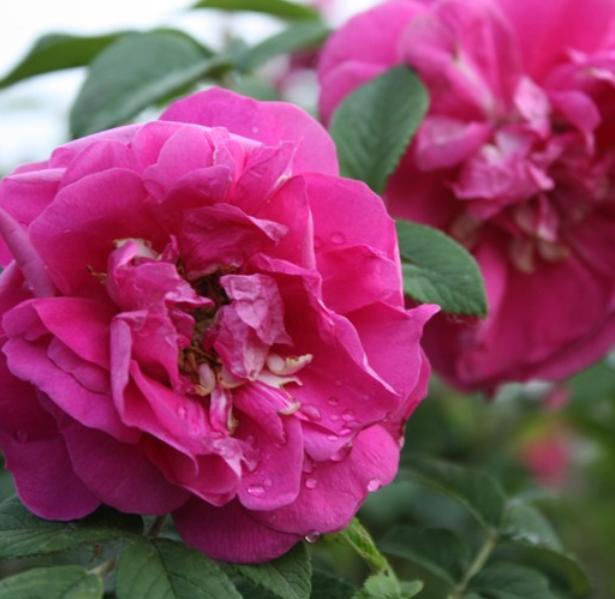
2 Planting of multi-season roses
2.1 Selection and preparation of the planting site
The multi-season rose has strong adaptability and is characterized by liking sunlight, drought tolerance and cold tolerance. It does not have high soil requirements, and sandy soil rich in organic matter is best. To improve the yield and quality of multi-season roses, the planting site should have good drainage and ventilation performance, and the groundwater level should be low. Fertile neutral or slightly acidic light loam can promote the growth of multi-season roses. The multi-season rose has strong sprouting ability and grows rapidly, but it is not tolerant of waterlogging. Therefore, heavy clay soil or low-lying waterlogged plots cannot be selected as the planting site. After selecting the planting site, the land should be leveled, and 500kg of decomposed farmyard manure should be applied per 667 sq m of land, after which the land should be deeply plowed to effectively enhance the air permeability of the soil.
2.2 Bed making and field planting
Multi-season roses are cultivated on raised beds. When preparing the land, the bed width should be set at 60-70cm, the spacing of each sprouted cutting should be 20-25cm, and the bed surface needs to be covered with plastic film. Early May to early October is the planting period for multi-season roses. Before field planting, roots that have rotted or were injured when the seedlings were lifted must be cut off to ensure the survival rate of planting. For well-developed roots, especially the main root, excessive pruning is not needed. When planting, the seedlings need to be dipped in rooting powder to promote seedling growth. 700 multi-season rose plants can be planted per 667 sq m of land.
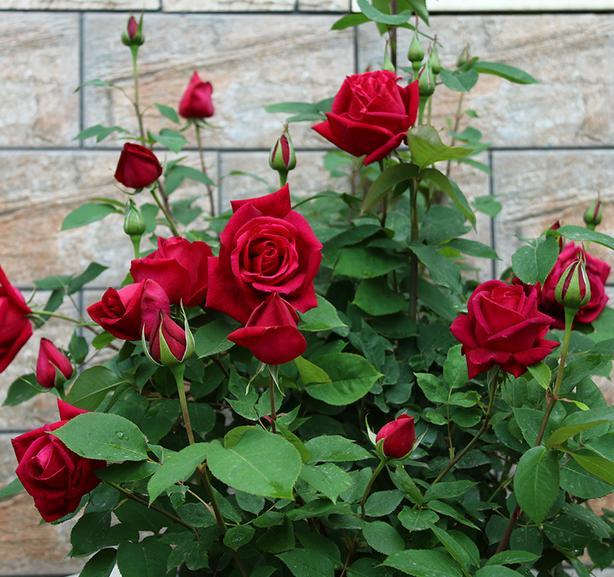
3 Field management of multi-season roses
3.1 Controlling the amount of watering
After the multi-season rose seedlings are field planted, the first watering should be thorough, after which the amount of watering should be controlled to raise the ground temperature and effectively promote the sprouting of new roots. Until the new leaves are fully expanded, the amount of watering can be appropriately increased. When watering, the principle of "dry-wet alternation" should be followed to avoid damaging the roots of multi-season roses through overwatering. To prevent early-spring drought in the second year and encourage early growth and rapid development of multi-season roses, water once with freeze-proof water before the soil freezes.
3.2 Rational fertilization
Multi-season roses have high yields and require large amounts of fertilizer. Base fertilizer needs to be applied when preparing the land. From after leaf fall in autumn to late October, farmyard manure should be applied, and intertillage should be carried out to fully mix the soil and fertilizer. From the appearance of flower buds in the second year until the end of flower harvesting, decomposed human and livestock manure or cake fertilizer should be applied as topdressing 3 times to promote flower bud enlargement and improve the yield and quality of multi-season roses.
3.3 Appropriate shaping and pruning
(1) Spring: for 1-year-old seedlings, the trunk is headed at 5cm from the base. After the branches emerge, leave 3 main branches, and then leave 3 main branches on each main branch, presenting an umbrella shape with 3-9 main branches. The remaining side branches are pruned appropriately according to density to ensure ventilation and light transmission. Overdense branches, dead branches, old branches or diseased branches must be pruned. The cut should be 1cm from the retained bud and should be as smooth as possible, sloping from one side of the retained bud down to the other side. (2) Autumn: flat-topping treatment can be carried out to avoid affecting the flower yield of the second year.
3.4 Pest and disease control
Multi-season roses have strong resistance to pests and diseases and usually do not suffer from pests and diseases. Even during periods of low temperature and scant light or high temperature and high humidity, pests and diseases rarely occur. If used as edible material, no chemical control is needed. Powdery mildew is the main disease of multi-season roses, and its control measures are: (1) remove diseased branches by pruning to reduce sources of infection; (2) strengthen cultivation management. In spring, spray 5°Be lime sulfur mixture on the planting ground and plants, and when flower buds first appear, spray once more with a lower concentration of 5°Be lime sulfur mixture. (3) If used for landscaping and ornamental purposes, various chemical controls can be used during the disease period, such as carbendazim, dinocap, chlorothalonil, etc.
3.5 Harvesting and drying
The harvest time of multi-season roses is determined according to use. Harvesting when the buds are about to open is for tea use, harvesting when they first open is for wine use, and harvesting when in full bloom is for beverages and rose jam. If fresh flowers cannot be dried in time, they need to be frozen at a low temperature of -10°C. The drying time and temperature depend on the use. If used for medicine or oil extraction, strong-fire drying is needed; if used for rose tea, drying takes 15-24 hours, first drying at 30-90°C for 10 hours, and finally setting the color at 110°C.