Key Points for Calcium Supplementation in Hybrid Citrus Cultivation
Looking back over the southern citrus industry, it has rolled forward with great momentum for decades, once bringing substantial economic income to countless fruit growers, and many citrus growers thereby embarked on the path to prosperity. Today, however, quiet changes are taking place. In recent years, large-scale variety improvement and top-grafting have been carried out, mostly with Shiranui, Harumi, Daya, Ehime, Satsuma mandarin, Wogan and others as the main varieties; many newly built large-scale orchards (hundreds to thousands of mu) even take hybrid citrus as the flagship, setting off wave after wave of hybrid citrus planting, as if a mighty hybrid citrus revolution were underway!

This hybrid citrus revolution is not only happening in various regions, cities and prefectures of Sichuan Province; it is also stirring in Chongqing, Hubei, Hunan, Jiangxi and Guangxi; even Fujian and Guangdong are raring to go and eager to try! Perhaps many fruit growers, because hybrid citrus cultivation has brought substantial economic income, have overlooked information related to hybrid citrus quality and fruit cracking: What causes hybrid citrus fruit cracking? Can hybrid citrus fruit cracking be prevented, reduced or eliminated? Is calcium related to hybrid citrus fruit cracking? What specific role does calcium play in hybrid citrus cultivation? What inevitable connection is there between calcium and keeping hybrid citrus on the tree for freshness and safe overwintering? What role does calcium play in improving or enhancing hybrid citrus quality and yield? How should calcium be rationally applied during hybrid citrus cultivation?

Today [Friend of Hybrid Citrus] lists and shares all aspects related to hybrid citrus quality and fruit cracking!After carefully reviewing relevant data, research reports and field performance, it was found that hybrid citrus quality and fruit cracking are caused by multiple factors, not just a single link. To solve the problems of hybrid citrus quality and fruit cracking, it is necessary to consider factors on all sides; one-sidedly emphasizing a single measure or method often makes it difficult to achieve any obvious results.
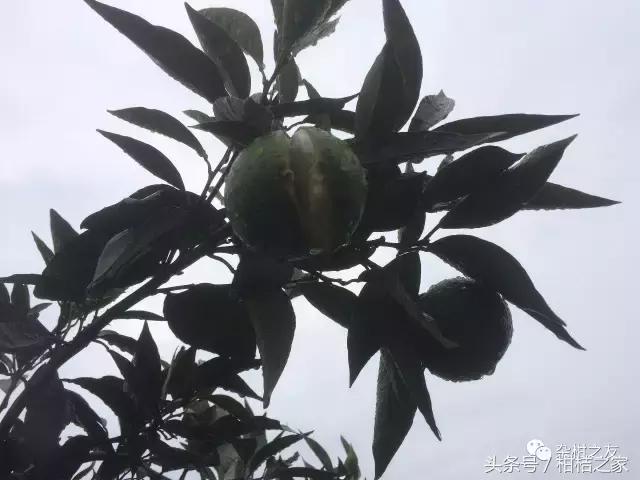
After a rainstorm cleared up at night, fruit cracking was found in the early morning.
High-quality, high-yield cultivation and management of hybrid citrus is itself a system (variety and seedling selection, orchard site selection and planning, soil improvement, balanced fertilization, scientific pest and disease control, tree, flower, fruit and shoot management, pruning and shaping, etc.), and cannot rely on just a single measure or method, otherwise one aspect is attended to while another is neglected, and the loss outweighs the gain!
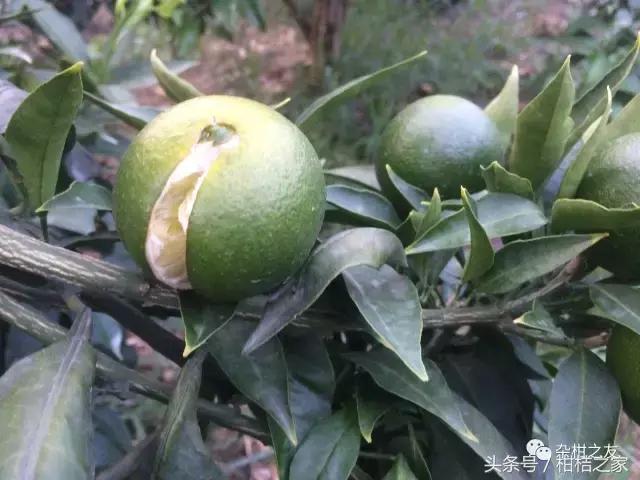
This picture shows fruit cracking caused by slight sunburn in Ehime 38 (Ehime 28, Red Beauty) (August 5, 2017).
1. Hybrid citrus fruit cracking is closely related to variety and its characteristics.It is related to the variety's fruit shape, peel thickness and fruit shape index, and sugar content is closely related to fruit cracking. Flat fruit cracks more easily than tall fruit; thin peel cracks more easily than thick peel; a small fruit shape index cracks more easily than a large fruit shape index; high sugar content cracks more easily than low sugar content. Excessively vigorous (weak) tree vigor cracks easily, and excessive (insufficient) fruit set cracks easily. Whether Ehime, Shiranui, Harumi, or Daya, Wogan, or Satsuma mandarin, all have suffered fruit cracking to varying degrees, and it is even more obvious in certain special years. Fruit growers must pay attention. Solutions: A. Since we have already carried out variety improvement, we can no longer choose the variety and its characteristics, so fruit growers need not agonize over this during cultivation and management! B. According to the characteristics of different varieties, apply scientific balanced fertilization (do not over-apply any single macroelement) to cultivate moderate tree vigor.
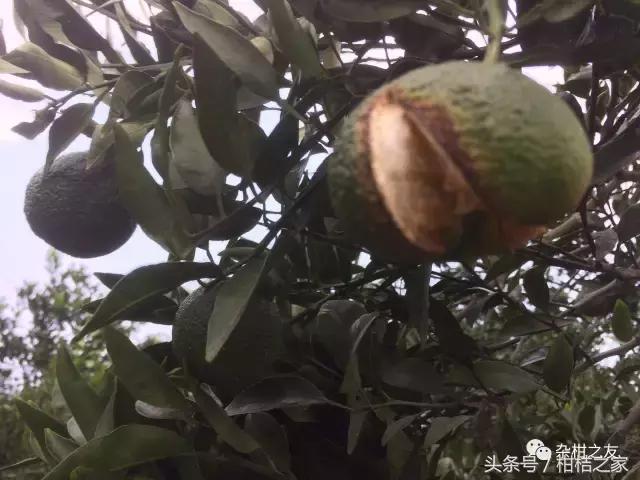
This picture shows fruit cracking in a mountain Daya orchard (August 3, 2017).
2. Hybrid citrus fruit cracking is related to soil and soil water content。If crops encounter drought in the early growth stage, their ability to absorb water and nutrients is poor; however, if frequent rainfall occurs during the rapid fruit expansion stage, the water transported by the root system to the fruit increases sharply, and the pulp cells expand rapidly. At this time, the peel has mostly already begun to age, and the peel cells expand slowly due to the limitation of the cuticle layer, so the pulp bursts the peel. Fruit cracking caused by this situation occurs not only in hybrid citrus; it is also relatively common in grapes, peaches, plums and pears. If there is a water shortage in the early stage, it will affect the expansion of young fruit; if continuous rainfall or flooding irrigation occurs during the expansion and coloring stages, it will cause a large outbreak of fruit cracking. Solutions: A. Soil improvement: increase soil depth and organic matter content (increase the soil's water- and fertilizer-holding capacity) and increase carbon supply; thereby making the hybrid citrus root system well developed and distributed more deeply (only with deep roots can leaves flourish). Although it cannot produce immediate results, soil improvement is imperative and indispensable. B. Drought resistance: irrigate timely during the young fruit and expansion stages of hybrid citrus to resist drought, plan and clear drainage ditches, and allow balanced water supply, avoiding sudden drought and sudden waterlogging. Drought resistance and waterlogging prevention take effect in real time, and the results are visible.
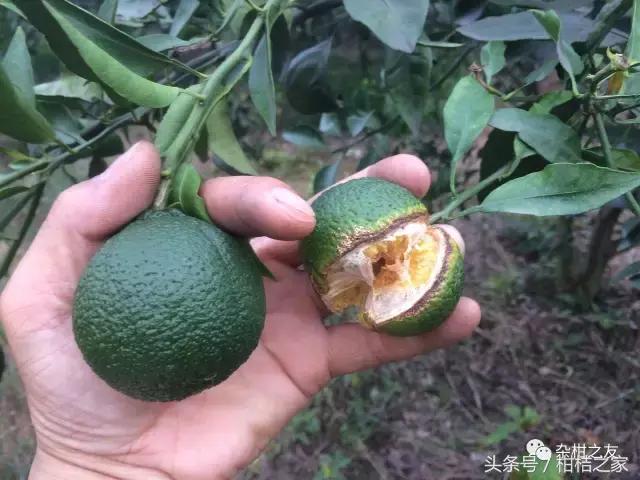
This picture shows fruit cracking in a mountain Shiranui orchard (August 5, 2017)
3. Hybrid citrus fruit cracking is related to pests and diseases.Research and field findings show that sunburn, anthracnose, brown rot, rust mites, red spiders and other pests and diseases are directly related to fruit cracking, and scientific pest and disease control is needed. Mechanical damage (scuffing, scratching, puncturing, collision) is likewise a chief culprit causing hybrid citrus fruit cracking. Solutions: A. According to the occurrence characteristics and patterns of hybrid citrus pests and diseases, carry out scientific and standardized pest and disease prevention(prevention first, combined with treatment)to reduce the probability of pest and disease damage; once pests and diseases are found, apply the right remedy and control them promptly, so as to minimize the damage from pests and diseases. B. During careful fruit thinning, thin out sunburned fruit, pest- and disease-damaged fruit, mechanically damaged fruit and fruit close to the ground.
Sunburned fruit cracks after a rainstorm.
5. Hybrid citrus fruit cracking is related to nutrient deficiency.The mineral elements in the pulp and their nutritional balance have a significant effect on fruit cracking, and imbalanced tree nutrients will aggravate fruit cracking. During fruit growth, phosphorus, potassium and calcium have the greatest effect on fruit cracking, followed by magnesium, boron, zinc, iron, copper and manganese. When one or several elements are excessive (when P is excessive, the peel becomes thin and cracks easily), while other elements are relatively low, fruit cracking increases (B deficiency causes transverse cracking, Ca deficiency causes longitudinal cracking, Mn deficiency causes cracked peel). In actual production, in the late growth stage of crops, fruit cracking caused by calcium deficiency and excessive potassium is especially prominent. Changes in orchard soil moisture greatly affect calcium uptake in the peel; drought and flooding can both cause water stress, reduce calcium uptake, and thereby cause fruit cracking (calcium exists in the form of calcium pectate between cell membranes and cell walls, and can enhance cell toughness and hardness). At present, soil acidification is becoming increasingly obvious, and the resulting deficiency or imbalance of medium and trace elements is very common, aggravating the occurrence of fruit cracking.
Professor Luo of the Meishan Fruit Industry Chamber of Commerce shares relevant technical points!
Next, [Friend of Hybrid Citrus] focuses on discussing the importance and necessity of calcium during hybrid citrus cultivation and management! A large number of research experiments show that the ranking of citrus demand for macroelements and medium elements is: potassium > nitrogen > calcium > phosphorus > magnesium.
Teacher Zhao Qiang and Guangji's fruit-growing experts exchange and share insights together!
Plant nutrition tells us that calcium is a fairly important medium element in plant growth; it can promote plant cell division, regulate the acid-base balance in plants and around the root system, and can promote root growth and root hair formation. Calcium is an important element that can improve plant photosynthesis, coordinate the plant's absorption of N and K, and promote the formation of dry matter (carbon) in the body. Thus hybrid citrus has a fairly large demand for calcium, second only to N and K. Calcium deficiency in hybrid citrus not only affects growth, but also affects hybrid citrus quality and yield! In simple terms, the roles of calcium during hybrid citrus cultivation and management can be summarized as follows:
1. Improve leaf photosynthesis, strengthen tree vigor, preserve flowers and fruit, and promote fruit expansion;
2. Enhance the toughness of citrus peel and reduce fruit cracking;
3. Increase peel hardness and smoothness, and improve appearance quality;
4. Promote fruit coloring, reduce puffing fruit, and increase yield;
5. Can obviously prevent and treat disorders caused by calcium deficiency in crops, and delay the speed of fruit aging.
Use high calcium during the young fruit stage to improve leafglossiness, stabilize young fruit and promote fruit expansion, promote color
ing, increase peel hardness, and reduce puffing.
Meishan Fruit Industry Chamber of Commerce Dongpo District supervisor: President Luo shares cultivation technology insights!
From the ranking of citrus nutrient requirements, citrus has a very high demand for calcium during growth. Calcium deficiency will seriously affect citrus plant growth and fruit taste, hardness and yield. Rational and timely calcium supplementation can not only improve plant growth and enhance citrus stress resistance (cold, drought, heat, pests and diseases), but also improve fruit quality and yield, especially having a certain preventive and inhibitory effect on fruit cracking, sunburned fruit, puffing fruit and frost damage (especially during the process of keeping fruit on the tree for freshness and safe overwintering), and can prevent the occurrence of physiological disorders (fruit cracking, fruit softening, granulation, hollowing, gumming, navel rot).It is well known that soil calcium content is generally relatively abundant, and calcium deficiency rarely occurs; however, during citrus production, calcium deficiency in citrus is often found, and it is especially prominent in hybrid citrus kept on the tree for freshness. The causes of citrus calcium deficiency are related to soil quality, soil organic matter content, the type of chemical fertilizer and planting slope!
Meishan Fruit Industry Chamber of Commerce Citrus Department Technical Supervisor: Teacher Zhou shares management key points!
A brief chat about the causes of calcium deficiency in hybrid citrus
A. Soil calcium deficiency or absorption obstacles. Southern sandy soil, small soil (bean-face soil) and acidic soil
are prone to calcium deficiency, and the abundant rainfall in the south causes serious calcium loss. In addition, calcium absorption obsta
cles: calcium is absorbed only through the root tip, and the root hair zone does not have the ability to absorb calcium; as the soil becomes acidic and compacted,
with low organic matter content, and the fruit tree root system has not been renewed and rejuvenated for a long time, the obstacles to calcium absorption become even
more serious.Applying calcium to the soil cannot effectively prevent the occurrence of physiological disorders caused by calcium deficiency in fruit, so calcium supplementation needs to combine above-ground and below-ground methods.
The technical supervisor goes deep into the fields to solve problems for members!
B. Obstacles to calcium transport and distribution. In plants, calcium is transported along with leaf transpiration,
and the transpiration intensity of fruit tree fruit is far less than that of leaves, and its competition for calcium is also far less than that of leaves; some
times calcium in the fruit even flows back into the leaves (fruit cracking is more serious during drought). In addition, calcium in the tree body
and leaves has extremely poor mobility and is difficult to transport again to the fruit, thus causing calcium deficiency in the fruit,
triggering multiple physiological disorders.
Meishan Fruit Industry Chamber of Commerce President: Zhao Zhou shares and looks ahead to the chamber's present and tomorrow!
How to scientifically and timely supplement calcium in hybrid citrus
Because calcium has very poor mobility in the plant body, and less than 3% of the calcium absorbed through the root system can reach the fruit,
the best way to supplement calcium to the fruit is direct supplementation through foliar spraying (chelated calcium, sugar alcohol calcium, amino
acid calcium). Of course, the premise is to ensure that the tree body has sufficient calcium, to prevent the tree body, branches and leaves from robbing the calcium in the fruit after calcium deficiency,
causing a "calcium backflow" phenomenon. Applying water-soluble calcium fertilizer by drenching promotes root
tip growth, stimulates root hair development, and delays root system aging; at the same time, it loosens and improves the soil and increases aggregate
structure.
The best period for calcium supplementation in citrus fruitThe best period is March, June and September of the year, because this is when citrus produces a large number of new roots, and calcium supplementation at this time promotes roots with twice the result for half the effort.
1. 3-5 days before flowering: supplement calcium during the young fruit formation stage to promote young fruit cell division and help increase
the fruit-setting rate and reduce deformed fruit. Before flowering, in combination with pest and disease control, spray once on the leaves, and at the same time supplement B
fertilizer.
2. Young fruit development and expansion stage: during the rapid young fruit cell division stage and rapid expansion stage, supplement calcium
elements to help promote young fruit development and prevent deformed fruit and severe physiological fruit drop. This period is the most important period for pre
venting fruit cracking; spray calcium fertilizer on the leaves 2-3 times, and apply calcium-containing water-soluble fertilizer by soil drenching (sugar
alcohol calcium rich in Mg) 1-2 times, which can effectively reduce fruit cracking. Calcium supplementation for hybrid citrus must be done early, during
the period when peel cells are continuously dividing and forming; if you wait until the peel has basically taken shape and then
supplement, or wait until fruit cracking has already begun and then supplement, the effect on cracking prevention will be far from satisfactory.
3. Coloring and expansion stage: in the late stage of autumn shoot and fruit expansion, before coloring, apply calcium-containing water-soluble fertilizer + humic
acid types 1-2 times by drenching to promote root hair growth; spray calcium fertilizer + seaweed type + boron fertilizer on the leaves 2 times to comprehensively supplement
key nutrient elements, promote robust autumn shoot growth, and at the same time reduce late-stage fruit cracking caused by calcium backflow,
prevent fruit puffing, and improve peel appearance.
Meishan Fruit Industry Chamber of Commerce member: Manager Chai shares cultivation insights from many years!
Why is calcium deficiency fruit cracking still serious even though calcium fertilizer is sprayed every year?
As is well known, citrus fruit cracking is mainly caused by two reasons: low peel hardness and water imbalance.
Spraying water-soluble calcium fertilizer on fruit during the young fruit stage can enhance peel toughness and reduce fruit cracking
in the middle and late stages. Why, after spraying calcium fertilizer, does calcium deficiency fruit cracking still occur? The author believes that in addition to timely calcium supplementation,
the choice of calcium fertilizer product also has a great deal to do with it. The most common calcium element foliar fertilizers on the market are: amino
acid chelated calcium, sugar alcohol chelated calcium, EDTA chelated calcium, etc., and their quality is uneven, their absorption
and utilization rates are not the same, and their effects vary greatly (special reminder: long-term application of calcium ammonium nitrate
has the opposite effect; it is best to rotate different types of calcium products).