Vegetable greenhouse planting methods, this one suits every greenhouse
Protected agriculture has certain limitations and cannot compare with open-field growing; open fields offer vast space and ample land. Protected planting must make the most of limited space and allocate land reasonably to achieve maximum yield.
The first goal of greenhouse planting is to have yield; no matter how the market goes, yield comes first. However good the market is, without yield there is no good income. So on limited land, produce vegetables with yield as much as possible.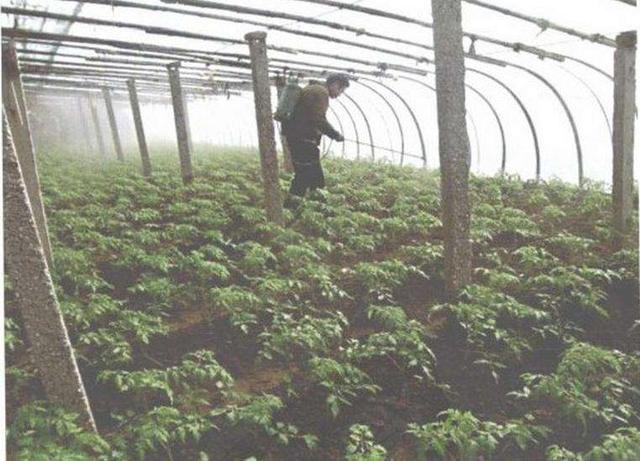
Take northern greenhouse planting as an example: with warm greenhouses, in the northern winter there are two months when fruit vegetables cannot be grown because the temperature is too low, and only leafy vegetables can be grown. However, an important use of a warm greenhouse is raising seedlings. Fruit vegetables planted in spring all need to be raised as seedlings in a warm greenhouse.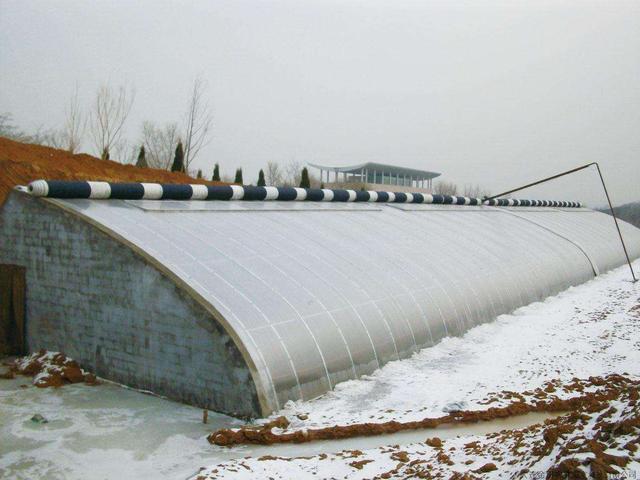
In winter, leafy vegetables can be grown in a warm greenhouse. Warm greenhouses differ from household to household: those with better facilities and better insulation grow somewhat cold-sensitive vegetables such as garland chrysanthemum and lettuce. If the facilities are poorer, they grow cold-tolerant vegetables such as cilantro and spinach; even if the greenhouse drops to a few degrees below zero, it does not matter, and the next morning after sunlight exposure they grow as usual.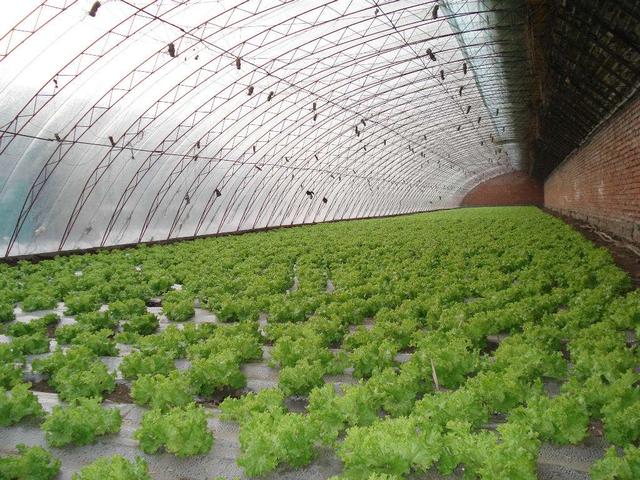
By January and February it is time to plant fruit vegetables, and planting fruit vegetables requires rational use of the land; when transplanting fruit vegetables there is a lot of idle land, which must be used rationally. Leafy vegetables should be intercropped in the planting furrows, and there is a knack to intercropping leafy vegetables: grow fast-growing leafy vegetables so as not to affect the growth of the fruit vegetables. At the lower corners of the greenhouse, grow somewhat shorter fruit vegetables for easier management; in this one warm greenhouse there should be at least three kinds of vegetables grown.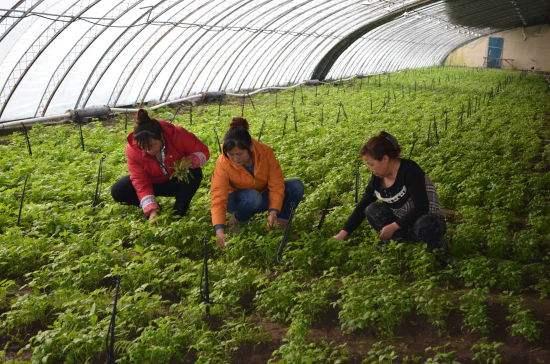
Cold greenhouse planting differs somewhat from warm greenhouse planting. In the north, cold greenhouses must wait until around the Start of Spring before leafy vegetables can be grown, because the temperature is too low to grow fruit vegetables. When the leafy vegetables are half grown, the fruit vegetables must be transplanted; if you wait until the leafy vegetables are finished before transplanting the fruit vegetables, it will affect the fruit vegetables' time to market, so before the leafy vegetables are finished you must punch holes and plant the fruit vegetables. That is, use a hole punch to plant the seedlings in the leafy vegetable plot, which neither affects the transplanting time of the fruit vegetables nor delays transplanting because of the leafy vegetables.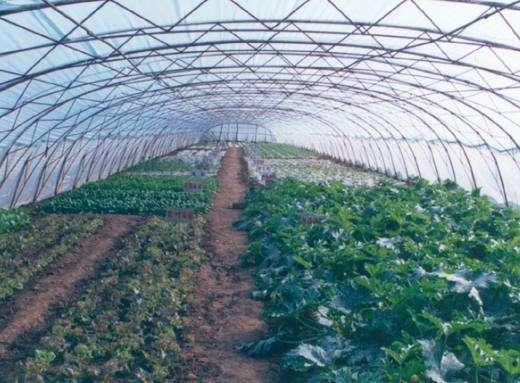
This is how you squeeze out an extra crop of vegetables and increase income. After this crop of leafy vegetables is finished, you can grow another crop of leafy vegetables without affecting the growth of the fruit vegetables. This is making the most of the land; greenhouse growers often say that growing one crop of vegetables should bring the income of two crops.