Detailed Explanation of the Cultivation Techniques and Ecological Habits of the Chinese Medicinal Herb Xuanshen (Scrophularia ningpoensis)
Ecological Habits and Cultivation Techniques of the Chinese Medicinal Herb Xuanshen
1 Ecological Habits of Xuanshen
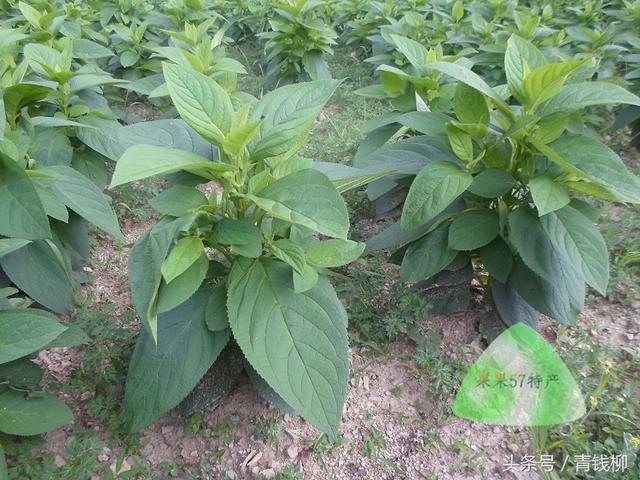
Xuanshen (Latin scientific name: Scrophularia ningpoensis Hemsl.) is a herbaceous plant of theScrophulariaceae family, reaching over 1 m in height; it has several lateral roots, spindle-shaped or carrot-like swollen,up to more than 3 cm thick; it grows in bamboo forests, beside streams, in thicketsand tall grass at altitudes below 1700 m [1]; it is produced in Hebei (southern part), Henan, Shanxi, Shaanxi (southern part),Hubei, Anhui, Jiangsu, Zhejiang, Fujian, Jiangxi, Hunan, Guangdong, Guizhou,Sichuan and other places.
Xuanshen has strong adaptability and prefers a warm and humid climate; it is relatively cold-tolerant and drought-tolerant,and can be planted in any well-drained location; it prefers fertile humus soil and sandy loam;clay soil and low-lying land are not suitable for planting Xuanshen, and continuous cropping is avoided - Xuanshen can only be planted again after an interval of 3-4 years.In view of the special growing environment of Xuanshen, the author conducts a briefanalysis of the cultivation techniques of Xuanshen, hoping to be of help to those engaged in Xuanshen cultivation.
2 Cultivation Techniques of Xuanshen
2.1 Selection of Soil for Xuanshen
Xuanshen should be planted in plots with loose soil texture, fertile soil, deep soil layer,and easy drainage. Xuanshen has a well-developed root system that penetrates deep into the soil layer, and its ability to absorb nutrients is verystrong, so deep ploughing and sufficient basal fertilizer are essential. After fine ploughing and levelling, form raised beds,with a bed height of 25-60 cm and a bottom width of about 30 cm; flat beds are not suitable for planting.
2.2 Land Selection and Preparation
Xuanshen is not suitable for continuous cropping; the previous crop can be a grass family or legume crop. Well-drainedplots with deep soil layers and plenty of humus, sandy soil for planting, preferably on sunny, wind-shelteredlow slopes. Plots with heavy clay soil prone to waterlogging are not suitable for planting. When deep ploughing and levelling the land,remove residual plant debris and fallen leaves. Apply 1500-2500 kg of barnyard manure or compost per 667 sq mas basal fertilizer, then fine-plough, level and form raised beds. The bed width is about 1.3 m with a height of 20-25 cm, and the ditchwidth is 40 cm. On hillside land, beds should be made across the slope to prevent soil erosion, and at the same timeperimeter ditches and cross ditches should be properly constructed.
2.3 Propagation Methods
There are many propagation methods for Xuanshen, mainly including division, daughter buds, seeds and otherdifferent propagation methods; under normal circumstances, the daughter bud propagation method is used.
3 Field Management of Xuanshen
3.1 Topping and Bud Removal
Xuanshen has a well-developed root system and vigorous stem and leaf growth, so timely topping and bud removal should be carried out to increaseair circulation and light penetration, reduce nutrient consumption, promote the expansion of underground tubers, and improve yield andquality. Topping and bud removal should be based on the actual growth vigour and robustness of the plants; short and sturdy plants should be topped low,while the opposite should be topped high. When topping, more than 10 leaves should be retained to facilitate photosynthesis andpromote tuber expansion and increase yield.
3.2 Topdressing
After the first intertillage, diluted farmyard manure can be applied as topdressing, with a small amount of nitrogenfertilizer added; the standard for diluted farmyard manure is 1500 kg per 667 sq m, and the standard for nitrogen fertilizer is10 kg of urea per 667 sq m for topdressing. After the second intertillage,a more concentrated diluted farmyard manure can be applied, with standards of 1500-2000 kg, 10 kg and 20 kg per 667 sq m for topdressing compost, potassium sulphate and superphosphaterespectively. At the third intertillage, compost fermented from phosphorus and potassium fertilizers should be applied as topdressing, with potassium sulphate25 kg, potassium superphosphate 50 kg and soil miscellaneous fertilizer 1500 kg in the ratio for preparing the compost, appliedat an average of 1000 kg per 667 sq m [3]. The method of punching holes and applying fertilizer into them can be used fortopdressing Xuanshen grown under plastic film; after topdressing, the openings should be sealed with fine soil.
3.3 Use of Herbicides
For tuberous Chinese medicinal materials, paraquat-type herbicides should be used, and root-absorbedherbicides should be avoided. When spraying chemicals, keep away from the roots, stems and leaves of the medicinal materials.
During the growing period, from April to June, carry out intertillage and weeding 3-4 times. In addition to applying sufficient basalfertilizer, topdress and earth up again in mid-June to prevent lodging. Irrigate during droughtto keep the soil moist; drain promptly when there is excessive rain and waterlogging. In the south, during the flowering period, the topflower spikes should be removed to promote tuber expansion.
3.4 Earthing Up
The key step in the growth of Xuanshen is earthing up; usually after the third topdressing is completed,the soil in the sunken ditches is shovelled and placed beside the Xuanshen plants, which provides good protection for the buds of the plants,also has the effect of retaining fertilizer, prevents the loss of fertilized soil, caneffectively thicken the topsoil layer, strengthen the plants, and improve the quality of the daughter buds.
3.5 Pest and Disease Control
The main disease of Xuanshen is southern blight, which damages the roots and rhizomes; the disease is severewhen there is a lot of rain, with root rot, and the roots and the soil around the root zone covered with white silky mycelium,forming pale yellow to tea-brown mycelial sclerotia the size of oilseed rape seeds, damaging the main stem, and diseased plants rapidlywilt and die.
The main control methods include the following: no continuous cropping; strengthen field management,maintain drainage and ventilation with light penetration, and preferably use raised bed planting; promptly pull out diseased plants, and afterharvesting Xuanshen, burn and clear the weeds, diseased leaves and residual plants in the field to thoroughlyeliminate the pathogens; before sowing, seeds should be sprayed with fungicide in a timely manner, and mixing methamidophos intothe basal fertilizer can effectively control cutworms; through a mixed spray of carbendazim wettable powder and dimethoateto eliminate pests such as armyworms, snails and red spiders.