What medicinal herbs are most profitable to grow in rural areas in 2017
2016 is about to pass, and many farmer friends are already preparing their 2017 planting projects. What medicinal herbs are good to grow in 2017? Which medicinal herbs are most profitable? Many herb growers also feel at a loss: the selling price of the herbs produced is not high, the income per mu is low, and they may even lose money. So how can one make a fortune growing medicinal herbs? Below are several medicinal herb projects suitable for rural cultivation.
I. Growing Scutellaria baicalensis
Astragalus is a perennial herb of the legume family, genus Astragalus, also known as membranous milkvetch. Its root is used as medicine and has effects such as tonifying qi and raising yang, consolidating the exterior and stopping sweating, promoting diuresis and reducing swelling, and promoting tissue regeneration. For medicinal use, 2- to 3-year-old plants are mainly used. In recent years, 1-year-old astragalus used as a health product has been very popular among consumers, and growing it is highly profitable.
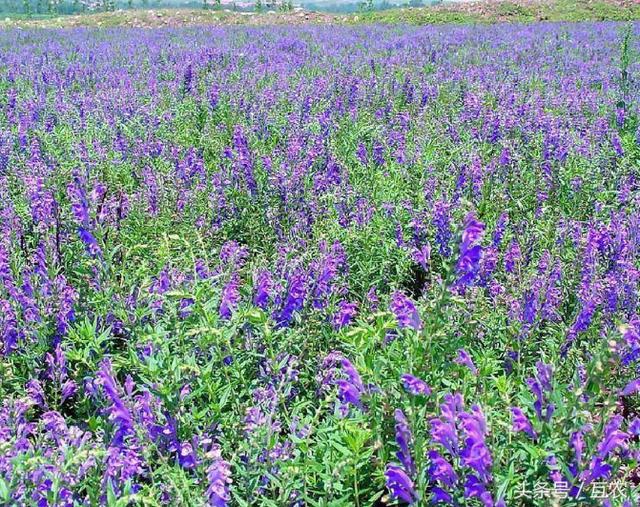
Scutellaria baicalensis is the dried root of the Lamiaceae plant Scutellaria baicalensis Georgi, used as medicine. It has the effects of clearing heat and drying dampness, purging fire and detoxifying, stopping bleeding, and calming the fetus. It is used for damp-warm and summer-warm diseases with chest tightness, nausea and vomiting, damp-heat distension and fullness, diarrhea and dysentery, jaundice, lung-heat cough, high fever with thirst, blood-heat vomiting and nosebleeds, carbuncles, swellings and sores, and restless fetus.
Main growing and cultivation areas of Scutellaria baicalensis: it is mainly distributed in the provinces north of the Yangtze River, primarily produced in the provinces and regions of northwest and northeast China, and the output in provinces and regions such as Shandong and Hebei is also relatively large. Scutellaria baicalensis was originally wild and could be found in the mountainous areas of Shandong and other provinces, but now it has changed from wild to cultivated. Cultivated Scutellaria baicalensis is mainly used on the market. Especially since the development in recent years of baicalin as a raw material for Chinese patent medicines such as Yinhuang oral liquid, the amount of cultivated Scutellaria baicalensis used has increased greatly. The active ingredient content of cultivated Scutellaria baicalensis in Shandong Province is relatively high.
II. Growing Rehmannia
Rehmannia, also known as dried rehmannia and prepared rehmannia, is a Chinese medicinal material used in relatively large amounts. At present, it sells well both domestically and abroad, and there is even a shortage. Rehmannia was originally wild in northern China and is now widely cultivated. Generally, one mu can produce 2000-3000 kg of fresh rehmannia, which can be processed into 1000-1500 kg of dried rehmannia, yielding considerable income. It is an economic crop with great development prospects.

Rehmannia is generally propagated by rhizomes. The rhizomes used for propagation are called planting stock. There are usually the following 3 ways to keep planting stock:
1. Cellar storage of planting stock. When harvesting rehmannia, select rhizomes of excellent variety and free from pests and diseases, and store them in a cellar to overwinter for use the following spring.
2. Leaving seed in the field. At harvest time, leave the rehmannia intended for planting stock in the field, and dig it up the following spring to use as planting stock.
3. Plant first, then transplant. For rehmannia planted in spring, in mid-to-late July the portion intended for planting stock can be dug up and transplanted to another plot so that it overwinters in the field, and then be dug up the following spring to use as planting stock.
Practice has proved that among the above 3 methods, the third is the best, with advantages such as less seed stock required, uniform thickness, and strong vitality. Before planting, the planting stock must be strictly selected; the middle section with spiral lines is preferred, then cut into small sections 6 cm long and sun-dried, and planted after the cut surface shrinks and heals. Open furrows with a row spacing of 30 cm, a depth of 15 cm, and a plant spacing of 20-25 cm, place the planting stock flat in the furrow, then cover with soil and press lightly. When the temperature is 20-24°C, seedlings emerge in about 15 days. Use about 30 kg of planting stock per mu, planting 8000-10 000 plants.
III. Growing Anoectochilus
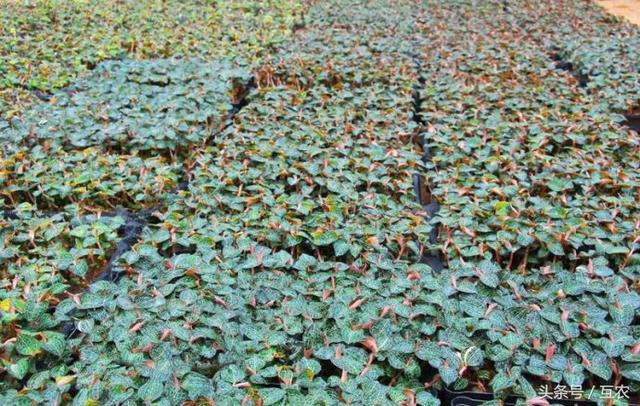
Anoectochilus is a Chinese herbal medicine, also known as jinxianlan and jinsicao. It contains rich amino acid components and anti-aging active trace elements. Although this thing looks unremarkable, each jin can sell for about 300 yuan, the output value per mu can exceed 100,000 yuan, and the net profit is 60,000 yuan.