How to Grow and Propagate Desert Rose
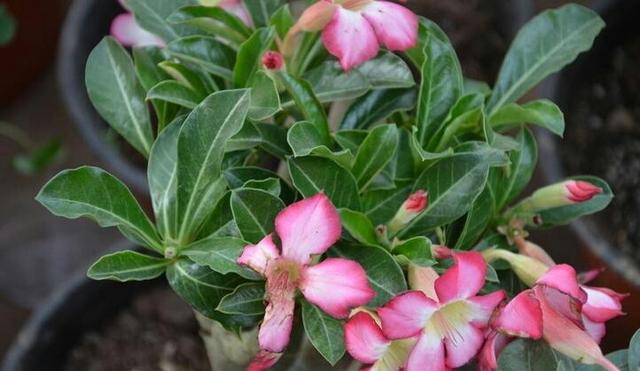
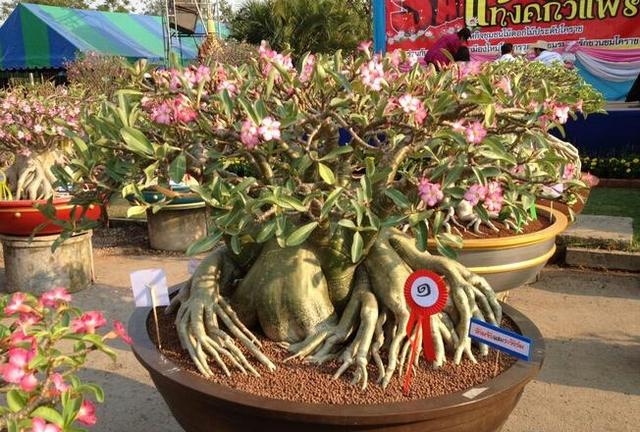
Desert Rose, also known as: Tianbao Flower, of the Apocynaceae family, is a succulent plant of the genus Adenium, also called a succulent plant. It is a succulent shrub or small tree, reaching up to 4.5m tall; the trunk is swollen. Below we will introduce how to grow Desert Rose and the points to note. Let's take a look.

How to Grow Desert Rose
1. Desert Rose is mainly propagated by sowing and cuttings. Sowing is best done in spring, using the spot-sowing method to make management easier after the seedlings emerge. Before sowing, the substrate must be sterilized. After the seedlings emerge, be careful that the substrate in the sowing tray does not become too wet, otherwise the roots may rot and cause the death of large numbers of seedlings. Cuttings are best taken in the vigorous growing season. Cut the stem sections to about 10 cm, soak the lower ends in water to dilute the sticky sap at the cut, so as to prevent it from clotting and affecting root formation. They can be inserted into a sand bed or directly into sterilized growing substrate, and will root in about 15-30 days. When propagating, it is recommended to use the sowing method, so that the root and stem of the plant can naturally swell and form a good plant shape. Cuttings cannot do this, and will also greatly reduce the ornamental value.

2. In addition, during cultivation, Desert Rose branches tend to grow leggy, affecting the beauty of the plant shape, and grafting can be used to change its shape. At a certain height of the plant, cut off all the branches according to a certain shape, then take the upper ends of the cut branches and graft them using the cleft grafting method. Plants treated by grafting have a beautiful shape, and after flowering the flowering branches are compact and highly ornamental.
3. Desert Rose is relatively drought-tolerant, and the amount of water given each time must not be too much. If there is too much water, it is very easy to cause root rot, and the branches will also grow leggy, making pruning rather troublesome. In summer when temperatures are high, water according to the soil condition. Generally water once every two or three days, and there must be no water accumulation in the pot. In winter when the temperature drops, Desert Rose also enters a semi-dormant period. At this time, watering should be appropriately controlled, and care should be taken to keep the soil dry; watering once a week is enough. Moderate drought is very beneficial to the growth of Desert Rose. [When Desert Rose enters the dormant period in winter, its leaves will gradually fall off; this is normal leaf drop, so there is no need to be nervous about it.]

4. Desert Rose relatively prefers phosphorus and potassium fertilizers, and is usually given a supplement about once a month. During the vigorous summer growing period, sufficient fertilizer and water are needed, so that the flowers produced can be lush and vivid. In addition, in conjunction with repotting once a year, some long-acting base fertilizer can also be appropriately applied in the pot, such as decomposed bean cake, bone meal, etc. Desert Rose relatively prefers phosphorus and potassium fertilizers, and is usually given a supplement about once a month. During the vigorous summer growing period, sufficient fertilizer and water are needed, so that the flowers produced can be lush and vivid. In addition, in conjunction with repotting once a year, some long-acting base fertilizer can also be appropriately applied in the pot, such as decomposed bean cake, bone meal, etc.
5. Pruning Desert Rose is also very important. If you do not pay attention to regular pruning and let it grow leggy, it will easily lose its ornamental value. After the flowering period is the best time for pruning, and you can make choices according to personal preference. Note: more branches mean more flowers; if you want more flowers, you must find a way to keep more branch divisions.
Points to Note When Growing Desert Rose
1. Desert Rose is quite susceptible to leaf spot disease, which in severe cases can cause large numbers of leaves to fall off. It can be controlled with 25% carbendazim wettable powder at 500 times dilution, or 50% thiophanate at 1000 times dilution.

2. The main pest of Desert Rose is scale insects. When the infestation is severe, it causes all the leaves to fall off, the growing points of the plant to die, and even the death of the plant. For home cultivation, pay attention to observation, and once discovered, immediately wipe them off with a water-soaked cotton swab. You can also use 40% omethoate emulsifiable concentrate at 1000-2000 times dilution, or 50% fenitrothion emulsifiable concentrate at 1000 times dilution, sprayed 1-2 times during the egg-laying and hatching periods. [When carrying out pest and disease control, pay attention to the safety of pesticide use.]
3. Propagation Methods
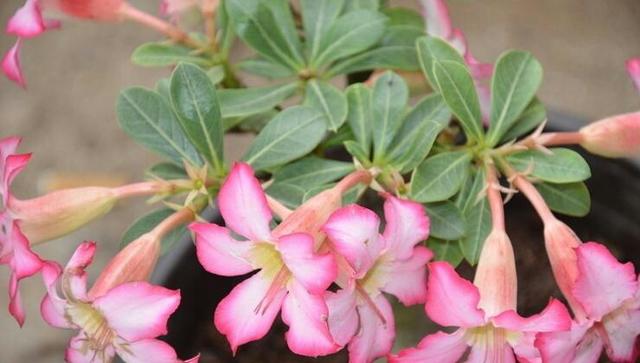
Cutting propagation is usually carried out in spring and summer. Select 1-2 year old branches, with the top branches being best, and cut them to about 10 cm long. The stem of Desert Rose is fleshy and has transparent milky sap (note that the sap is toxic). Wash off the sap with clean water, then place in a cool, ventilated place to let the cut heal before inserting. The substrate can be clean river sand or soil; be careful about drainage and air permeability. During the cutting period, pay attention to controlling the frequency of watering, keep the soil slightly moist, and provide appropriate shade. They will root in 3-4 weeks after insertion.
Layering: Desert Rose propagated by air layering has a relatively high survival rate, and the operation is relatively simple. Generally, layering can be done during the plant's growing season, with spring and summer being best. When layering, first use a sharp knife to make a cut or girdle at the part where roots are to form, then wrap the wound with sphagnum moss or soil, then wrap the substrate with transparent film, and tie both ends tightly. Once you see the roots grow to the film, you can cut it off and plant it.
Grafting should avoid the plum rain season. After grafting in spring, you can soon enjoy the flowers. The scion length is generally 7-10 cm. After grafting is completed, place the potted plant in a shaded place for care. If successful, the wound will heal in about 10 days, and then it can be placed in a spot with sufficient sunlight. Remove the film binding after about 2 months; if too late, constriction marks are likely to appear and affect subsequent growth. Grafting can combine different varieties onto the same plant, improving the ornamental value.
Sowing: Desert Rose does not easily set fruit and requires artificial assisted pollination. Its fruit will naturally split open a certain time after ripening, and the seeds scatter easily, so they must be harvested before they split. After harvesting, the seeds should be sown as soon as possible; if they need to be stored, they should be placed in a cool, dry place, otherwise they easily lose their ability to grow.
Reasons for Yellowing Leaves on Desert Rose
1. If it has not been long since purchase and it is in the adaptation period, a small amount of yellow leaves is very normal and very common.
2. If the flower pot is not breathable, or the pot is large while the roots are small, avoid the potting soil being wet for a long time, which causes root rot.
3. When the temperature is low, in winter it will be in a dormant period, that is, the leaves turn yellow and fall off, and may even fall off until the stems are bare.
4. It is relatively drought-tolerant, and the amount of water given each time must not be too much. If there is too much water, it is very easy to cause root rot and yellow leaves.
5. If the sunlight is too shaded, but also remember not to expose it to the blazing sun, the leaves are also prone to turning yellow, and flowering will be affected.
6. Poor ventilation and insufficient light will inevitably cause yellow leaves, and in severe cases the whole plant may rot and die.
7. Too much fertilizer; fertilizer should be applied in appropriate amounts, not excessively.
8. If there are pests such as earthworms or wireworms (red spider mites, beetles) in the potting soil, yellow leaf symptoms will also appear.
9. Damage from leaf spot disease and root rot disease; when leaf spot disease occurs severely, it can cause large numbers of leaves to fall off.

Finally, special note: whether it is in the adaptation period or the dormant period, watering should be controlled and fertilizing suspended. When a large number of new buds sprout in spring, then supplement with topdressing according to the growth condition. In winter it can be placed in a sunny position, and the potting soil should be kept dry; the minimum temperature must not be lower than 8°C. In other seasons it can be placed in a sunny area, and must not be kept in a dark place for care, otherwise even if watering and fertilizing are normal, the leaves will turn yellow and fall off due to insufficient light.
When Does Desert Rose Bloom?
First, it should be explained that Desert Rose needs a certain tree age to bloom; ones that are too small will not bloom.
1. If Desert Rose already has flower buds at this time but they do not open, then it is due to lack of fertilizer (each time you water, replace the clean water with lightly fertilized water; once the buds show color, stop fertilizing), the ambient temperature being too low (it is recommended to raise it to 15-25°C), or insufficient light (it needs to be placed in a spot with sufficient light).
2. If Desert Rose has no flower buds at this time, then the tree age is too young, or after recent pruning it has not grown enough branch length!
3. Furthermore, the flower bud differentiation of Desert Rose also requires reasonable watering, fertilizing, light, and temperature in daily management to be achieved together!
The above is our introduction to how to grow Desert Rose and the points to note. We hope it can help you.