Cultivation Methods and Key Technical Points for Sacha Inchi in the Guizhou Region
Cultivation Methods for Sacha Inchi in the Guizhou Region
Sacha Inchi (Plukenetia volubilis Linneo), also known as South American oil vine, Inca nut, and Inca peanut, is a perennial woody climbing vine of the family Euphorbiaceae, whose seed oil is edible. It originally grows in the tropical rainforests of the Andes (Andres) mountain region of South America at altitudes of 80-1700 m. It was first domesticated from the wild by the Incas, and is called Sacha Inchi in the Inca language. It has been used by the indigenous peoples of South America for three thousand years, and pottery unearthed from tombs of the ancient Inca era and the pre-Inca era has revealed Sacha Inchi motifs. In 2006, the Xishuangbanna Tropical Botanical Garden of the Chinese Academy of Sciences introduced and successfully cultivated it. At the 2004 and 2006 Paris World Edible Oils Expos, Sacha Inchi oil (Peruvian crude oil) won gold medals for its excellent sensory qualities and quality.
The main components of Sacha Inchi seeds are oils, proteins, amino acids, vitamins, sterols and other bioactive substances, as well as secondary metabolites such as alkaloids, saponins and coumarins. The oil content of the seeds is 45-56%, and the oil portion consists mainly of polyunsaturated fatty acids. Sacha Inchi oil contains no toxins or substances harmful to health, and is a purely natural, organic food.
Sacha Inchiis a wild woody climbing oil plant native to the tropical rainforests of South America, and is a new type of premium health-care oil plant. It was first introduced to Guizhou from the Yunnan Xishuangbanna Botanical Garden in 2011 by the Guizhou Institute of Subtropical Crops for trial cultivation, and its cultivation techniques remain a blank.
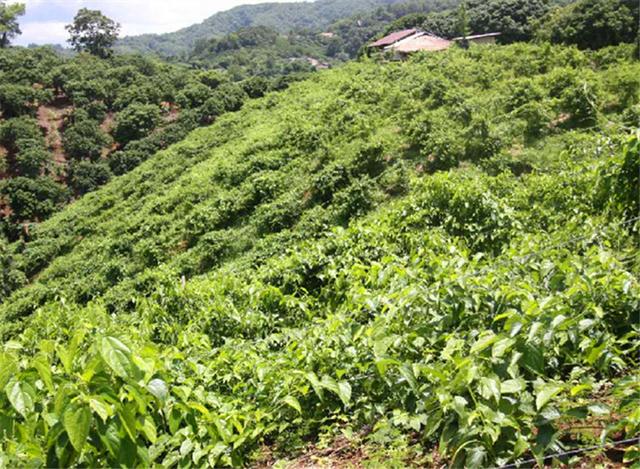 Cultivation Methods for Sacha Inchi in the Guizhou Region
1) Seedling raising: In March 2011, select plump Sacha Inchi seeds, first soak the seeds in warm water at 40-55°C for 24h, then place them in a sand bed with good permeability for germination. After 15 days, when the seeds show white sprouts, take out the seeds and plant them in pre-filled nutrient bags, set up a low arched shed with shade netting, and water once every other day; when the seedlings reach 15-20cm in height in May, transplant them to the field;
2) Land selection: Sacha Inchi is a typical South Asian subtropical perennial woody climbing evergreen oil plant, so areas should be selected with an annual mean temperatureabove 19.5°C, annual accumulated temperature above 6500°C, annual rainfall above 1200mm, and no frost throughout the year, with soil depth above 1m, soil pH 6.5-7, and slope below 20° for cultivation on gentle slopes, terraces and flat land. Altitude 420 m, gentle slope land, sandy shale yellow soil, soil depth 1m, soil pH 6.7, annual mean temperature 19.6°C, annual absolute minimum temperature 2.5°C, annual active accumulated temperature at ≥ 10°C above 6500°C, annual rainfall 1250mm, annual sunshine 2575h;
3) Land preparation and pit digging: Before digging pits, remove residual branches, fallen leaves, stones, etc. from the previous crop; if conditions permit, plow and turn the whole area once, then pull ropes and draw lines to mark and dig pits at a row spacing of 3m and a plant spacing of 2m; Digging pits: according to the marked pit positions, pits can be dug manually or by machine, requiring a pit top width of 70-80cm, a pit bottom width of 60-70cm, and a pit depth of 50-60cm; Backfilling soil and applying base fertilizer: after digging the pits, first backfill the topsoil into the pits to 10-20cm, then while backfilling 10cm of soil at a time, apply 1kg of farmyard manure as base fertilizer, mixing the backfilled soil and fertilizer as thoroughly as possible until level with the pit surface, then cover with soil 8-15cm above the pit surface. The base fertilizer should be organic fertilizer, applying 5-8kg of farmyard manure or 1-2kg of tung oil cake per pit.
4) Planting of seedlings: Planting was carried out on May 4, 2011; on the planting pits that had been given base fertilizer and covered with soil, first pull a straight line along the rows and dig small pits 18-25cm deep and 20-30cm in diameter on the planting pits, arrange the seedlings to be planted by size, grouping large seedlings with large seedlings and small seedlings with small seedlings as much as possible. During planting, first use scissors to cut open and remove the nutrient bags from the seedlings, gently place the soil-bearing seedlings into the dug small pits with the base of the stem 3-5cm above the soil surface, then after covering with soil, firm the soil around the bag soil, and pour 8-12kg of settling water per pit; within 20 days after planting, water once every 4-5 days on sunny days to keep the soil moisture content at around 15%, until the seedlings survive and sprout;
5) Trellis building: Use wooden stakes 6-8cm in diameter and 230-250cm long to plant 1 upright post every 3-4m, connect the posts with No. 10 or No. 12 iron wire in 3 layers, then use bamboo poles 2-3cm in diameter to cross-bind along the iron wire between the posts into a fence-style trellis;
6) Field management: After spring planting, water once every 3-4 days until survival is confirmed 20 days after planting; Checking and replanting seedlings: within 20 days after planting, frequently check the survival of the seedlings, and promptly replant dead plants with reserve seedlings to ensure full and uniform stands; 20 days after seedling planting, the vines grow rapidly and gradually produce branches, so promptly guide the vines in different directions onto the trellis to avoid the vines tangling on the ground with weeds or with each other; at 28-32 days, apply urea once to promote seedling growth, applying 20-30g of urea per plant on rainy days, with the fertilizer at least 20cm away from the plant to avoid burning roots and seedlings; combined with intertillage and weeding, apply a compound fertilizer once in July-August, applying 100-200g per plant in the same way as before; in November-December, apply farmyard manure once, applying 1-2kg of tung oil cake and 200g of compound fertilizer per plant, or 5-6kg of barnyard manure and 200g of compound fertilizer per plant;
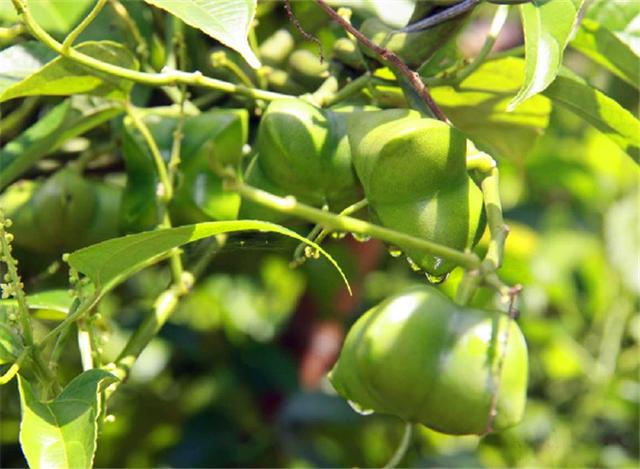 Cultivation Methods for Sacha Inchi in the Guizhou Region
7) Pruning and trimming: More than 60 days after planting, Sacha Inchi branches rapidly, especially after fruit harvest when some branches are damaged and naturally dry up, new branches soon sprout from the middle and lower parts and flower and bear fruit. Promptly prune away excessive vegetative branches, shaded branches, diseased and pest-infested branches, and dead branches; the cut tender branches can be used as livestock feed;
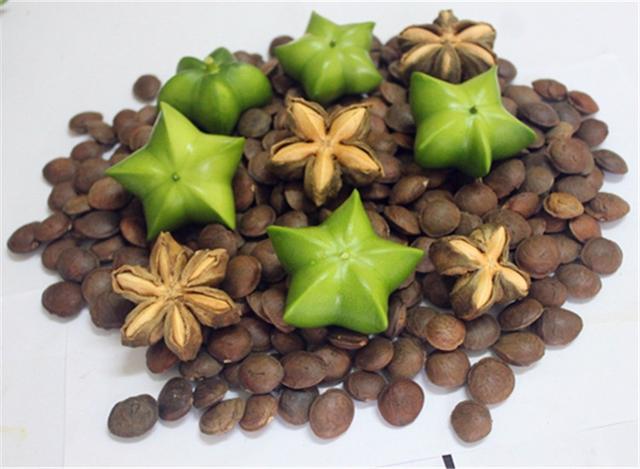
South American oil vineCultivation Methods for Sacha Inchi in the Guizhou Region
8) Disease and pest control: During the growth of Sacha Inchi, the main problems are root rot, root-knot nematode disease, stem base rot, locusts and some omnivorous pests of the butterfly and moth type. Promptly inspect and monitor the occurrence of diseases and pests, and avoid waterlogging in the field and overgrown weeds. In the early stage of disease, promptly use hymexazol, guangkuling, chlorothalonil, mancozeb, pudike, phoxim emulsifiable concentrate, dichlorvos, etc. at standard application rates, mixed or separately in rotation, for control. For severely affected plots, the plants must be pulled out and burned, and the soil disinfected with quicklime;
9) Cold and frost protection: Sacha Inchi is not tolerant of low temperatures and frost. In winter in Guizhou, growth generally stops when the temperature falls below 10°C, and cold damage occurs when the temperature is below 5°C. If low temperatures last continuously for more than 3-5 days, some leaves and young tender branches become water-soaked and gradually dry up, fall off or rot; in areas with occasional brief low-temperature frost, depending on the specific situation, straw and plastic film can be used in mid-to-late December for covering and wrapping to protect against cold and frost. The key is to protect the middle and lower foundation branches 0.8-1.5 meters above the ground, so that new branches can sprout again after the temperature warms up the following year;
10) Harvesting: Sacha Inchi flowers and bears fruit successively as the vines branch and grow, and matures and is harvested successively. The concentrated harvest period is from September to February of the following year, and it generally takes 100-120 days from fruit set to natural fruit maturity. When the fruit grows plump and gradually changes from light green to dark green and then to dark brown, it is mature and ready for harvest. Some fruits naturally split open and fall off after ripening, so harvest mature fruits regularly once every 10-20 days, and dry the harvested fruits promptly before shelling.