How to Grow Potted Grapes: A Detailed Guide to Balcony Planting
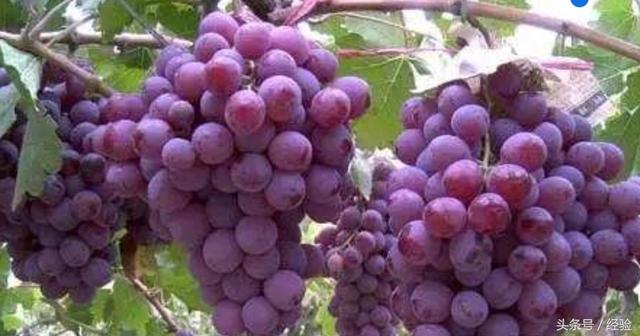
Nowadays many people also grow grapevines on their balconies. Not only can they block the sun in summer and lower the indoor temperature, but when the grapevine bears fruit they can also eat grapes grown at home. Just thinking about it is wonderful!
Choose a strong, high-quality plant free of disease or wounds, dilute chitosan and Liangdun with water at 500 times and dip the roots, to prevent root diseases caused by root damage during transplanting.
1: Choosing a Pot
Before planting, you must first choose a good flower pot. The pot must mainly be a round porcelain pot with a diameter of 25-35 cm and a height of 25-35 cm or more, and the bottom must have holes for drainage, to avoid root damage caused by overwatering.
2: Soil
The soil must be fertile and have good air permeability. It is recommended to thoroughly and evenly mix high-quality peat soil, fermented organic fertilizer and castor cake at a ratio of 1:1:1 and put it into the pot for later use.
3. Fertilizing
The principle of fertilizing potted grapes is to apply little but often. During the seedling stage and the early stage after planting, potted grapes may not be fertilized for the time being. After the seedlings grow 5-6 leaves, apply a thin liquid fertilizer once every 6D8 days.
After flowering and fruit set, the nutrient requirement increases, so the number of fertilizations can be appropriately increased. Note that after each application of liquid fertilizer, water immediately.
4. Watering
Before and after sprouting, water potted grapes once every 2D3 days. Watering before 10 a.m. and after 4 p.m. is better; when watering, the water temperature should preferably be close to the pot soil temperature. In summer, when the temperature is relatively high and evaporation is relatively large, water once in both the morning and evening. After the temperature gradually drops in autumn, the number of waterings gradually decreases again, and keeping the pot soil moist is suitable; during the winter leaf-drop dormant period, keep the pot soil alternately dry and wet, and when watering you can sprinkle some water on the leaves.
After the potted grapes sprout and before flowering, water with a mixture of 2% water-soluble fertilizer Molfon balanced fertilizer plus chitosan rooting agent. This achieves the purpose of rooting and strengthening the seedlings. During the flowering period, be sure not to water, because too much water makes the plant's top grow too fast, producing abscisic acid at the end of the flowers and reducing the fruit-setting rate. In addition, spray boron fertilizer on the leaves to promote flower bud differentiation and increase the fruit-setting rate.
5. Pest and Disease Control
If there is disease, spray 3-5 degrees Baume lime sulfur mixture during the grape dormant period. After sprouting, spray once every 10-15 days with 1:0.5:200 Bordeaux mixture or 500-times compound carbendazim solution, and general diseases can be controlled.
If brown spots, powdery mildew or other abnormal phenomena are found on leaves, branches or fruit clusters, they should be cut off immediately to prevent spread, and Bordeaux mixture should be sprayed for control;
In an environment with sufficient light and good ventilation, potted grapes rarely suffer from disease.
After fruit set, promptly apply the balanced water-soluble fertilizer Molfon once. When the fruit swells, supplement with high-potassium water-soluble fertilizer once about every ten days, and during this period apply a rooting agent once by flushing. Also pay attention to controlling diseases and pests such as rachis rot, anthracnose and red spider mite.
6. Light
Grapevines are very sensitive to light. Grapevines like light, so they must be placed in a place with very sufficient light;
7. Trellis
Some people build trellises on the balcony to make it easier for grapes to climb. Remember not to use iron or trellises that conduct heat quickly; wooden ones are best.