Detailed Explanation of the Cultivation Technique of Interplanting Tomatoes in Solar Greenhouse Strawberries
Luannan County has a long history of strawberry cultivation, and its "Hongxiang" brand strawberries are sold to large and medium-sized cities such as Beijing, Tianjin, Qinhuangdao and Tangshan. In order to improve the multiple cropping index and obtain more benefits from the land, Luannan County, based on the similar temperature requirements of strawberries and tomatoes during their growth and development, has developed a high-efficiency cultivation model of interplanting tomatoes in solar greenhouse strawberries.
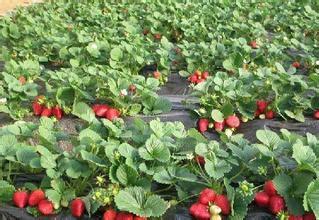
1. Theoretical basis for interplanting tomatoes in strawberries
Strawberries and tomatoes have relatively similar temperature requirements during their growth and development. The fruit swelling stage to the ripening stage of strawberries requires a daytime temperature of 18-24 °C, while the optimum growth temperature for tomatoes is 14-25 °C. This stage is the best period for interplanting tomatoes in strawberries, and the symbiotic period of the two can reach about 4 months. In the early stage of interplanting, the tomatoes are in the seedling stage and will not shade or affect strawberry growth; at the same time, the interplanted tomatoes are sparsely planted, so they also have little effect on strawberry fruit ripening in the later stage. During the strawberry growth period, a large amount of base fertilizer and topdressing has already been applied, so no additional fertilizer is needed when the tomatoes are transplanted, which can meet their growth needs, thereby both reducing production costs and improving fertilizer use efficiency.
2. Crop rotation arrangement
Strawberries are generally transplanted in late August and harvested from mid-January to mid-June of the following year. Tomatoes are sown in late November, transplanted in late February of the following year, and begin to be marketed in early April.
3. Strawberry cultivation techniques
3.1. Variety selection
According to production needs, select varieties with a short dormancy period, early maturity, disease resistance, cold resistance, and appearance and internal quality that meet market demand, such as Quanmingxing, Tutela, Tongzi No. 1, etc.
3.2. Seedling raising
Strawberry seedling raising is generally carried out from late March to late April. Select a plot with fertile soil and convenient irrigation and drainage as the seedling bed. Take mother plants from the mother plant nursery and transplant them into the seedling nursery, and promptly remove the flower buds on the mother plants. Generally, the seedling nursery is watered with a small amount of water once every 5-7 d, followed by shallow intertillage after watering, without topdressing. In order to promote the mother plants to produce stolons earlier and in greater numbers, after removing the flower buds, each plant can be sprayed with 10 mg of 50 mg/kg gibberellin, and after leaving 2-3 daughter seedlings on each stolon, the growing tip is pinched off.
3.3. Transplanting
For each 667 sq m of transplanting field, apply 4,000-5,000 kg of decomposed organic fertilizer, 750-1,000 kg of decomposed livestock and poultry manure or dried manure, 25 kg of diammonium phosphate, and 10 kg of potassium sulfate, plow deeply for 25 cm, and make small high ridges 0.8-1 m wide running north-south. Begin transplanting in late August. Select strong seedlings free from disease and insect damage with at least 4 leaves, and when digging up the seedlings, keep a soil ball. Plant two rows per ridge, with a row spacing of 20-25 cm and a hole spacing of 12-15 cm. Plant the seedlings in water, and plant 8,000-10,000 plants per 667 sq m. Keep the soil moist before the seedlings recover. During the seedling recovery period, irrigate with a small amount of water along the furrows, avoiding flood irrigation, so as to facilitate seedling recovery and rooting.
3.4. Covering the greenhouse and management
Generally in late October, when the nighttime temperature drops to 8 °C, cover the greenhouse. After covering the greenhouse, cover with plastic film 10-15 d later to increase ground temperature and prevent weed growth. When the seedlings grow to the top of the film, promptly cut a cross-shaped opening in the film and lift the seedlings above the film. Strictly control the temperature inside the greenhouse: during the germination stage, the daytime temperature should be 26-28 °C and the nighttime temperature above 8 °C; during the flowering stage, the daytime temperature should be 20-25 °C and the nighttime temperature 10-12 °C; during the fruit swelling stage, the daytime temperature should be 18-25 °C and the nighttime temperature 8 °C. When about 20% of the strawberry plants have flower buds, spray once with 7-10 mg/kg gibberellin on a sunny morning to break dormancy (be sure not to spray repeatedly). After spraying, ventilation in the greenhouse should be reduced as much as possible, and the greenhouse temperature should be maintained at about 27 °C. During the flowering stage, control the amount of irrigation. From fruit set to fruit ripening, water must be applied in time to keep the soil alternating between dry and wet. Topdressing should follow the principle of "small amounts and multiple applications." Starting from bud emergence, apply topdressing once every 20 d, with 5 kg of nitrogen fertilizer (equivalent to 10.9 kg urea) and 4 kg of potassium fertilizer (equivalent to 8.9 kg potassium sulfate) per 667 sq m. According to seedling condition, an appropriate amount of iron fertilizer and 0.3%-0.5% urea and monopotassium phosphate can also be sprayed on the leaves 2-3 times. After fertilizing, water and intertill in time. During strawberry growth, promptly remove old leaves, diseased leaves, stolons and excess side buds. Before the first flower opens, leave 7-8 small flowers per inflorescence and remove the other flower buds at the front end of the inflorescence, so that the strawberries bear fruit in a concentrated manner and the fruits are large and uniform. During the flowering stage, using bees for supplementary pollination gives the best effect.
3.5. Pest and disease control
Common diseases during strawberry growth include gray mold, bud blight, powdery mildew, viral disease, etc. For pesticide application in protected cultivation, priority should be given to dust and fumigation methods to reduce humidity inside the greenhouse; spray control should be carried out in dry and sunny weather. To control gray mold, 80-100 g of 20% sec-butylamine fumigant can be dispersed and burned per 667 sq m; or 50% sec-butylamine wettable powder or 25% iprodione wettable powder 1,000-fold solution can be used for spray control, spraying once every 7-10 d, for 2-3 consecutive sprays. To control bud blight, 110-180 g of 5% chlorothalonil dust can be divided into 5-6 spots and ignited in the evening per 667 sq m, with the greenhouse closed overnight, fumigating once every 7 d, for 2-3 consecutive fumigations. To control powdery mildew, 50 g of 10% difenoconazole water-dispersible granules can be mixed with water and sprayed per 667 sq m, or 20% triadimefon wettable powder 1,000-fold solution can be used for spray control. In the early stage of viral disease, 20% virus A 400-fold solution or 1.5% zhibingling emulsion 400-fold solution can be used for spray control.
Common insect pests during strawberry growth include aphids, whiteflies, cutworms, cabbage armyworms, red spider mites, etc. Yellow boards can be used to trap and kill aphids and whiteflies, and silver-gray film can also be used to repel aphids; aphids can also be controlled by spraying 50% pirimicarb 2,000-fold solution, or 3% acetamiprid 1,000-2,000-fold solution, or 10% imidacloprid 1,500-fold solution, etc. Cutworms and cabbage armyworms can be controlled by using a sugar-vinegar liquid to trap adults. The method is: mix liquor, water, sugar and vinegar in a ratio of 1:2:3:4, put it in a basin, add half the amount of the trapping liquid every 5 d, and replace all the trapping liquid every 10 d. Red spider mites can be controlled by spraying 1.8% abamectin emulsifiable concentrate 3,000-fold solution or 15% pyridaben emulsifiable concentrate 1,500-fold solution.
3.6. Harvest
Strawberry fruits mature about 30 d after flowering and generally begin to be harvested around New Year's Day. For those used for processing juice and fruit wine, fully ripe fruits should be picked; for those sold locally, fruits at 90% maturity should be picked; for those transported to other places for sale or processed into jam, fruits at 80% maturity should be picked.
4. Tomato cultivation techniques
4.1. Seedling raising
Tomato seedling raising is generally carried out in a greenhouse. The seedling bed is divided into a sowing bed and a pricking-out bed. The soil of the sowing bed is made by mixing 60% disease- and insect-free garden soil and 40% decomposed cow manure. Be careful to mix evenly and finely to avoid burning the seedlings with manure. The soil of the pricking-out bed is made by mixing 50% garden soil, 40% decomposed organic fertilizer and 10% fine sand. For each square meter of seedling bed (about 10 cm thick bed soil), add 25 g urea and 200-250 g superphosphate. In addition, for each square meter of sowing bed, 30-50 mL formalin must be mixed with 3 L water and then sprayed on the bed soil. After spraying, cover tightly with plastic film, keep it closed for 3 d, then uncover the film, and sow after the odor has dissipated. Select tomato varieties with good taste, moderate fruit size, early maturity and disease resistance, such as Dongsheng Huabao, American Pink King, Shanghai 908, etc. The seeding rate per 667 sq m is 35-40 g, and seed treatment should be carried out before sowing. Begin sowing in late November, with a sowing rate of 10-15 g per square meter of sowing bed. When sowing, first water the bed soil thoroughly, and after the water seeps down, spread a thin layer of nutrient soil on the bed surface (keeping the bed surface level), then sow. After sowing, cover with soil 0.8-1.0 cm thick, and then mix 8 g of 50% carbendazim with fine soil per square meter of seedling bed and evenly spread it on the bed surface to control damping-off.
4.2. Seedling stage management
From sowing to full emergence, control the daytime temperature at 25-30 °C and the nighttime temperature at 15-18 °C. From full emergence to before pricking out, control the daytime temperature at 20-25 °C and the nighttime temperature at 10-15 °C. From pricking out to seedling recovery, control the daytime temperature at 25-30 °C and the nighttime temperature at 15-20 °C. From after seedling recovery to before transplanting, control the daytime temperature at 20-25 °C and the nighttime temperature at 12-16 °C. From 5-7 d before transplanting, control the daytime temperature at 15-20 °C and the nighttime temperature at 8-10 °C.
When the seedlings have 2 leaves and 1 heart, prick them out into nutrient pots and place them in the pricking-out bed, and combine with disease prevention by spraying 1,000-fold chlorothalonil solution or 500-fold mancozeb solution. When the seedlings grow 3-4 leaves, increase the spacing between seedlings, and fill the gaps between nutrient pots with fine mud to preserve moisture and heat. During the seedling stage, focus on controlling water and fertilizer. Water thoroughly after pricking out, and in other growth stages water appropriately according to soil moisture, avoiding excessive water amounts, so as to reduce humidity and prevent disease occurrence. When the seedlings have 3-4 leaves, apply seedling-promoting fertilizer according to seedling condition.
4.3. Transplanting and management after transplanting
Transplanting generally begins in late February of the following year. Transplant the tomato seedlings in the middle of the two rows of strawberries in the strawberry ridge. To prevent the tomato seedlings from shading and affecting strawberry growth, plant 1 row every other ridge, with a plant spacing of 25-30 cm, and transplant 2,400-2,500 plants per 667 sq m.
During this period, tomatoes and strawberries grow together, and temperature management is the same as for strawberries. To increase light intensity and light duration, use weather-resistant film with good light transmittance, keep the film surface clean in winter and spring, uncover the straw mats during the day, and hang reflective curtains at the rear of the solar greenhouse. To improve photosynthetic efficiency, carbon dioxide gas fertilizer can be added in spring, with a suitable concentration of 1,000-1,500 mg/kg.
After tomato transplanting, water in time, using drip irrigation under film or concealed irrigation. Water for seedling recovery 3-5 d after transplanting, intertill in time after the seedling recovery water, and control watering. When the first cluster of fruit is the size of a walnut, begin watering, and apply 10 kg urea and 10 kg potassium sulfate per 667 sq m with the water, watering once every 8-10 d; when the second cluster of fruit swells, apply topdressing once more at the above fertilization rate. According to the length of the tomato harvest period, topdressing can be applied 2-4 times, and each topdressing should be combined with irrigation.
During tomato growth, pruning must be carried out. Single-stem pruning is generally used, with thin bamboo poles for staking or nylon rope for vine hanging. In production, leave 4 clusters of fruit and then pinch off the growing tip. To improve the fruit-setting rate of tomatoes, 25-30 mg/kg tomato hormone can be used to spray flowers to ensure fruit set.
4.4. Pest and disease control
Common diseases in tomato production include early blight, late blight, gray mold, leaf mold, viral disease, septoria leaf spot, etc. Early blight can be controlled by spraying 75% chlorothalonil wettable powder 600-fold solution, or 58% metalaxyl mancozeb wettable powder 500-fold solution, or 64% oxadixyl wettable powder 500-fold solution; on cloudy or rainy days, dust or fumigants should be used for control, and each time per 667 sq m, 1 kg of 5% chlorothalonil dust, or 200-250 g of 45% chlorothalonil fumigant, or 200-250 g of 10% sec-butylamine fumigant can be applied. Late blight can be controlled by spraying 72.2% propamocarb aqueous solution 800-fold solution or 72% cymoxanil wettable powder 500-600-fold solution; the control methods with fumigants and dusts are the same as for early blight. Gray mold can be controlled by applying chemicals when dipping flowers. The specific method is: when the first cluster of fruit blooms, add 0.1% of 50% sec-butylamine wettable powder or 50% duomeiling wettable powder to the prepared flower-dipping solution, then dip or smear the flowers; the second application for controlling gray mold should be carried out 1 d before watering to promote fruit swelling, using 65% jiaimeiling wettable powder 800-fold solution or 50% duomeiling wettable powder 700-fold solution for spray control. In the early stage of leaf mold, each time per 667 sq m, 250 g of 45% chlorothalonil fumigant can be used for fumigation for 1 night, or 7% yemeijing dust can be sprayed in the evening for control. Viral disease can be controlled by spraying 1.5% zhibingling 1,000-fold solution or 20% virus A wettable powder 500-fold solution. Septoria leaf spot can be controlled by spraying 64% oxadixyl wettable powder 500-fold solution, or 58% metalaxyl mancozeb wettable powder 500-fold solution, or 75% chlorothalonil wettable powder 600-fold solution, spraying once every 10 d or so, for 2-3 consecutive sprays.
For tomato pest control methods, refer to those for strawberries.
4.5. Harvesting
Harvest in batches in a timely manner to reduce the burden on the plants, ensure fruit quality, and promote fruit swelling in the later stage.