Detailed Explanation of High-Yield and High-Quality Ginger Cultivation Techniques
Ginger is the fresh rhizome of ginger, a perennial herbaceous plant in the Zingiberaceae family. The rhizome, cork layer, and leaves of ginger can all be used as medicine, and in traditional Chinese medicine, ginger has effects such as dispersing, stopping vomiting, and relieving cough. Ginger is also a commonly used seasoning. Because ginger cultivation generally yields relatively high output, has low planting costs, and good economic benefits, it is widely favored by farmers, who also show relatively high enthusiasm for growing ginger. To achieve high yield and high quality in ginger cultivation, attention must be paid to the following aspects:
I. Fine land preparation and effective crop rotation
It is precisely because ginger has few roots and a small distribution range that ginger prefers plots with deep soil layers, fertile soil, and rich organic matter. During cultivation, ginger is both afraid of drought and afraid of waterlogging. Sandy loam soil that is loose and fertile, has good watering conditions, and offers convenient irrigation and drainage should be selected for planting. Generally, the land used for planting ginger needs to be deeply plowed in the communal field so that the soil can fully weather and become loose; fine land preparation should be carried out early in spring to facilitate the growth and development of the ginger root system. During land preparation, 35-40 kg of lime powder can first be spread to disinfect the soil, and then trenches can be opened for planting. For ginger cultivation, a location with relatively high terrain and convenient irrigation and drainage should be chosen, and the previous crop should preferably be grain fields or garlic fields. In particular, ginger should not be planted continuously on the same piece of land, as this is not conducive to the prevention and control of ginger diseases and pests.
II. Carefully select ginger seeds and cultivate strong sprouts
① Carefully select ginger seeds
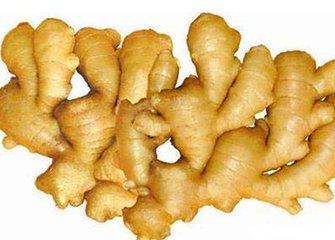
When selecting ginger seeds, selection should be based on the purpose, the local climate, and the yield of the ginger. Generally, small-piece ginger has smaller ginger heads, many branches, fine branches, and a stronger pungent taste, but its yield is generally lower; while lion-head large ginger has fat and large ginger heads, fewer branches, a milder taste, is suitable for pickling, and has a relatively high yield. Therefore, when selecting seeds, appropriate varieties should be chosen according to market demand. For seed ginger, ginger blocks from robust plants should be selected, harvested, and stored, and ginger blocks that are fat and large, have bright yellow and glossy skin, are not shriveled, are not frostbitten, are free of diseases and pests, have plump bud eyes, and have thick and strong internodes should be chosen as seeds.
② Cultivate strong sprouts
After selecting the seed ginger, the seed ginger should be taken out of the storage cellar in early to mid-March each year, the soil on the ginger blocks should be washed off with clean water, and the blocks should be spread flat on straw mats or clean ground to dry in the sun for 1-2 days. After sun-drying, the seed ginger should be covered with straw curtains to ensure nutrient decomposition as much as possible. Then soak the seed ginger with 3 g of Bihu plus 100 g of 80% carbendazim, mixed with 15-20 kg of water; place the soaked seed ginger in an environment with a temperature of 22-25°C and a humidity of 70-80% for 25-30 days to promote sprouting. When the ginger sprouts grow to about 1 cm, they can be taken out for sowing.
③ Sow at the right time and plant at a reasonable density
The sowing time for seed ginger is generally chosen in mid-to-late April in open fields, and protected cultivation can also be chosen in mid-March. The top width of the ginger trench is 30 cm, and the trench depth is 30 cm, with deep trenches and shallow covering required. When planting, the bottom of the trench should be watered. Ginger sowing is generally carried out in batches, first sowing large and strong sprouts, then small and weak sprouts. The ginger blocks are placed flat at the bottom of the trench, with the sprouts facing one direction: for east-west trenches, the sprouts face southeast; for north-south trenches, the sprouts face southwest. After sowing, cover with soil promptly to 2-3 cm.
Reasonable dense planting: large ginger 7000-7500 plants/mu, row spacing 50 cm, plant spacing 18-20 cm, seed quantity per mu 400-500 kg; small ginger 7500-8000 plants/mu, row spacing 50 cm, plant spacing 16-18 cm, seed quantity per mu 350-400 kg. The size of the ginger blocks has a relatively large relationship with yield. Using larger ginger blocks as seeds not only results in earlier emergence, accelerates growth and development, and advances maturity, but also gives higher yield.
III. Apply sufficient base fertilizer and topdress multiple times
Due to the fertilizer requirements of ginger, it has a particularly high demand for potassium fertilizer, but a relatively small demand for phosphorus fertilizer. Therefore, during cultivation, sufficient base fertilizer must be applied; the implementation of base fertilizer should be: spread 4000-5000 kg of high-quality farmyard manure per mu, or 100-200 kg of organic fertilizer, 2-4 kg of biological bacterial fertilizer, and 70-80 kg of a 45% (16-9-20) formula fertilizer; medium and trace elements: 40 kg of high-calcium potassium ammonium, 2 kg of zinc fertilizer, and 1 kg of boron fertilizer, then carry out fine land preparation and open trenches to form ridges.
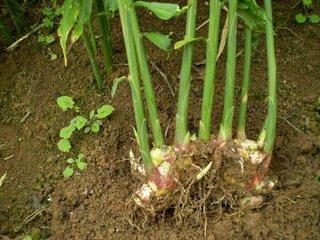
In the process of crop cultivation, topdressing should be emphasized, and ginger cultivation should not neglect it either. Topdressing for ginger should be applied frequently and lightly, from dilute to concentrated. Especially in the seedling stage, the plant growth amount is small and the fertilizer requirement is also small, but the seedling stage is very long. To make the seedlings grow robustly, usually when the seedlings are about 30 cm tall and have 1-2 small branches, the first topdressing is carried out, and 30 kg of water-soluble fertilizer can be applied per mu, which is called "small topdressing" or "strong seedling fertilizer." In addition, the second topdressing should be carried out around the Beginning of Autumn. This topdressing plays an important role in promoting rhizome expansion and obtaining high yield. For this topdressing, 50 kg of decomposed cake fertilizer per mu, or 2000 kg of high-quality farmyard manure, plus 10-15 kg of compound fertilizer can be applied, which is called "large topdressing" or "turning-point fertilizer." Around the Autumn Equinox, apply another "final strengthening fertilizer" or "expansion fertilizer," applying 10-15 kg of compound fertilizer.
IV. Strengthen field management
① Water management
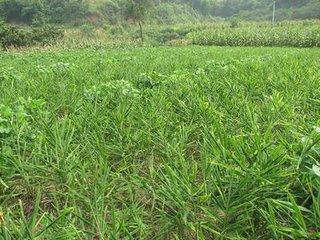
During the germination stage of ginger, the bottom water must be thoroughly watered, and the first water must be timely. Usually, the first watering is not started until about 70% emergence. Two to three days after the first watering, the second watering follows immediately, and then intertillage is done to preserve soil moisture, which can make the ginger seedlings grow robustly. In the seedling stage of ginger, small amounts of water should be applied frequently, and timely hoeing should be done to break soil crusting. After rainstorms, clear the trenches and drain water promptly. In the vigorous growth period of ginger, large amounts of water should be applied frequently, preferably in the morning and evening, maintaining moderate moisture and preventing water accumulation. Generally, water heavily once every 4-6 days and keep the relative soil humidity at 75-85%, which is beneficial to growth. Three to four days before harvest, water once more so that the ginger blocks carry moist soil at harvest, which is beneficial for cellar storage.
② Intertillage and earthing up
Ginger has shallow roots, so only shallow cultivation is suitable to prevent root damage and induce diseases. Weeding and earthing up are carried out simultaneously. Generally, the first earthing up is carried out when ginger has 3-5 branches and the rhizome has not yet emerged from the ground. In late June, earth up about 2 cm thick. The second earthing up should be carried out about 20 days after the first small earthing up, with a thickness of 2-3 cm; this earthing up also should not be too thick. The third earthing up is the large earthing up, carried out 15-20 days after the second earthing up, that is, around Major Heat, with a thickness of 7-8 cm being appropriate, turning the original ridges into trenches and the original trenches into ridges.
③ Shade at the right time to promote growth
Because ginger is a shade-tolerant crop, direct sunlight affects seedling growth. After sowing, use shade nets or artificial shade sheds for shading, and remove the sheds after the End of Heat. Throughout the entire growth period of ginger, spray Bihu on the leaves once every 10 days for three consecutive times to promote growth and prevent diseases.
The entire ginger cultivation process requires strengthened management and strengthened monitoring, doing well in the management of topdressing, water, and earthing up, and focusing on temperature and humidity management during ginger cultivation, so as to achieve high yield and high quality of ginger. Increase farmers' income!