How to Propagate a Money Tree? A Detailed Guide to Care and Management
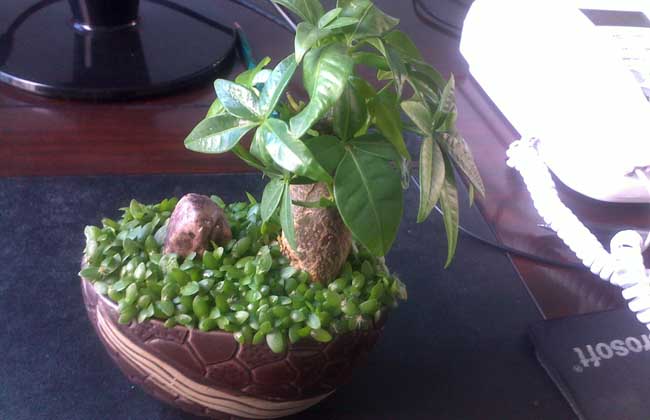
Money Tree Propagation Methods
1. Seed Propagation
The fruit can be harvested once ripe; crack open the husk, take out the seeds and sow them immediately. Generally, seeds are sown in a shallow seedling tray at a spacing of 5 cm × 10 cm, with plain sand as the sowing medium and a sowing depth of 3-4 cm. After sowing, soak the pot from the bottom to saturate the soil, keep the potting soil moist, and control the temperature at 25-30°C; germination occurs in 7-10 days. The money tree is a polyembryonic plant, and each seed can produce 1-4 seedlings, giving a high propagation rate. When the seedlings grow to 3-5 leaves, they can be potted up for permanent planting. When potting up, plant them shallowly so that the swollen root base is exposed.
2. Cutting Propagation
Cutting propagation is easy to source material for, has a high survival rate, and can also be used for mass propagation, but the base of cutting-grown plants does not form a swollen trunk. Cutting propagation can be done year-round in South China, while in the north it is best done from May to August. Cutting propagation mostly uses branches with the growing tip as cuttings; insert the cuttings into a pot or sand bed filled with plain sand, water thoroughly, and cover with plastic film to retain moisture. Keep the temperature at 25-28°C, keep the pot (bed) soil moist, and pay attention to shading; roots will form in about 15 days.
3. Grafting Propagation
Variegated varieties of the money tree must be propagated by grafting to maintain their superior characteristics. Use the common money tree as the rootstock. Grafting is generally done in August-September; the scion should have 3 buds, and the cleft grafting method with softwood is used. After grafting, place it in a plastic tunnel to protect it from rain. With careful care, it can become a saleable plant the same year.
How to Grow and Manage a Money Tree?
1. Pot and Soil Selection:
Most money trees bought nowadays come in the soil provided by the seller, so gardeners need not repot immediately after purchase; keep growing it first and consider repotting later. If repotting, a money tree in a pot generally uses loose garden soil or peat soil, leaf mold, and coarse sand, with a small amount of compound fertilizer or chicken manure as a base fertilizer and growing medium.
2. Watering Management:
The money tree has a very poorly developed root system, and many money trees die mainly from root rot. How much to water at one time varies from place to place, and the pot and soil used also differ, so there is no fixed watering standard; generally speaking, watering once a month is not too little. In addition, a plant short of water will not die quickly and will recover soon after watering, but if it is waterlogged it is basically beyond saving. Usually, you can mist the money tree more and water it less.
3. Fertilizing Management:
A money tree does not need fertilizing when the soil is fertile enough. If it has been grown for a long time, consider giving it a dilute fertilizer; never use a concentrated fertilizer. Common foliage fertilizers can be used, but be sure to apply them diluted.
4. Reasonable Pruning:
Generally speaking, money trees have had their tops cut off, so each spring you can also prune them appropriately: first, it improves their appearance, and second, it promotes the growth of new branches.
5. Pest and Disease Control:
In the early stage of stem rot on a money tree, spray with a 1000-fold solution of 50% water-soluble sterilizing powder, once every 10 days, for 2-3 consecutive treatments. For anthracnose, spray with 800-fold 50% chlorothalonil wettable powder or 600-fold 50% carbendazim solution, once every 7-10 days. For cabbage caterpillars, inchworms, and red spider mites, regularly spray with 800-fold 40% omethoate or 1000-fold 50% dichlorvos, once every 7 days, for 2-3 consecutive sprays.
Money Tree Propagation Methods Money Tree Propagation and Care Management
Because of its tenacious vitality, unique ornamental value, and auspicious name, the money tree is very popular. Below we will share with you the propagation methods of the money tree and its propagation and care management.
Money Tree Propagation Methods:
Money tree propagation methods are generally divided into three types: seed propagation, cutting propagation, and grafting propagation.
1. Money Tree Seed Propagation
Seed propagation of the money tree is one of the most common and also simplest propagation methods. The reasons for using seed propagation are: the seedlings are uniform, with straight roots and neat stems, a high seedling yield, and they can develop the thick, large "radish-shaped" base that enhances ornamental value.
2. Money Tree Cutting Propagation
For money tree cutting propagation, it can be done year-round in the south, and from May to August in the north. Cut the removed growing tips and branches into 10-15 cm lengths and insert them into coarse sand, but this has the drawback of a base that does not swell and is not straight. The money tree grows quickly, and after a period of growth the branches often become too long, which affects the ornamental effect. Generally, overly long branches can be cut back at any time during the growing season, or cut back in spring together with cutting propagation, to maintain a good plant shape. Money tree cutting propagation readily survives, but after the propagated plants grow up, the root-stem base does not thicken and swell, giving poorer ornamental value, so it is rarely used.
3. Money Tree Grafting Propagation
A money tree generally flowers and sets fruit 8 years after sowing. To make it flower and fruit earlier, you can choose a two-year-old braided seedling as the rootstock, and select one-year-old vigorous branches from a tree that has already flowered and fruited as the scion. In mid-to-late February, using the cleft grafting method, the survival rate reaches 80%. After grafting, the money tree flowers the following year, which can advance flowering and fruiting by 5 years.
Money Tree Propagation and Care Management:
The money tree is not strict about light and can adapt to strong sunlight or dim rooms; it is best grown under a shade canopy. During the peak growing season, apply 1-2 cm of decomposed cake fertilizer per pot, then cover with 1 cm of growing medium. Apply appropriate amounts of multi-element compound fertilizer and phosphorus-potassium fertilizer, which helps the trunk base swell. It is relatively cold-tolerant; when watering, it is better to keep it dry than wet. The high temperature and high humidity of summer are very favorable for the money tree, and this is its fastest growing period. In winter, the temperature must not drop below 5°C, and it is best kept at 18-20°C. Use a moderate amount of water in the growing season and water less in winter, watering when the soil is dry and letting it dry out between waterings, and frequently mist the leaves to keep them moist; then it will grow vigorously.
Money Tree Care Methods Money Tree Propagation Methods
Nowadays many households like to grow green plants indoors, as they are both attractive and can purify the air, and the money tree is one of the very popular plants. So how do you care for a money tree, and what propagation methods are there? Below, we will explain the money tree care methods and the money tree propagation methods.
Money Tree Care Methods
1. Placement of the Money Tree
A general money tree is fairly large, so it is suitable for placement in a relatively spacious space, such as a living room, study, or office. Miniature money trees are not so limited by space and can be placed wherever you like. It should be noted here that the money tree cannot grow well in all environments. So it is recommended to grow the money tree in a place with bright light and good ventilation. Also be careful not to move it around often, and do not place the money tree next to a television.
2. Choosing a Flower Pot for the Money Tree
When it comes to choosing a flower pot, many gardening enthusiasts find it hard to understand: does growing a plant really depend on the pot? To be precise, it is not about the style of the pot, but about the depth and size of the pot. Pots that are too deep and too large are not good. The large money trees sold on the market nowadays all come in those very deep, very large ceramic pots. To be honest, that kind of deep, large pot is really not suitable for growing money trees, because the money tree's root system is not well developed, and that kind of pot has very poor air permeability, making it very easy for watering problems to cause root rot in the money tree. So if you like a large pot, it is recommended to use the method of a small pot set inside a large pot to grow the money tree; this way you can solve both the aesthetic problem and the money tree's waterlogging problem.
3. Choosing Potting Soil for the Money Tree
Most money trees nowadays are bought from the market, and the potting soil comes with them from the seller, so gardening enthusiasts do not need to change the soil immediately after buying; you can grow it first and consider repotting later. But if it has been grown for quite a long time and needs repotting, you should choose a fertile, loose, breathable, water-retaining sandy loam or acidic soil, and avoid alkaline or heavy clay soil. You can use loose garden soil or peat soil, leaf mold, and coarse sand, with a small amount of compound fertilizer or chicken manure as a base fertilizer and growing medium.
4. How to Water a Money Tree
The question of watering a money tree has always been a topic that is hard to pin down, and it is also a very important topic, because if you water well the money tree can grow healthily, but if you water poorly it will directly cause the money tree to die. So gardening enthusiasts should spend a bit more time on this. The money tree does not tolerate water, and its root system is not well developed, so if it is overwatered or the potting soil becomes even slightly waterlogged, it very easily causes root rot in the money tree, leading to the death of the plant.
Therefore, it is recommended that before watering your money tree, gardening enthusiasts should be clear about whether the soil used can evaporate water quickly. With some soils, water applied in the morning is basically dry by evening, but with some soils, even watering once every half month, or even once a month, still leaves them moist. Add to that the fact that some pots are still deep pots (which is why the choice of flower pot was discussed above as very important), so gardening enthusiasts can easily keep watering after half a month, and over time water gradually accumulates, and you do not even know it has become waterlogged.
So there is no such thing as watering once every few days; you must water according to the actual situation. A money tree short of water will not die immediately and can still be saved, but if it becomes waterlogged it may be beyond saving. Normally, gardening enthusiasts should mist the money tree's leaves every day, especially when the air is dry, mist the leaves more often, to meet its need for high-humidity air and keep the leaves clean, tender, and glossy. Remember not to let the money tree become waterlogged, and water according to your own actual situation.
5. How to Fertilize a Money Tree
Because the money tree is full in form, has large leaves, and grows vigorously, it likes fertilizer and has a high demand for it. When repotting, apply enough base fertilizer; generally the fertilizer should make up 1/3 of the potting soil. During its growing season, you can apply a decomposed liquid fertilizer or a mixed flower-growing fertilizer once every 15 days to promote deep roots and lush leaves. You can also apply a foliar top dressing 2-3 times with a 0.5% monopotassium phosphate (nitrogen-phosphorus) solution or a 200-fold solution of a dual-effect micro-element fertilizer.
If it is a newly planted seedling, in the first year after planting, top-dress once every six months; the fertilizer can simply be some solid compound fertilizer. For potted money trees, besides requiring fertile growing soil, all forms of top dressing should be stopped in winter to prevent fertilizer burn damaging the roots, which would cause the leaves to yellow or wither and drop, after which it is very hard for the plant to recover its original appearance.
6. Environmental Requirements for Growing a Money Tree
The money tree is not very strict about sunlight. It can be enjoyed indoors in a dim spot for 2-4 weeks in a row, and it can also grow in full sun, partial sun, or shaded environments. So it can be placed anywhere in a room for a long time, but the pot should be turned frequently so that the whole plant receives even light. In winter, it should be placed in a spot indoors with plenty of light.
The money tree has relatively high requirements for temperature and humidity. During cultivation, care should be taken to maintain a temperature above 15°C, and to frequently mist the branches and leaves of the money tree to add the necessary humidity. If the temperature is too low or the humidity is insufficient, leaf drop may occur, and in severe cases the branches may become bare, which is not good for viewing and may also cause the money tree plant to die.
Money Tree Propagation Methods
Money tree propagation methods are generally divided into three types: seed propagation, cutting propagation, and grafting propagation.
1. Seed Propagation
Seed propagation of the money tree is one of the most common and also simplest propagation methods. The reasons for using seed propagation are: the seedlings are uniform, with straight roots and neat stems, a high seedling yield, and they can develop the thick, large "radish-shaped" base that enhances ornamental value.
2. Cutting Propagation
For money tree cutting propagation, it can be done year-round in the south, and from May to August in the north. Cut the removed growing tips and branches into 10-15 cm lengths and insert them into coarse sand, but this has the drawback of a base that does not swell and is not straight. The money tree grows quickly, and after a period of growth the branches often become too long, which affects the ornamental effect. Generally, overly long branches can be cut back at any time during the growing season, or cut back in spring together with cutting propagation, to maintain a good plant shape. Money tree cutting propagation readily survives, but after the propagated plants grow up, the root-stem base does not thicken and swell, giving poorer ornamental value, so it is rarely used.
3. Grafting Propagation
A money tree generally flowers and sets fruit 8 years after sowing. To make it flower and fruit earlier, you can choose a two-year-old braided seedling as the rootstock, and select one-year-old vigorous branches from a tree that has already flowered and fruited as the scion. In mid-to-late February, using the cleft grafting method, the survival rate reaches 80%. After grafting, the money tree flowers the following year, which can advance flowering and fruiting by 5 years.
The above are the money tree care methods and money tree propagation methods we have introduced for you. Do you all understand them now? For more home knowledge, please stay tuned.