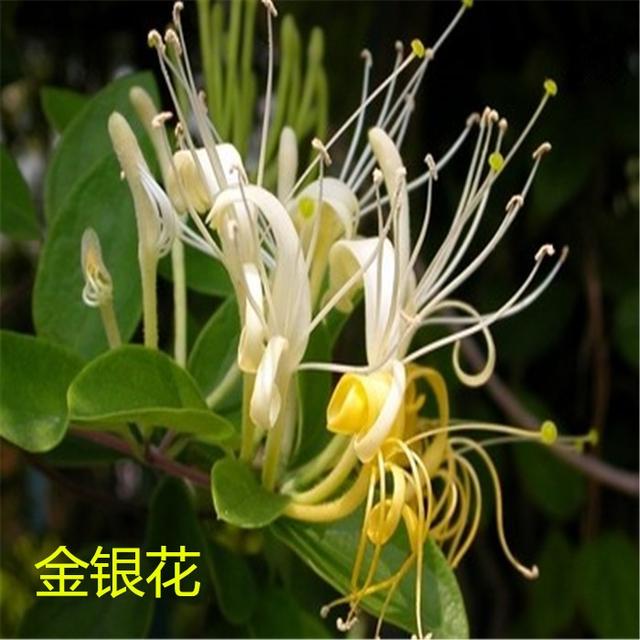
Common pest and disease control methods for honeysuckle grown in southern China
Common pest and disease control for honeysuckle grown in southern China
Honeysuckle, also known as silver flower and Japanese honeysuckle flower, belongs to the Caprifoliaceae family and is distributed throughout the country. Its flower is an important Chinese medicinal material, and it is cultivated as a valuable medicinal plant in many places. In landscaping, it is a very good climbing plant that can meet a variety of greening needs. Honeysuckle has many pests and diseases, and control work cannot be neglected. The symptom identification and control methods of several common pests and diseases are introduced below.
Brown spot diseaseA common leaf disease that weakens plant growth after infection. It mostly occurs in the middle and late stages of honeysuckle growth, with August and September being the peak period of occurrence and damage. At the initial stage of the disease, small brown round spots form on the leaves; later they gradually expand into round or irregular multi-angled lesions. When humid, a layer of grayish-brown downy mildew-like matter can be seen on the underside of the leaves. When dry, the center of the lesion easily ruptures. In severe cases, the leaves turn yellow and withered, causing leaf drop and affecting growth. Control methods: carry out good agricultural control, such as cleaning the field and removing dead branches and fallen leaves from the planting site, burning them in a centralized manner or burying them deeply; after the disease occurs, promptly remove diseased leaves and spray promptly for control. Use 50% carbendazim wettable powder at 800 times dilution, or 75% chlorothalonil wettable powder at 750 times dilution, or 1:1.5:200 Bordeaux mixture for spraying, once every 7 to 10 days, for 2 to 3 consecutive times.
AnthracnoseAfter the disease occurs, the leaf lesions are nearly round, first reddish-brown, then turning blackish-brown, and the lesions crack and easily perforate; affected seedlings turn reddish-brown with sunken canker-like symptoms; when stems and branches are affected, it easily causes the branches to lodge and die. Under humid conditions, large numbers of conidia accumulate on infected leaves, appearing as orange-red dots. Control methods: pay attention to ventilation in the cultivation environment and reduce the surrounding humidity; after the disease occurs, promptly remove diseased branches and residual leaves, burn them in a centralized manner, and reduce infection by pathogens. Spray 65% zineb at 500 times dilution, or 50% thiram at 800 to 1000 times dilution, once every 7 days, for 2 to 3 consecutive sprays.
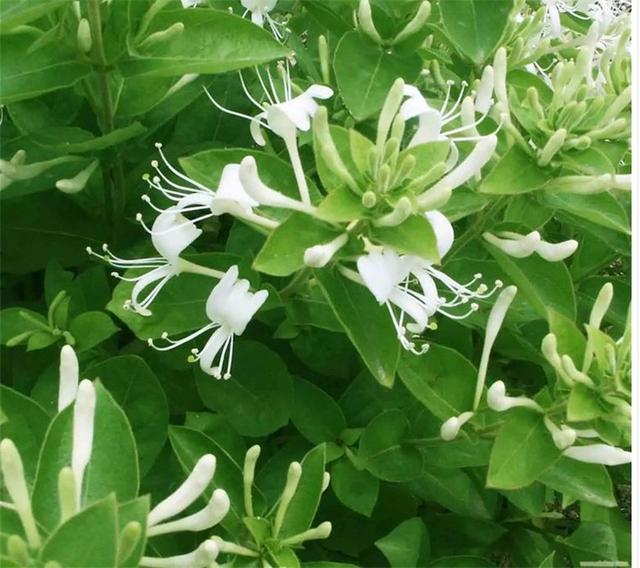
Rust diseaseAfter honeysuckle is affected, tea-brown or dark-brown small spots, or nearly round lesions with a small blister in the center, appear on the underside of the leaves, which can cause the leaves to wither and die. Humid environments very easily cause the occurrence and spread of rust disease. Control methods: after each flower harvest, promptly clean the field and take dead branches and fallen leaves out of the garden for disposal; use medication promptly at the early stage of the disease, using 50% dinitro compound at 200 times dilution, or 25% triadimefon wettable powder at 800 to 1000 times dilution, or 65% zineb wettable powder at 500 times dilution, applying control once every 7 to 10 days, for 2 to 3 consecutive times.
Powdery mildewUnder warm, dry, or shaded environmental conditions, the disease is severe. It mainly harms leaves, followed by flowers and stems. At the initial stage of the disease, small white spots appear on the leaves, then gradually develop into white powdery patches, and in severe cases cover the entire leaf. After being affected, the leaves turn yellow and easily fall off; after the stems are infected, the lesions are brown, irregular, and covered with white powder; after the flowers are affected, they become distorted, and in severe cases a large number of flowers drop. Control methods: prune promptly during the honeysuckle growing period to promote ventilation and light penetration; increase the application of phosphorus and potassium fertilizers and reduce the use of nitrogen fertilizer to promote healthy growth and improve its own resistance. At the initial stage of the disease, spray with 50% thiophanate-methyl at 800 to 1000 times dilution, or 25% triadimefon wettable powder at 1000 to 1500 times dilution, for 2 to 3 consecutive applications, with an interval of 7 to 10 days.
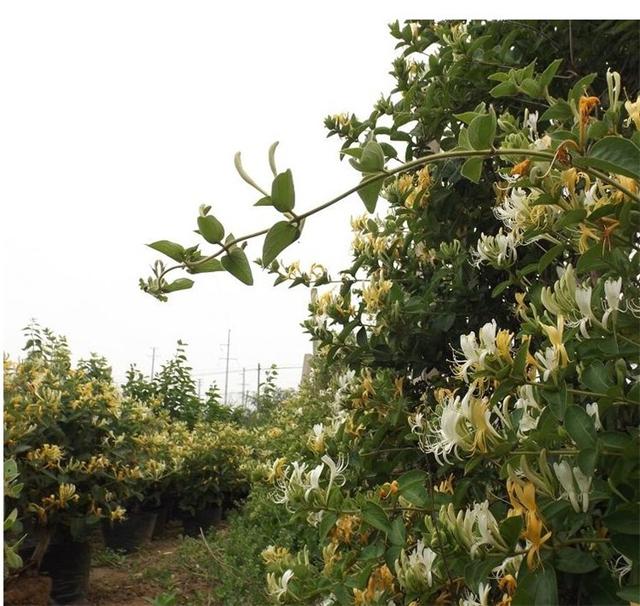
Red spider miteThe red spider mite is a mite pest that harms honeysuckle. The red spider mite body is very small and mainly gathers on the underside of leaves to suck sap, causing honeysuckle leaves to curl, yellow, and finally fall off. High temperatures and dry air very easily cause major outbreaks of red spider mites. Control methods: prune promptly, cutting off old leaves and declining branches; improve the ventilation and light penetration environment. Spray hexythiazox at 2000 times dilution, or ovomite clean at 2500 times dilution for control, applying medication once every 7 to 10 days, for 2 to 3 consecutive sprays, with good results.
AphidsThey generally occur severely from April to June. Aphids mainly harm leaves, gathering on the front and back of leaves, mostly on the back. Tender leaves suffer more severely when affected, causing leaves and flower buds to curl and growth to stop. When aphids cause damage, they can secrete honeydew, leading to sooty mold, which both affects the growth vigor of honeysuckle plants and affects their ornamental value. Control methods: spray with 40% dimethoate emulsion at 1000 to 1500 times dilution, or menazon at 1000 to 1500 times dilution, for 2 to 3 consecutive sprays with good results.
Longhorn beetleAdults emerge from the soil in May and lay eggs within the bark of branches. The larvae move within the bark and bore into the xylem, feeding on the base. After autumn, the larvae overwinter at the base or in the roots. After honeysuckle plants are affected, the branches age and wither, or even die. Control methods: when adults emerge from the soil, pour 80% trichlorfon at 1000 times dilution at the roots; during the peak egg-laying period, spray 50% phoxim emulsifiable concentrate at 600 times dilution once every 7 to 10 days; when pest-damaged branches are found, promptly cut them off and burn them; when longhorn beetle holes are found, insert medicinal cotton soaked in undiluted 80% dichlorvos into the holes and seal them with mud to kill the larvae.