Planting Camellia oleifera this way makes increasing yield and income no longer a problem
2017-12-01 Chayou Jun Bajiao Voice
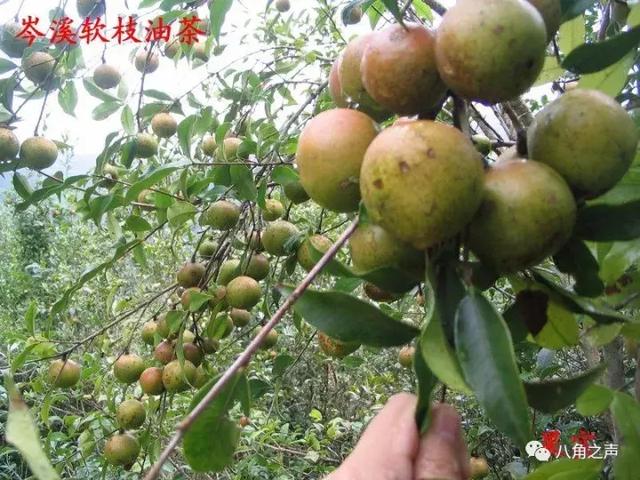
Briefly describing the commonly used cultivation techniques for Camellia oleifera, for growers' reference:
1 Seed selection and seedling raising
1.1 Selection and breeding of improved varieties
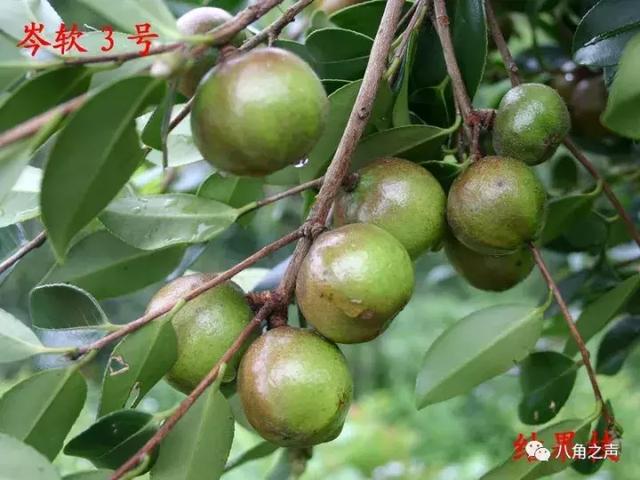
The improved Camellia oleifera varieties in Guangxi that have passed national forest tree improved variety approval include Cenxi soft-branch Camellia oleifera, Cenruan No. 2, Cenruan No. 3, Guiwu No. 1, Guiwu No. 2, Guiwu No. 3, Guiwu No. 4, Guiwu No. 5, Guipu 32, Guipu 101, etc.
1.2 Nursery site selection and post-sowing management
The nursery site should be chosen in a place with flat terrain, deep soil layer, fertile soil, loose soil texture, good drainage, and convenient irrigation. Never use heavy clay land, vegetable plots, or continuous Camellia oleifera cropping land as a nursery. When preparing the land, add an appropriate amount of farmyard manure and harrow it several times, make seedbeds 1-1.2m wide, and open drainage ditches around them. When sowing, single-row drilling is suitable, with a plant spacing of 3-5cm, a row spacing of 10-15cm, and a sowing rate of 1,500kg per hectare. After sowing, cover with soil 4-5cm deep, then cover with rice straw or pine needles. After the seedlings emerge, water them in a timely manner; take shading measures to prevent them from being burned to death by strong sunlight; carry out intertillage and weeding at any time; regularly spray a thin foliar fertilizer; prevent and control pests and diseases, and so on, as routine nursery management measures.
2 Cultivating grafted seedlings
In order to achieve the goals of early fruiting, high yield, and good quality, the seedlings used for establishing Camellia oleifera plantations are generally 1a-old grafted nutrient bag seedlings. The cultivation of Camellia oleifera grafted seedlings usually adopts 2 methods: bark-tearing patch grafting seedling cultivation and bud seedling rootstock grafting seedling cultivation.
2.1 Bark-tearing patch grafting seedling cultivation
Bark-tearing patch grafting seedling cultivation is to directly insert the scion branches collected in advance from excellent mother trees of superior varieties into the torn bark layer of the rootstock. Then carry out pruning of the rootstock, removing the cover and untieing the binding, removing buds and staking, fertilizing and weeding, and preventing and controlling pests and diseases on the grafted seedlings. Finally, move them into nutrient bags and continue cultivating until they reach the standard for leaving the nursery, and then they can be planted on the hills for afforestation.
2.2 Bud seedling rootstock grafting seedling cultivation
Bud seedling rootstock grafting is a cleft grafting seedling method in which selected seeds, after germination promotion treatment, are used as rootstock when the young buds have sprouted but not yet unfolded leaves, and current-year superior trees or superior clone branches are used as scions. Then transplant the bud-grafted seedlings onto previously prepared seedbeds at a plant-row spacing of 6×15cm. In the following 1 and a half years, carry out shading, pruning of the rootstock, intertillage and weeding, moisture retention and drainage, and prevention and control of pests and diseases. When the seedlings grow to a height of more than 30cm and a basal diameter of more than 0.3cm, they can leave the nursery and be planted on the hills for afforestation.
3 Afforestation and plantation establishment
3.1 Forest land selection
For Camellia oleifera afforestation and plantation establishment, it is suitable to choose sunny slopes at an altitude of 1,500-1,800m, with an effective soil layer thickness of more than 40cm, good drainage, and fertile acidic sandy red soil, yellow soil, or yellow-brown soil for afforestation.
3.2 Land preparation
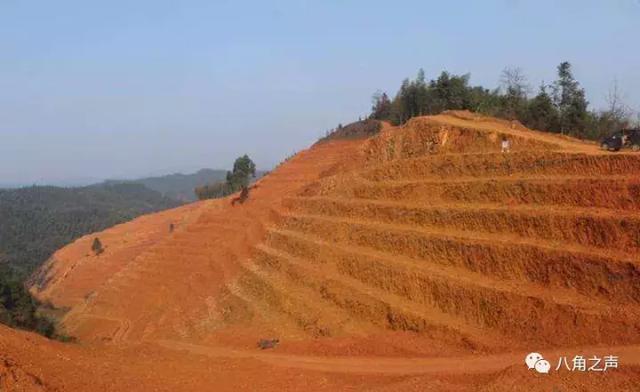
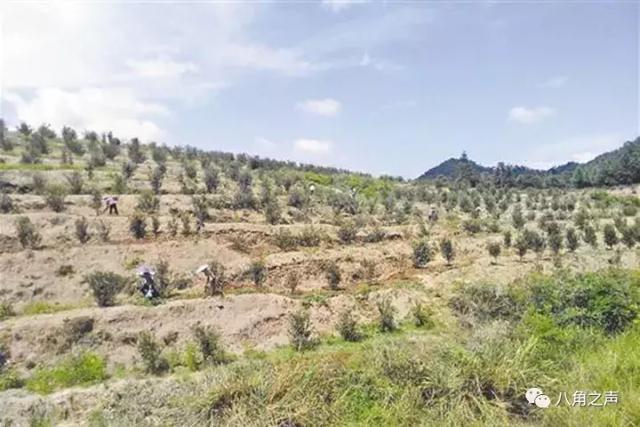
Carry out land preparation of the afforestation site according to the actual terrain. On plains or slopes with a gradient of less than 10 degrees, full reclamation land preparation is suitable, with a reclamation depth of 25-35cm, and then dig holes of length, width, and height of 50cm×40cm×40cm at fixed points; on mountainous land with a 10-15 gradient, strip land preparation is suitable. To allow the soil to fully weather, land preparation should be carried out 30-90d before afforestation. After land preparation and before afforestation, planting holes need to be dug. The length, width, and height of the holes are generally 50cm×40cm×40cm or 60cm×50cm×50cm. After weathering for a period of time, use barnyard manure, compost, and cake fertilizer as base fertilizer, mix thoroughly with backfill soil, and backfill to slightly below the ground surface. After natural settling, seedlings can be planted for afforestation. The season for planting seedlings for afforestation should be chosen when spring rains arrive or during the rainy season from June to July. When planting, strictly follow the conventional operation of one filling, two lifting, and three tamping, so that the roots are spread out, the seedlings are upright, and the soil is firm, and then water thoroughly for root setting.
4 Tending and management
(1) Replanting: use large seedlings or container seedlings of the same variety type, and replant during the afforestation season. (2) Tending and fertilizing: young trees are fertilized 2 times per year. In early spring on rainy days or before rain, within 20-30cm from the base of the plant, open circular or arc-shaped ditches and apply 0.1-0.3kg of high-nitrogen compound fertilizer. The fertilization amount gradually increases with the increase of forest age. In winter, apply farmyard manure; for mature forests, formula fertilization is the main method. (3) Shaping and pruning: when the main trunk is 40-50cm high, select and retain 3-4 strong main branches around the main trunk, with a mutual spacing of 10-15cm. The most suitable period for pruning is early spring, and remove sprouts promptly after pruning. (4) Intercropping: during the young forest stage of Camellia oleifera, appropriately intercrop short-stemmed leguminous plants such as peanuts, soybeans, medicinal herbs, vegetables, and forage grass, so as to achieve cultivation in place of tending. (5) Pest and disease control: give priority to prevention, with integrated control, and grasp the principle of "treating early, treating small, treating thoroughly."
5 Summary
Key points of cultivation techniques:
Forest land selection: choose sunny slopes, with an effective soil layer thickness of more than 40cm, good drainage, and fertile acidic sandy red soil, yellow soil, or yellow-brown soil for afforestation.
Afforestation density: reasonably determine the afforestation density according to site conditions and variety types. The general density is suitably 74-107 plants/mu.
Seedling quality: use 1-2 year old superior clonal grafted seedlings (or cuttings seedlings) for planting, requiring a seedling height of more than 30cm, ground diameter of more than 0.3cm, robust growth, no pests or diseases, and no mechanical damage.
Base fertilizer: after digging the holes, apply 2-3kg of organic fertilizer or 1-2kg of cake fertilizer per hole.
Planting: carry out planting from December of the current year to March of the following year, and the seedling roots should not come into direct contact with the fertilizer.