What Is a Dental Implant? Let One Infographic Explain It to You
Is a dental implant a "seed" placed in the mouth to let a tooth grow out?
If you believe that, you are still Too young, Too simple, Too naive~
Today, Hippo Dentist will use one infographic to let you understand what dental implants are & what benefits dental implants have.
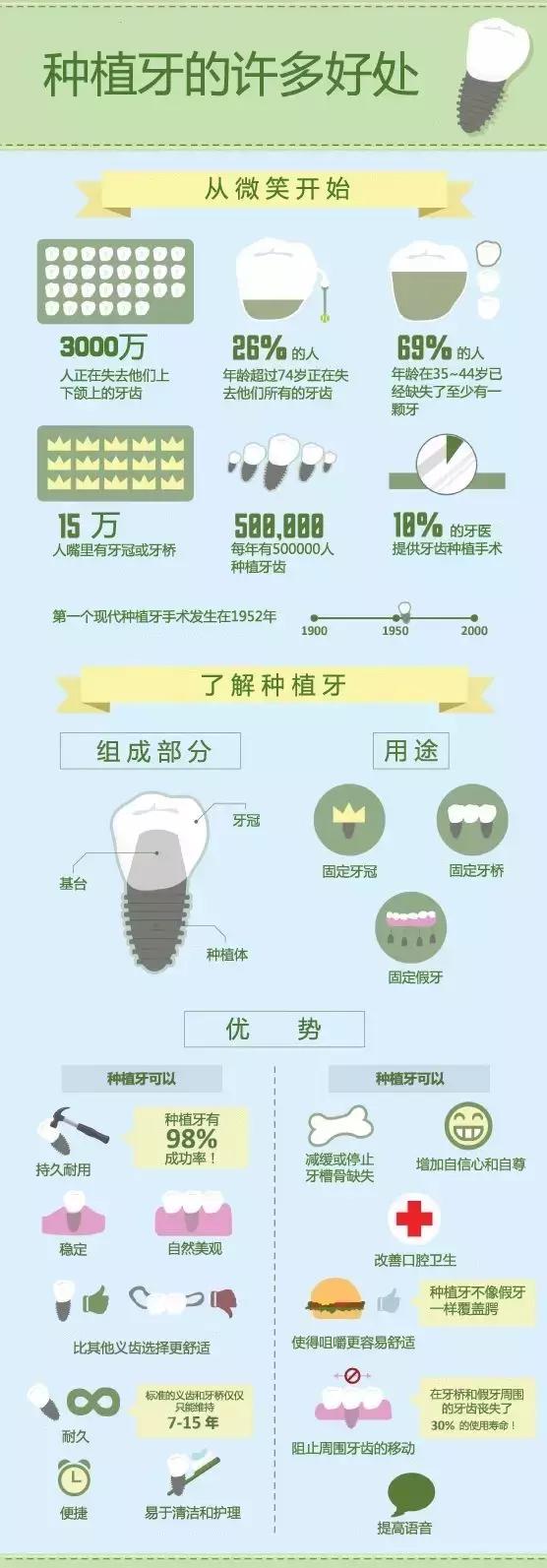
What is a dental implant?
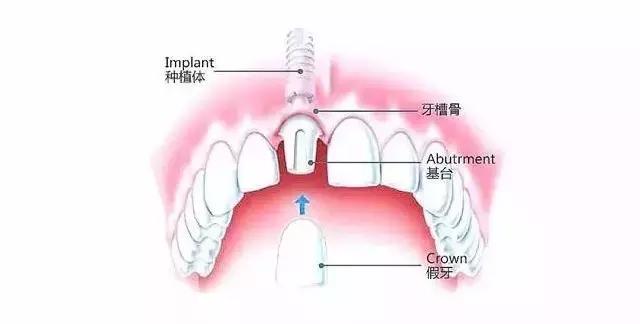
Dental implantation is also called artificial dental implantation. It includes two parts: the lower supporting implant and the upper dental restoration. It does not mean actually planting a natural tooth.
In plain terms, a dental implant is a small surgical procedure in which an implant made of artificial material is placed into the alveolar bone of the missing tooth area to serve as an artificial tooth root, and then the missing tooth is restored on this basis.
It has been 15 years since oral implant technology was introduced into China, and it is already very mature. Because the dental implant placed in the mouth is deeply embedded in the alveolar bone, it can bear normal chewing force and is almost the same as a natural tooth in function and appearance. Therefore, people call it the third set of teeth for humans.
If a tooth is missing, must it definitely be restored?
Missing teeth is not something that only happens to older people. Many adults also have missing teeth! And the harm of long-term tooth loss is great:
The integrity of the dentition is destroyed
After tooth loss, the adjacent teeth lose their support and restraint, become tilted, and easily cause occlusal dysfunction.
Tooth loss
Tooth loss can lead to absorption of the alveolar bone, causing other teeth to become loose.
Food impaction
Gaps appear between teeth, making it easy for food to become lodged in the interdental spaces, thereby causing bad breath, dental caries, periodontal disease, and so on.
Reduced chewing function
After tooth loss, the originally good occlusal relationship changes, chewing efficiency decreases, food cannot be fully ground, and digestion and absorption are affected.
What kind of people are suitable for it?
Because artificial dental implantation requires a small surgery, it has certain requirements for the patient's overall and local conditions. In general, healthy people who can undergo routine tooth extraction and minor outpatient oral surgery can consider implant-supported denture restoration.
As long as there is no heart disease, severe hypertension, endocrine dysfunction, diabetes, or severe blood system disease, and the intraoral tissue conditions permit and the occlusal relationship is normal, implant-supported denture restoration can be done.
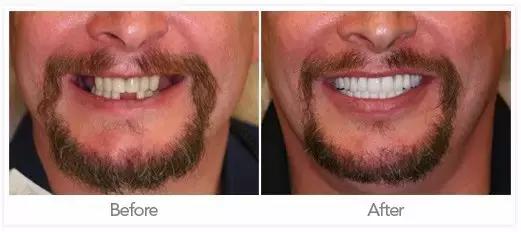
In terms of age, generally anyone after 18 years old can do it. The oldest patient known in clinical practice was 83 years old, with 4 implants placed in the mandibular anterior tooth area; the anterior teeth done in 2003 were fixed implant-supported denture restoration.
How long does implant treatment take?
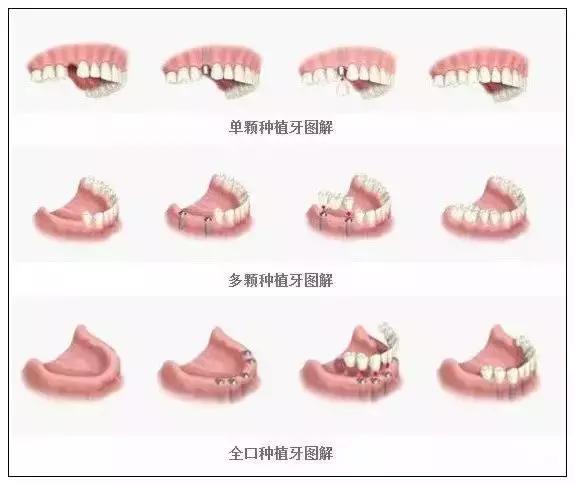
Implant treatment can generally be divided into three stages: preoperative preparation, implant placement surgery, and implant-supported denture restoration.
Preoperative preparation stage of treatment: conduct systematic specialized examinations, such as X-rays, blood tests, etc., formulate the implant treatment plan, and carry out a series of preparatory work. This takes several days.
Surgery time: implant surgery is usually performed under local anesthesia and generally takes 1 to several hours. On the day of surgery, the patient should eat normally before surgery, and eat soft food, liquid food, etc. after surgery. After surgery, take medication and return for follow-up visits as required by the doctor, and pay attention to keeping the mouth clean; stitches are removed in 7~10 days.
Postoperative restoration: performed 3~6 months after surgery. First, a second-stage surgery is performed, then impressions are taken, the denture is made, and the teeth are fitted. Treatment generally takes 2~3 weeks.
What advantages do dental implants have?
Can prevent alveolar bone absorption
After tooth loss, alveolar bone absorption proceeds rapidly, and the jawbone shrinks noticeably. Artificial dental implants can make the bone around the alveolar bone firmer, reduce absorption, and play a role in maintaining the alveolar bone.
Does not damage other teeth
Tooth restoration surgery like the bridge method must scrape down the two healthy teeth on both sides of the missing tooth, which reduces their lifespan. Artificial dental implants are performed independently, so they do not have an adverse effect on the surrounding teeth.
Restores chewing force
If the maximum chewing capacity of a healthy natural tooth is regarded as 100, the chewing force of a partial denture is 15~20, that of a complete denture is 10~15, while artificial dental implants can exert a force of 80~90.
Restores the mouthfeel when chewing
When using dentures, the dentures rest on the gums, the chewing force is greatly reduced, and it is hard to sense taste. Artificial dental implants are implanted in the alveolar bone, so the mouthfeel when chewing can be felt.
Less damage to the gums
Gingivitis and similar conditions often occur when using dentures, but using artificial dental implants reduces this risk.
Maintains a natural and beautiful appearance
When using dentures, the lips protrude outward, muscle movement is also restricted, and facial expressions become unnatural. If the dentures are removed, the lips sink inward again. But artificial dental implants, like natural teeth, are planted in the alveolar bone and can maintain a natural appearance.
Gives psychological security
Dentures are restorations that can be taken out at any time, can make sounds when eating or speaking, and users often feel insecure and often feel psychological pressure. But with artificial dental implants, there is no need to worry about this problem.
Does not cause pronunciation problems
Dentures move around in the mouth and are too bulky, causing difficulty in pronunciation. But artificial dental implants are very similar to natural teeth and basically have no effect on pronunciation.