How to choose hyacinth bean varieties? Detailed explanation of key planting techniques
Xiaofan Nongjia found in rural areas that rural people actually quite like to eat hyacinth beans, but hyacinth beans are generally grown in the south; in fact, they are also grown in the north, but because of winter, there are not particularly many in the north.
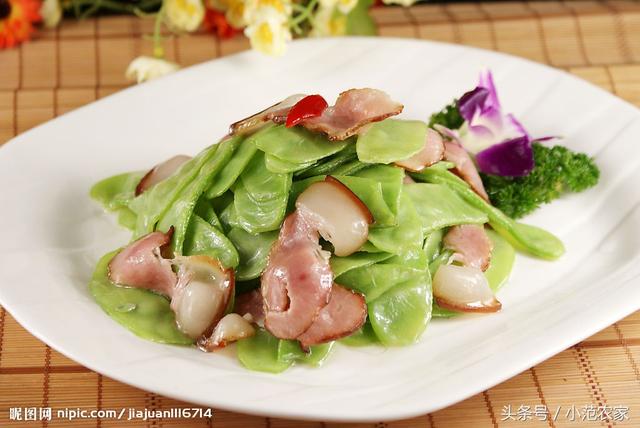
Hyacinth bean, also known as mei dou, emei dou, ou dou, que dou, and yanli dou, is a cultivated species in the genus Lablab of the tribe Phaseoleae in the legume family Fabaceae. It is an annual or biennial herbaceous vine,and can be perennial in frost-free areas of the south. The tender pods or mature beans are eaten.
It likes warmth and fears cold, and dies when exposed to frost. The suitable temperature for growth is 20-30°C, the most suitable temperature for flowering and pod setting is 25-28°C, and it can tolerate high temperatures of 35°C.
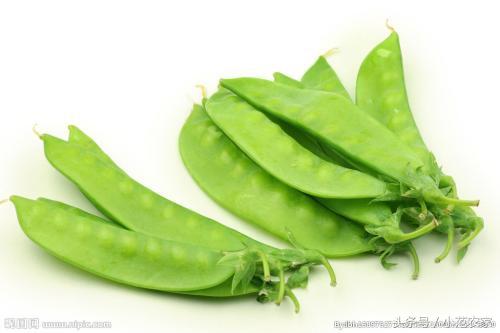
1. Select good varieties according to cultivation conditions. Existing hyacinth beans are divided by pod color into three types: white hyacinth bean, green hyacinth bean, and purple hyacinth bean. The main varieties cultivated in China are:
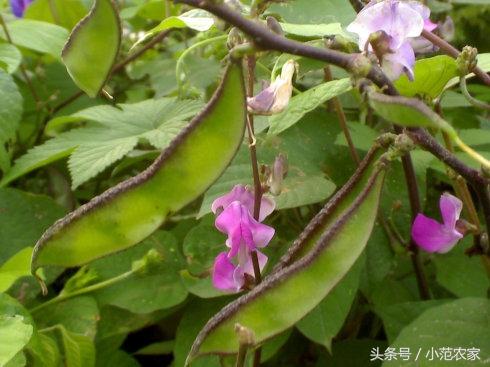
① Purple-edged hyacinth bean. Also called pig's ear hyacinth bean, vining. Leaves dark green, veins and petioles purple, pods broad and flat, green and thick, with dark purple at the suture on one side, pod flesh crisp and tender.
Each pod contains 5-6 seeds; mature seeds are black, and after cooking they are mealy, with good quality and high yield. It is mid-to-late maturing, highly heat tolerant, weakly cold tolerant, likes water and fertilizer, and has vigorous growth.
② White hyacinth bean. Vining, much branched, vigorous growth. The whole plant is green. Flowers white, pods slightly narrow, long, flat, and thin, light green, pod flesh relatively thin and tender, seeds white, good flavor.
Spring sowing whole growth period is 160-170 days. Extremely drought tolerant.
③ Black-seeded white hyacinth bean. Vining, vigorous growth, stems light green with purple at the nodes, leaves dark green, flowers purplish red, high pod-setting rate, pods light green, narrow and long, each pod contains seeds
5-6, seeds black. Drought tolerant, barren tolerant, heat tolerant, cold tolerant, long harvest period.
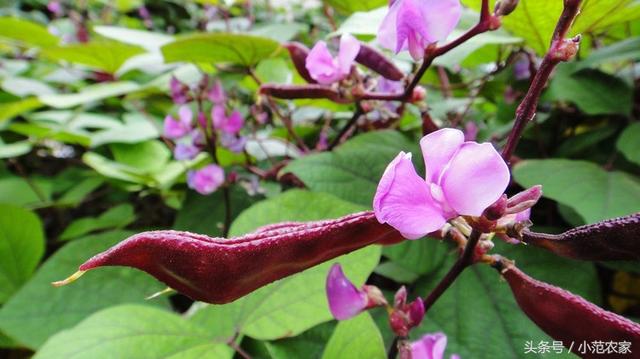
④ Purple hyacinth bean. Vining, strongly branching, stems dark purple, leaves green, veins and petioles dark purplish red, inflorescences long, many pods, pods narrow and long with thick flesh, purplish red,
containing 3-5 seeds, soft and mealy after cooking. Late maturing, heat tolerant, cold tolerant, drought tolerant, long harvest period, high yield.Cultivation techniques for hyacinth bean
2. Planting method. Mostly direct sown in late spring, and tender pods are harvested successively from summer and autumn to before early frost. Sole cropping or intercropping with corn, using corn stalks as support, or relay intercropping with garlic,
and it can also be planted at field edges and corners.
① Sowing density: for short-vine early-maturing cultivation, plant spacing 30-45 cm, row spacing 65-70 cm; for long-vine trellis pruning cultivation, plant spacing 45 cm, row spacing 100-130 cm
; for tent trellis pruning cultivation, make beds 133 cm wide, plant 2 rows, plant spacing 35 cm, leave a working path of 66 cm between beds.
② Sowing method: drill sowing or hole sowing, sowing depth 5-7 cm, and after sowing it is best to cover with plant ash.
③ Sowing rate: sole cropping 57-67.5 kg/ha, mixed cropping 6-16.5 kg/ha.
3. Field management
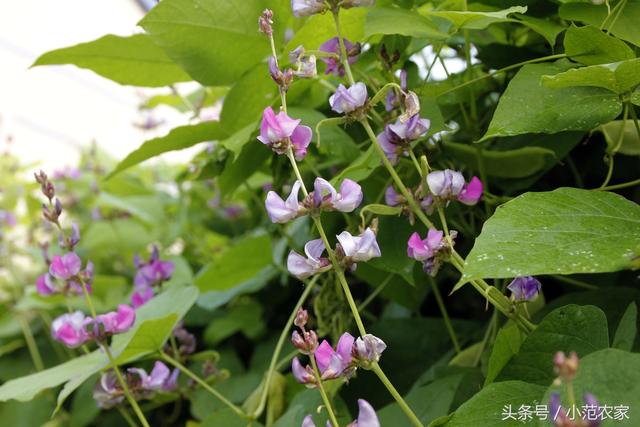
① Water and fertilizer management: water demand is relatively low at the seedling stage, and relatively high after the vines elongate and during pod setting. Generally, irrigate 1-2 times during vine elongation, and during the flower and pod stage, if there is no rain, irrigate about once every 10 days.
After watering, cultivate and weed, and combine with topdressing to prevent flower and pod drop and excessive vegetative growth. Cultivation should be shallow to avoid damaging roots. Before pod setting, apply decomposed chicken manure and other organic fertilizers. Afterpod setting, apply a small amount of chemical fertilizer as topdressing.
② Trellising to guide vines and pruning: build the trellis before vines begin to run, or after vines begin to run, promptly use rope to guide vines onto trees or roofs. Pinch the main vine when it has 5-6 compound leaves to promote more lateral vines; when lateral
vines have 3-4 leaves, pinch again, which can advance flowering and pod setting, but yield is lower. Generally, if using a trellis or tent trellis for cultivation, pinch when the stems and vines reach the top of the trellis, which can promote early pod maturity.
③ Pest and disease control: hyacinth bean has relatively few diseases; the main insect pests are aphids and red spider mites, which can be controlled by spraying low-toxicity pesticides, and controlled early.
4. Harvest
Hyacinth bean has a long growth period (160-300 days). It flowers and sets pods 60-65 days after emergence, and tender pods can then be harvested successively. Harvesting can continue for 90-120 days. Generally, the yield of tender
pods per hectare is 15000-18750 kg. Fresh tender pods and tender beans have a short shelf life. If stored at 85%-90% relative humidity and 0-2°C, fresh pods can be kept for 21 days,and tender beans with pods for about 7 days. For harvesting mature seeds, long-vine varieties take 150-210 days, and early-maturing short-vine varieties 60-75 days. When mature pods turn dry yellow, harvest and dry them in the sun, then thresh and winnowbefore storing.
Hyacinth bean is prone to rust and brown spot, and it is also necessary to prevent damage from hyacinth bean noctuid, small gray butterfly, and tobacco budworm.