Should you really get a dental implant after losing a tooth?
Tooth loss occurs in the following situations:
1. Tooth loss caused by accidental injury, which is common in teenagers and often involves the front teeth. Missing front teeth affects appearance, and parents are very anxious, eager to find the best way to restore the front teeth, one that can both restore appearance and meet functional needs.
2. Tooth extraction caused by tooth decay, or when only a residual root remains and needs to be removed. If there is no inflammation in the alveolar bone, immediate extraction and implantation can be used. If there is inflammation, it needs to be eliminated first, and implantation can be considered only after the alveolar bone has completely healed. Removable dentures and porcelain-fused-to-metal crowns can also be considered.
3. Gum recession caused by periodontitis, leading to tooth loss. This situation is the most complicated, because there is inflammation in the periodontal tissues, so an implant may not necessarily be possible, and the other teeth are also loose, or about to become loose, so removable dentures and porcelain-fused-to-metal crowns are also not suitable.
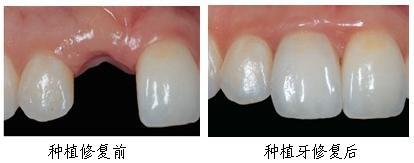
Restore the function of real teeth to the greatest extent
People who have lost teeth, especially those whose normal eating is affected, all long for a mouth of strong, good teeth, so they can eat whatever they want, and only then does life have flavor. Fortunately, with today's advanced medicine, there are three restoration options to choose from. Each has its advantages and disadvantages. Removable dentures are cheap but not stable; porcelain-fused-to-metal crowns are stable but require grinding down healthy adjacent teeth; dental implants can meet functional needs and restore the shape and function of real teeth to the greatest extent, but they have high requirements for the alveolar bone.
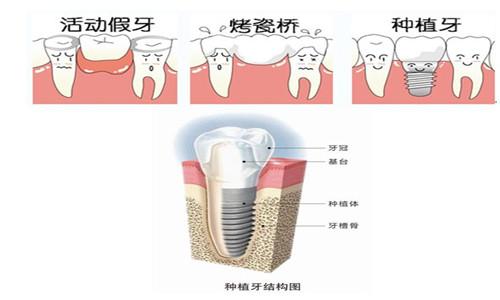
So, when a tooth is missing, should you really get a dental implant? What are the advantages and disadvantages of dental implants? Is everyone suitable for them?
A dental implant is a very good method for restoring missing teeth. By placing an artificial tooth root into the alveolar bone, and after the tooth root and alveolar bone have tightly healed, a dental crown is then worn. It has high stability, and the crown is also custom-made according to the color of one's other teeth and the bite state of the upper and lower teeth. Its shape and function are highly similar to real teeth, oral comfort is high, there is no foreign body sensation, and it has no effect on the other teeth, so it is highly praised.
The disadvantages are that although dental implant surgery is extremely minimally invasive, it also places very high demands on the doctor's skill. If the doctor's technique is not up to standard, there will also be quite a few problems later on. Because sufficient stability must be achieved, the implant and the alveolar bone need a three-month integration period, and some people are unwilling to wait. The high price is also one of the disadvantages of dental implants. The high cost makes it unaffordable for many people who need dental implants. In addition, dental implants are not suitable for everyone. Only adults over 18 years old who are in good general health, physically and mentally healthy, and whose bones and teeth have finished developing are suitable. If there are systemic diseases such as bleeding disorders, hypertension, heart disease, or diabetes, implant surgery can only be accepted after the disease has been treated and stabilized.
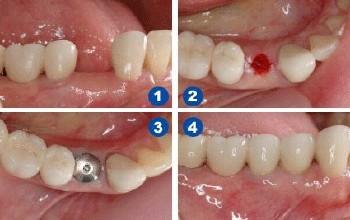
The dental implant process
Have you, the reader of this article, ever had a dental implant? If you have, you are welcome to leave a comment for people with missing teeth to refer to, describing how it felt after the dental implant was done. Is it just like your own teeth? After the tooth was implanted, did you feel very happy?