What are the considerations for growing forage grass for sheep?
I. Suitable varieties
You can choose high-yielding, high-quality, highly adaptable forage varieties such as alfalfa, Wintergrazer 70 rye, cup plant, clover, comfrey, and Rumex.
II. Moderate scale
The scale of breeding should be determined according to the household's labor situation and equipment conditions, and then the forage planting area should be determined by the scale of breeding. Under normal circumstances, 1 mu of forage grass can supply 15 to 20 adult sheep for a full year of feeding. Sheep reproduce relatively slowly, with an annual growth rate of only about 3 times the number of ewes at the beginning of the year, so the forage planting area should be determined according to the base number of breeding sheep and the rate of development, so as to both meet the supply and avoid waste.
III. Proper crop rotation
The principle for determining the layout of forage crop rotation is to increase forage yield per unit area and ensure that sheep can eat fresh green forage throughout all four seasons of the year. The following models are commonly used in production:
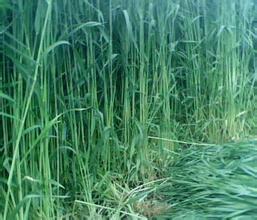
(1) A reasonable combination of alfalfa and Wintergrazer 70 rye can ensure a balanced supply of green feed for sheep throughout all four seasons of the year.
(2) Interplant Rumex k-1 hybrid dock fields with Italian ryegrass or Wintergrazer 70 rye.
IV. Appropriate feeding amounts
Adult sheep need about 4 kg of green feed per day, and feeding too much fresh green forage can easily cause diarrhea. When fresh green feed is sufficient, the proportion of bran in the concentrate feed should be appropriately increased (bran should account for about 40% of the total concentrate). Rumex k-1 hybrid dock has a higher water content, so it should be controlled even more appropriately when fed. Feeding alfalfa or clover alone can easily cause bloat, so they should be fed together with other forages. Sudan grass and Mexican corn contain hydrocyanic acid in the plants during the seedling stage, so after harvesting they should be wilted in the sun for a while before feeding.
Sheep farming technical exchange QQ group: 58656984