Cultivation Techniques and Pest and Disease Control Methods for Cabomba
Cabomba Encyclopedia
Cabomba, belonging to the plant kingdom, is one of the species in the genus Cabomba within the family Cabombaceae. Native to South America, it has been introduced to aquariums around the world and has naturalized in warm regions. It is a perennial aquatic herb, growing in rivers, lakes, canals and channels in plain water-network areas.
Morphological Characteristics of Cabomba
The stems of Cabomba are slender. The leaves are of two types: submerged leaves are opposite, round-fan-shaped, palmately divided, with lobes divided 3 to 4 times dichotomously. Because of its elegant and beautiful submerged leaves, it is often used as an ornamental aquarium plant. Floating leaves are few, alternate at the tips of flowering branches, narrowly elliptic, peltately attached. Flowers are solitary in the upper leaf axils of branches, trimerous, with white corollas.
Growing Environment of Cabomba
In China it usually flowers but does not set seed, and mainly reproduces and spreads through broken stem fragments bearing submerged leaves.
Distribution Range of Cabomba
Native range: South America
Invaded areas: Jiangsu, Shanghai, Zhejiang, Shandong, Beijing
Invasion time and locations: first discovered in 1993 in Yin County, Zhejiang Province; specimens were collected in 1998 in Taihu Township, Wu County, Jiangsu Province.
Cultivation Techniques for Cabomba
Transmission Pathways
In China it usually flowers but does not set seed, and mainly reproduces and spreads through broken stem fragments bearing submerged leaves.
Control Methods
In the United States and Australia, various control methods have been tried, including the use of herbicides, lowering water levels (draining the field), mechanical cutting, and feeding by herbivorous fish.
Pest and Disease Damage of Cabomba
It was most likely introduced as an ornamental aquarium plant and then escaped into the wild. In the United States, Australia and elsewhere, its infestation causes rising water levels in reservoirs and ponds, leading to increased seepage, blockage and flooding in irrigation canals; after large amounts of Cabomba die and decompose, they consume oxygen, harming fisheries; dense Cabomba hinders the recreational, agricultural and aesthetic functions of lakes and reservoirs; in Australia, Cabomba tends to replace native aquatic plants, thereby affecting biodiversity. Therefore, the potential threat of Cabomba invasion and spread to China's national economy and ecosystems should not be underestimated.
Lotus Root Cultivation and Pest and Disease Control Techniques
Abstract This paper briefly introduces the key points of lotus root cultivation and pest and disease control techniques.Keywords lotus root; cultivation; techniques
Chinese Library Classification Number S645.1 Document Identification Code B Article Number 1004-8421(2007)09-062-01
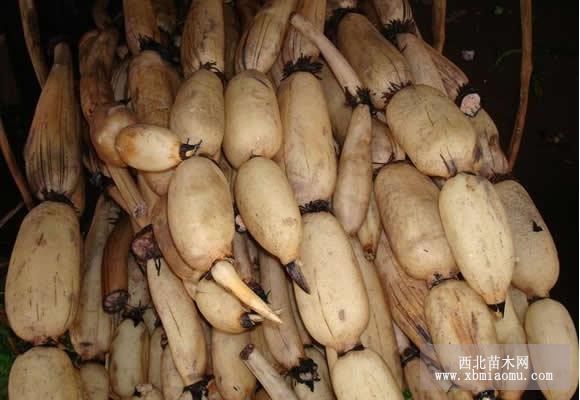
Lotus root is an aquatic economic plant with high nutritional value, containing various amino acids and minerals needed by the human body. It can be processed into various convenient foods, can also be eaten directly as a vegetable, and in midsummer can be eaten as a fruit, helping to cool and relieve summer heat. Under conventional cultivation of lotus root, the yield per hectare can reach more than 22,500 kg. The key points of its cultivation techniques are as follows.
Choose a fertile field that is sheltered from the wind and facing the sun, with convenient drainage and irrigation, a plough layer of 20-30 cm, and a plough pan, as the lotus root field. For pond cultivation of lotus root, the water depth should not exceed 1 m, the water level should be relatively stable, and there should be a plough pan.
2 Field Preparation and Fertilization
Taking an area at 25°N latitude and 1,300 m altitude as an example, lotus root is planted around the Spring Equinox, so the field can be prepared and base fertilizer applied after Awakening of Insects. The base fertilizer should be mainly organic fertilizer, with 22,500-37,500 kg of farmyard manure and 750 kg of compound fertilizer applied per hectare. It is particularly important to note that ammonium bicarbonate and tung oil cake must not be applied to lotus root fields.
3 Planting
Use the oblique insertion method, that is, bury the lotus root tip 10-13 cm into the mud, with the tail node slightly tilted above the water surface, with a spacing of 2 m x 2 m or 2 m x 2.5 m between plants and rows, and a seed quantity of 3,000-4,500 kg per hectare. If it is a field reserved for seed lotus root propagation, the density can be appropriately increased. When planting, the direction of the lotus root tips should preferably cross each other in a crisscross pattern between plants and rows; the outermost rows should preferably follow the direction of the field ridge, always pointing the lotus root tips toward the field ridge. Because lotus root generally grows forward along the direction of the lotus root tip, this planting method is beneficial for root formation and growth.
4 Field Management
4.1 Intertillage and Weeding From planting until the lotus leaves fill the rows and close the canopy, timely intertillage and weeding should be carried out 2-3 times: the first time before the lotus leaves sprout, the second time after floating leaves appear, and the third time after standing leaves emerge.
4.2 Topdressing During the lotus root growing season, apply quick-acting fertilizer in a timely manner according to growth conditions, generally requiring 2 topdressings. The first is when 1-2 standing leaves have just emerged, applying 112.5-150 kg of urea per hectare; the second is before row closure, applying 75-112.5 kg of urea plus 225-300 kg of potash fertilizer per hectare. Decomposed cake fertilizer or farmyard manure can be used as topdressing.
4.3 Water Level Regulation Lotus root has different water requirements at different growth stages. Water level regulation should follow the principle of shallow to deep, then deep to shallow. From planting until standing leaves extend, maintain a water level of 5-10 cm; from standing leaf extension until before root formation, as the standing leaves grow, the water level can be raised to 30-60 cm; during the root formation period, the water level should be lowered to about 5 cm. Drain the water 15-20 d before harvesting lotus root to facilitate harvesting.
4.4 Pest and Disease Control
4.4.1 Lotus root viral disease. Control methods: pay attention to selecting disease-resistant varieties; strengthen investigation, and once initial diseased plants are found, dig them up and destroy them as early as possible, insert bamboo markers at the destroyed diseased plants, continue monitoring the disease situation, and do not keep lotus roots near them as seed plants at harvest; carry out aphid prevention and control well; spray diseased fields with foliar nutrient agents (such as potassium dihydrogen phosphate, Yemianbao, etc.) plus 0.05%-0.1% black soap or laundry soap, or 5% Jun Du Qing water agent at 300 times dilution or Ns-83 resistance enhancer at 100 times dilution. Spray 2-3 times or more, once every 10-15 d, to inactivate the virus source, promote plant growth, and reduce disease incidence; select and retain seed lotus roots from disease-free fields.
4.4.2 Lotus root leaf small sclerotium leaf rot. Control methods: there is no mature control experience yet. It is recommended that in severely affected fields, use spraying or splashing application with 5% Jinggangmycin water agent or soluble powder at 500-1000 times dilution, or 20% flutolanil (Wangjiaduo) wettable powder at 800-1000 times dilution, or 50% Ronilan (vinclozolin) wettable powder at 1000-1300 times dilution, or 30% Beisheng emulsifiable concentrate at 1000 times dilution, or 50% anilazine wettable powder at 500 times dilution. Spray 2-3 times consecutively, once every 7-15 d, alternating applications, with denser application early and sparser application later. If using the splashing method, the amount of the above medicinal solution should be doubled, diluted with water before application, for safety. Before application, lower the water level as much as possible to a shallow layer, and after 24-48 h restore the required water level.
4.4.3 Insect pests. Rhopalosiphum nymphaeae, Donacia provosti and Spodoptera litura are the main insect pests in lotus root fields, and they can be controlled at the initial stage with general low-toxicity, high-efficiency insecticides.
5 Harvesting
In autumn and winter, after the aboveground parts stop growing and gradually wither, it is the best time to harvest lotus root. If harvesting cannot be carried out in time due to the influence and constraints of processing and sales schedules, it may also be left until before the Spring Equinox of the following year to complete harvesting. Before harvesting, drain the lotus root field in advance, so that the mud does not stick to the feet and slightly cracks in chicken-claw patterns. When harvesting lotus roots, simply gently turn over the soil along the direction of lotus root growth (that is, the direction the lotus root tips pointed when planted), and the lotus roots can be taken out whole. When harvesting, start from one end of the field and try to avoid blindly digging with a hoe or harvesting while dragging mud and water when the lotus root field is not dry, so as to harvest the lotus roots completely, increase yield, and reduce damage as much as possible, so as to better maintain their marketability.
Cultivation Techniques for Spring Grass and Measures Taken for Pest and Disease Control
When mentioning Spring Grass, most flower enthusiasts may not really know what it looks like, but a small number of people like to grow this little plant. Spring Grass is also called Spiral Grass, named because its leaves twist and coil, resembling a spring. Today I will take you to gain a deeper understanding of the cultivation techniques for Spring Grass and the measures taken for pest and disease control.
Planting and Cultivation
Water and Fertilizer:
Spring Grass likes a moist environment. During the growing period, the soil should be kept moist but not waterlogged. If there is long-term drought and water shortage, although the plant will not die, growth will stagnate, leaves will turn yellow, and they may even wither; if the potting soil is waterlogged for a long time, it will cause bulb rot. You can often spray water on the plant to increase air humidity and prevent the leaf tips from drying out. In summer, to avoid flooding during the rainy season, place the flower pot on a rack or a platform of a certain height, and pay attention to controlling watering to prevent bulb rot caused by waterlogging, but do not let the potting soil dry out completely, so as not to dry out the bulb. From October each year to April of the following year is the plant's vigorous growth period. Apply a decomposed dilute liquid fertilizer or compound fertilizer once a month to provide sufficient nutrients so that the plant grows vigorously. After the flower scape emerges in spring, spray 0.5% potassium dihydrogen phosphate solution 2 to 3 times to promote flowering.
Pollination:
After Spring Grass blooms, different plants should be selected for artificial pollination so that the plants set fruit. After the seeds mature, pay attention to harvesting them and do not let them scatter; if seeds are not to be kept, promptly cut off the remaining flower stalks after flowering to avoid consuming too many nutrients.
Repotting:
Repot Spring Grass once a year at the end of August. The potting soil should be fertile and loose, rich in humus, and have good drainage and air permeability. It can be prepared by mixing 3 parts leaf mold or peat soil with 2 parts vermiculite or sandy soil, and mixing in a small amount of bone meal. When repotting, cut off rotten roots. When planting, expose about 1/3 of the bulb above the soil surface. After planting, water thoroughly and place in a place with sufficient light for maintenance. Afterward, pay attention to keeping the soil moist, and soon new leaves will grow from the top of the bulb.
Pest and Disease Control
Spring Grass does not have many pests and diseases. The main pests include snails and nematodes in the soil that damage the bulb. When planting, the soil can be treated at high temperature to kill pests and eggs in the soil. Carbofuran and other insecticides can also be mixed into the culture soil, but because carbofuran is a highly toxic pesticide and has very poor degradability, improper use will cause harm to the environment, so it must be used with great care.
The main disease of Spring Grass is bulb rot caused by long-term waterlogging due to poor soil permeability. In addition, leaf tip drying caused by factors such as dry air and long-term soil water shortage can be prevented by improving the cultivation environment.
The above is the relevant introduction I have learned today about the cultivation techniques for Spring Grass and the measures taken for pest and disease control. I hope flower enthusiasts will find this article helpful after reading it. If you want to learn more, please continue to follow our Succulent Garden, and we will provide you with more related knowledge!