How to grow Calathea roseopicta? Detailed care methods and precautions
Growth habits of Calathea roseopicta
Calathea roseopicta likes to grow in a warm, humid, shaded environment; it is not cold-tolerant, fears drought, and dislikes strong direct sun exposure. Its optimum growth temperature is 20-30°C, and its overwintering temperature is 15°C. The soil for growing Calathea roseopicta should preferably be a sandy soil rich in humus, loose and well aerated.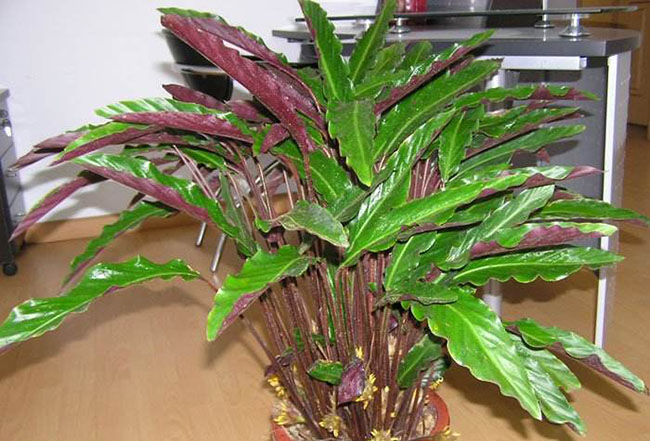
Propagation methods for Calathea roseopicta
1. Division propagation:
Calathea roseopicta is best divided after temperatures warm up in spring; vigorously growing plants can be divided once every 1-2 years. Cut the clustered plant into several clumps along the direction of underground rhizome growth, then pot each one separately and place them in a relatively shady spot for care. Once roots have formed, manage them by the usual method.
2. Cutting propagation:
Cuttings can be taken during the plum rain season: cut the internodes from the upper part of the mother plant and insert them into leaf mold or peat, then pot them up once roots have formed. During the growing season, mist the leaves frequently and fertilize once a month; in midsummer, place them in a shaded spot and avoid strong direct sun. Water must not accumulate in the pot, and yellow and withered leaves should be removed promptly. In winter they need ample sunlight and watering should be reduced appropriately.
Care methods for Calathea roseopicta
1. Soil:
Planting Calathea roseopicta requires nutrient-rich, loose and well aerated soil. For potted Calathea roseopicta, you can use equal parts leaf mold, garden soil and river sand mixed with a small amount of base fertilizer as the growing medium.
2. Light:
Calathea roseopicta is an excellent shade-loving indoor foliage plant. In summer, 70%-80% of the light should be blocked to avoid sun exposure; otherwise the leaves of Calathea roseopicta will lose their green color and luster, and in severe cases sunscald will occur. When growing Calathea roseopicta, it should also not be kept for long periods in dark, poorly ventilated places, as this can cause the leaves to turn yellow and drop.
3. Temperature:
Calathea roseopicta likes a warm, humid, shaded environment; its optimum growth temperature is 20-30°C, and its overwintering temperature is 15°C.
4. Watering:
During the growing period of Calathea roseopicta, water should be supplied generously to keep the potting soil constantly moist; water promptly once the potting soil is slightly dry. Misting the leaves and the surrounding area frequently can raise air humidity and help Calathea roseopicta grow better. But be careful not to let water accumulate in the potting soil, as this affects growth and causes root rot; especially after early autumn, watering should be controlled.
5. Fertilizing:
During the growing season of Calathea roseopicta, apply liquid fertilizer 1-2 times a month to keep it growing vigorously with lush foliage. In addition, to help Calathea roseopicta grow well, it can be repotted once every 1-2 years.
6. Pest and disease control:
The common diseases when growing Calathea roseopicta are mainly leaf spot and leaf blight. At the early stage of disease, spray 200-fold Bordeaux mixture 2-3 times at half-month intervals. It can also be controlled by spraying 65% zineb wettable powder at 600-fold dilution. In addition, if ventilation is poor, Calathea roseopicta may suffer from scale insect pests; during the nymph stage, spray 50% fenitrothion emulsifiable concentrate at 1000-fold dilution to kill them.
The uses of Calathea roseopicta
Calathea roseopicta is mainly potted for indoor decoration and is an excellent plant for both foliage and flowers. Placing Calathea roseopicta in bedrooms, living rooms, offices and similar places gives a quiet, dignified look. Moreover, Calathea roseopicta is a perennial evergreen plant, so when grown indoors it can be enjoyed for a relatively long time.
How to grow potted Calathea roseopicta: care methods and precautions for Calathea roseopicta
Calathea roseopicta is a plant commonly used to beautify the home environment, elevate the style of public spaces and improve air quality. The methods and techniques for planting Calathea roseopicta are broadly not very different from those for planting other Calathea species; as long as these basic points are done well, good growth can usually be achieved.
How to grow potted Calathea roseopicta
Calathea roseopicta likes a warm, humid, shaded environment. Its optimum growth temperature is 20-30°C; it needs a lot of water, is not drought-tolerant, is fairly heat-tolerant and slightly cold-tolerant, and can overwinter safely above 5°C. Calathea roseopicta fears frost and likes loose, fertile, moist, well-drained acidic soil.
Care methods and precautions for Calathea roseopicta
1. Temperature and light
Calathea roseopicta likes a hot, humid, semi-shaded environment; its suitable growth temperature is 20-30°C, and its safe overwintering temperature is 10°C. In summer, guard against high temperatures, and in winter, guard against cold. Calathea roseopicta dislikes direct sunlight and grows better under indirect or diffused light. Otherwise the leaves will turn yellow and lose their luster; especially in summer it must be shaded, but it should also not be kept for long periods in dark, poorly ventilated places, as this causes the leaves to turn yellow and drop.
2. Water and fertilizer management
Calathea roseopicta is not drought-tolerant and has a fairly high water requirement. During the growing season it must be given plenty of water to keep the potting soil constantly moist, but be careful not to let water accumulate in the potting soil, as this causes root rot. In summer and autumn, when temperatures are high and the air is dry, mist the leaves and surrounding area frequently to maintain high air humidity. After late autumn, when temperatures are lower, control watering and just keep the potting soil slightly moist.
During the growing season of Calathea roseopicta, apply liquid fertilizer 1—2 times a month to keep it growing vigorously with lush foliage. Calathea roseopicta is a foliage plant, and appropriately increasing nitrogen fertilizer can make the leaf color even more beautiful. But note that the amount of fertilizer must not be too large.
3. Growing taboos
Calathea roseopicta is an excellent shade-loving indoor foliage plant. In the hot summer, prevent sun exposure and block 70%-80% of the light, otherwise damage easily occurs. If air humidity is low and the potting soil is dry, the leaf edges will turn yellow and scorch; direct sunlight will also cause the leaf edges to turn yellow and scorch.
4. Propagation methods
The main propagation methods for Calathea roseopicta are division propagation and cutting propagation.
5. Pests and diseases
The common pests and diseases of Calathea roseopicta mainly include southern blight, leaf spot, scale insects, red spider mites and similar problems.
Division propagation of Calathea roseopicta
As Calathea roseopicta grows, the plant gets bigger and bigger; if it grows vigorously, it needs repotting every 1-2 years. Therefore, division propagation can be done together with repotting. Divide when temperatures rise in spring; if temperature and humidity are suitable, it can also be done year-round.
Remove the Calathea roseopicta plant from its pot and soil, and use a small knife to cut the clustered plant along the direction of underground rhizome growth, preferably keeping stems and leaves or leaf buds on each piece. It can be divided into several clumps and then potted separately. Place the potted Calathea roseopicta in a relatively shady spot for care, control water, and only water normally once it has resumed normal growth.
The value of Calathea roseopicta
1. Ornamental value of Calathea roseopicta
Calathea roseopicta is a foliage plant. Its branches and leaves grow densely, its plant form is full, its leaves are dark green and glossy on the surface, and its leaf colors are rich and varied. It is a highly ornamental plant, mainly used as an indoor ornamental potted plant.
2. Indoor potted value and cut-leaf value of Calathea roseopicta
Because Calathea roseopicta has a beautiful plant form, colorful leaf surfaces and fairly strong shade tolerance, and is relatively simple to cultivate and manage, it can be used for indoor potted display and is one of the most famous indoor foliage plants in the world.
Large varieties of Calathea roseopicta can be used to decorate large spaces such as the halls of hotels and shopping malls, while small varieties can accent balconies, living rooms, bedrooms and similar home spaces. During cultivation and management, after being displayed in one place for a period, it should be placed in a brighter spot such as a balcony or windowsill to increase light, which helps long-term enjoyment.
Because Calathea roseopicta has colorful leaves with striking markings, it is very beautiful and is a high-grade cut-leaf material that can be used directly in flower arrangements or as a filler material for arrangements.
3. Edible value of Calathea roseopicta
The rhizomes of Calathea roseopicta contain starch and can be eaten; they also have effects such as clearing lung heat and promoting urination.
Besides its market value for ornamental use and cut leaves, Calathea roseopicta also has certain edible and dietary therapy uses. The starch in the roots of Calathea roseopicta can not only be eaten directly but can also clear heat and promote urination, which is very beneficial for daily body conditioning. Friends who grow Calathea roseopicta can give it a try!
The uses of Calathea roseopicta: care methods and precautions for Calathea roseopicta
Calathea roseopicta is an excellent shade-loving indoor foliage plant. Are you familiar with it? What are the uses of Calathea roseopicta? Today we will talk about the care methods and precautions for Calathea roseopicta.
I. Introduction to Calathea roseopicta
Calathea roseopicta, a perennial herbaceous plant. Family Marantaceae, genus Stromanthe. Other names: Calathea roseopicta, red-backed Calathea, Stromanthe. It is an excellent shade-loving indoor foliage plant. It is an excellent plant for both foliage and flowers, used to decorate bedrooms, living rooms, offices and similar places, giving a quiet, dignified look, and can be enjoyed for a relatively long time. Native to Brazil.
II. Care methods for Calathea roseopicta
1. Soil: Calathea roseopicta likes loose, fertile, moist, well-drained acidic soil. For potting, equal parts leaf mold, garden soil and river sand mixed with a small amount of base fertilizer can be used as the growing medium; the soil should be nutrient-rich, loose and well aerated.
2. Watering: Calathea roseopicta is not drought-tolerant. During the growing season it must be given plenty of water to keep the potting soil constantly moist, and be sure to mist the leaves; especially in summer and autumn, when temperatures are high and the air is dry, mist the leaves and surrounding area frequently to maintain high air humidity. But be careful not to let water accumulate in the potting soil, as this affects root aeration and leads to poor growth or root rot; after late autumn, when temperatures are lower, control watering and just keep the potting soil slightly moist.
3. Light: Calathea roseopicta likes shade and dislikes direct sunlight, so it must not be placed in the sun; otherwise the leaves will lose their green color and luster, and in severe cases sunscald will occur. But it should also not be kept for long periods in dark, poorly ventilated places, as this causes the leaves to turn yellow and drop.
4. Fertilizing: During the growing season, apply liquid fertilizer 1-2 times a month to keep it growing vigorously with lush foliage.
5. Pests and diseases: The common diseases of Calathea roseopicta are mainly leaf spot and leaf blight. At the early stage of disease, spray 200-fold Bordeaux mixture 2-3 times at half-month intervals. It can also be controlled by spraying 65% zineb wettable powder at 600-fold dilution. The common pest is mainly scale insects, which easily occur when ventilation is poor. During the nymph stage, spray 50% fenitrothion emulsifiable concentrate at 1000-fold dilution to kill them.
III. Precautions for growing Calathea roseopicta
1. Calathea roseopicta is an excellent shade-loving indoor foliage plant. In the hot summer, prevent sun exposure and block 70%-80% of the light, otherwise damage easily occurs;
2. If air humidity is low and the potting soil is dry, the leaf edges will turn yellow and scorch; direct sunlight will also cause the leaf edges to turn yellow and scorch;
3. For Calathea roseopicta, be sure to repot once every 1-2 years.
IV. The uses of Calathea roseopicta
Stromanthe is mainly potted for indoor decoration and is an excellent shade-loving indoor foliage plant. It is an excellent plant for both foliage and flowers, used to decorate bedrooms, living rooms, offices and similar places, giving a quiet, dignified look, and can be enjoyed for a relatively long time.